Car electrical guys - need battery upgrade advice

Joined
Mar 27, 2019
Messages
2,897
Location
Northern Nevada
Hoping some guys with experience can advise here on upgrading my truck's battery and electrical system. Electrical in general is voodoo to me, so I need this broken down like an absolute rookie.

Where I live and how I daily drive is hard on batteries. Often over 100F in the summers, and down to 0F and the teens in winters. Plus, there's no real commute - generally just a 5-10 minute trip daily each way, not more than 35mph, sometimes with several starts-ups with errands. After killing a couple of batteries in the deep cold, I've had fewer problems in just keeping a solar-panel trickle-charging the battery from the cab.

I'd like to upgrade the truck's electrical to something much more bulletproof, and overbuilt to the extent feasible. Looking for ridiculously reliable and durable.

The truck is a 2019 Tundra TRD.

I've read that with as little as a battery-tray swap, I can upgrade to a Group 31 battery. Is this the case - and, any downsides?

What about dual batteries, or upgrading the alternator?

What other stuff needs to be done with any of this? Fuses, terminals, etc?

I get deep into the middle of nowhere in Nevada regularly across the year, both snow and summer heat, so a lot of what I do would probably benefit from an overlanding concept, even if I'm not really "overlanding".

Thoughts and advice greatly appreciated.
 

I've done that upgrade setup to several trucks because of running winches and stereo systems, they make a huge difference in how efficiently your battery is charged.

I'd suggest an upgraded (higher amperage) alternator before adding a second one. You're not underpowered, you're just not charging enough time.

A AGM battery is much more stable in temperature extremes. Any parts store will have them. I've had good success with the Oriley brand ones in 3 vehicles.
 
You have a pile of issues that probably need more than one solution.

I can't speak for the tray but extra battery capacity never hurts. What are you on, a 27 now?

If it was me, I would add a second battery before upgrading my alternator, with an isolator between them. I sure wouldn't bother messing around with replacing wire looms, fuse boxes, etc. Those are those classic "you won't get out of it what you put in" expenses. But if you install it properly, a second battery can provide a lot of peace of mind when dealing with things like vampire loads, lights left on overnight, that USB cigarette-lighter phone charger that stays on when your truck is off, etc. It's also really nice to have if you're going to do something like install a front winch.)

The solar trickle charger is a good idea that should address the short-trip-battery-can't-recharge concern. But on top of that, IMO one of the best upgrades ANY vehicle owner can make with almost no effort is one of those lithium jump packs. It's not just about your own truck - it's an easy hand-out at a campground or kids sports field when somebody needs a jump so you don't have to work your way around for your jumper cables to reach (or even move at all).
 
The solar trickle charger is a good idea that should address the short-trip-battery-can't-recharge concern. But on top of that, IMO one of the best upgrades ANY vehicle owner can make with almost no effort is one of those lithium jump packs. It's not just about your own truck - it's an easy hand-out at a campground or kids sports field when somebody needs a jump so you don't have to work your way around for your jumper cables to reach (or even move at all).
I keep a Noco in all our vehicles. So handy in so many situations.
 
A good AGM battery is probably the first step. If you can squeeze in a bigger one, all the better. Odesseys are primo, but spendy for sure. An X2 or Delco gold is probably not too far behind in quality.

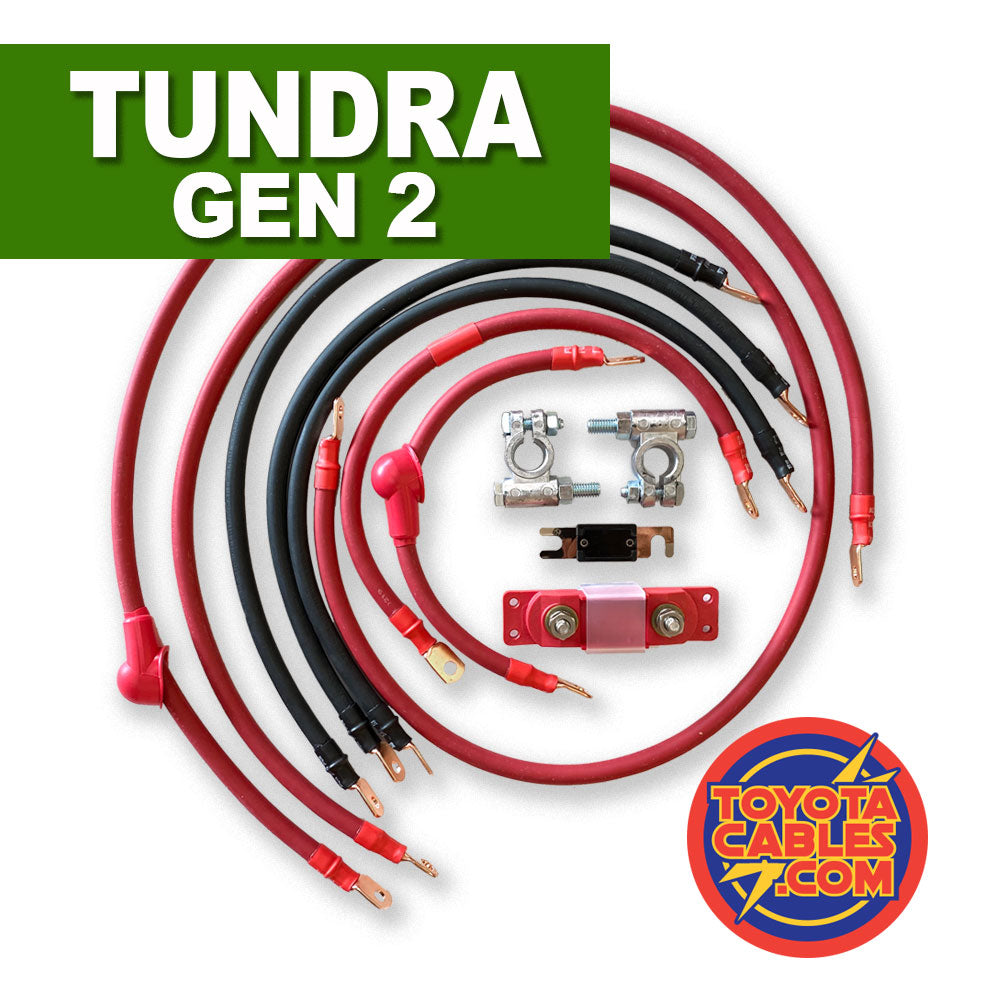
Bigger cables done well wouldn't be a terrible addition for the relatively low cost and time to install.

Best bang for the buck is probably the jump pack.

If the issue is you're not driving enough to charge the battery, adding a second probably won't help. Id consider putting an onboard charger on there if you can plug it in from time to time to top off the battery. Victron makes a nice one you can dial in the charge parameters via Bluetooth.
 
I would get a good jump pack before I spent more money on batteries (unless I was trying to run additional stuff).

How many years are you getting out of your current set up? Stuff I use regularly last 5-6 years typically and stuff that sits a lot usually only lasts 2-4.
 
What kind of batteries have you been buying and do you have any after market electrical accessories? The situation you describe shouldn't be enough to warrant re-engineering your electrical system, especially on a 2019 Toyota.
The only Batteries I run are Deka, I gave up on interstate long ago. Walmart, Autozone, and other big box batteries are generally sub par from my experience. You could go AGM, but honestly I doubt that you need to. If you really want to do something I would go this route before I started installing a different group size battery or larger alternator. If you plan on putting a plow or winch on or something that will tax a stock electrical system then I could see the upgrades, but for a stock truck there is probably a more assignable cause giving your grief.
Once a battery wears down and freezes one time you loose cold cranking amps and its generally down hill from there.
Doing an electrical draw test may reveal an issue, I would honestly start there first then make sure its got a quality battery in it. I deal with -20 in the winter and 90-100 in the summer and my daily drivers seem to get 5-6 years out of a Deka, if I run anything else (not to say there aren't other brands) I'll have dumb issues. Case in point, I had 1 out of 3 rigs start this morning this at -20. The 2 that didn't have big box store batteries in them that I haven't cycled out yet, the Wife's rig fired right up.
 
An AGM will charge faster with limited driving vs a lead acid. However, it may need occasional top ups with an AGM charger if the vehicles charge profile is designed for lead acid.
 
I have a 19 Tundra SR5 TRD Off-Road with the tow package. If your Tundra has the tow package, it came with a higher output alternator. A size 24F or 27F battery should fit your tray. Mine has a 27F regular old lead acid battery. A jump pack is always with me.

Unless there is a problem with the electrical system, your issue is probably short trips in tough conditions. Battery probably not getting fully charged after the short trip. If needed, I would get a new group 27F battery with a highest CCA (cold cranking amps) rating I could find, possibly an AGM. Then I am going to have a charger I can plug into a pig tail I run from my battery to outside the grill, SAE style. I keep a charger in my garage and run a lead outside I can plug into the pig tail, takes 5 seconds to hook up or unhook.

Make sure you set it to your battery type, lead acid or AGM, plug it in at least weekly and every night it is freezing. If you get an AGM odds are your alternator will not give it all the volts it needs to fully charge, making the regular charging overnight more important.
 
I put an AGM in my Toyota and hated it
Sure I didn’t drive that truck very often.

But that thing would not hold a charge at all.
I’ve never had a battery fail to crank a truck as often as that junk.

A reg 2a trickle charger would not keep it topped off, had to have a special charger.

Screw that, I doubt I’d try one again.
 
I put an AGM in my Toyota and hated it
Sure I didn’t drive that truck very often.

But that thing would not hold a charge at all.
I’ve never had a battery fail to crank a truck as often as that junk.

A reg 2a trickle charger would not keep it topped off, had to have a special charger.

Screw that, I doubt I’d try one again.
What year was it? AGMs can be direct swaps for flooded-cell types in terms of usage, but not for charging. If the voltage regulator on your alternator isn't adjusted or replaced, many older units (and honestly, a lot of modern ones) just don't charge them properly. It's not the battery's fault. It just requires a certain "charge profile". With flooded-cells, you just chuck a high voltage on their (+) terminal and they're (mostly) fine. But AGMs need bulk/absorption/float "phases" and because AGMs aren't usually an OEM option your alternator was probably not charging your battery properly.

Lots of folks don't notice this because although it's not ideal, an AGM WILL charge just using a fixed voltage. But you're basically in "float" phase all the time if you do this, so if you're doing more/shorter trips they may not charge fully. If you want to go AGM, you can get "DC-DC chargers" that manage this cycle better.

TBH despite owning probably 6 AGMs myself for various purposes, I think a lot of folks won't benefit from them. You can discharge them more without damaging them (50% for flooded, 80% for typical AGMs) but that's not really an advantage in a car - usually you should only be taking a 10-20% max hit when you start your engine. A >50% discharged battery of either chemistry is probably going to need a jump to get going, so there's one advantage out the door. That particular advantage is most valuable for things like off-grid solar energy storage, RV batteries, etc.

Another big advantage of AGMs is you can have them in any orientation. Back when I was working on an airplane project the only place it made sense to put the battery was under the pilot's seat, and it had to go sideways. You can see how in odd situations like that, tucking a battery under the frame rail of a trailer to run a winch, fitting a starter battery sideways in a narrow slot under a generator, etc would be an advantage, but in a car we almost universally have a single vertical orientation in a battery box or holder, so there's another advantage you don't need.

Finally, AGMs are really expensive - sometimes double what a standard flooded would cost. Again for an RV or solar storage setup it's worth the cost for those benefits, and you don't replace them that much. But if you need to replace a battery in Naples, UT on a hunt trip, IMO it's better to be rolling with something easy to source and replace.

YMMV but for a car/truck I think an AGM isn't something I'd usually recommend.
 
Back
Top