Hypothetical, just trying to figure in some light pack work throughout the year.
Would save heavier pack work until closer to the hunt.
Ok, then that would be fine but at that weight you would not be doing ME work.

Follow along with the video below to see how to install our site as a web app on your home screen.
Note: This feature may not be available in some browsers.
Hypothetical, just trying to figure in some light pack work throughout the year.
Would save heavier pack work until closer to the hunt.
Hard to say, you have a touch under 3% and the test is only 40 minutes. Looking at the trend another 20 minutes could have put your drift too high.
I would rerun the test with a full hour. But if you don't want to, you will probably be fine using 137 bpm.
It depends on you. I can hold lactate threshold with 90 pounds for an hour on the stairmaster and my legs feel fine. 125 starts to make my legs be what slows my pace down.
So, do it and see what limits you. If your legs don't limit your pace, then add weight until they do.
Scott says don't worry about HR (edit during ME), but an hour of zone 4 trashes my training for the week, so I do make sure my rate is not climbing too high.
"Disregard heart rate in these ME workouts."I’m not sure where he states to ignore HR.
Quotes from the book.
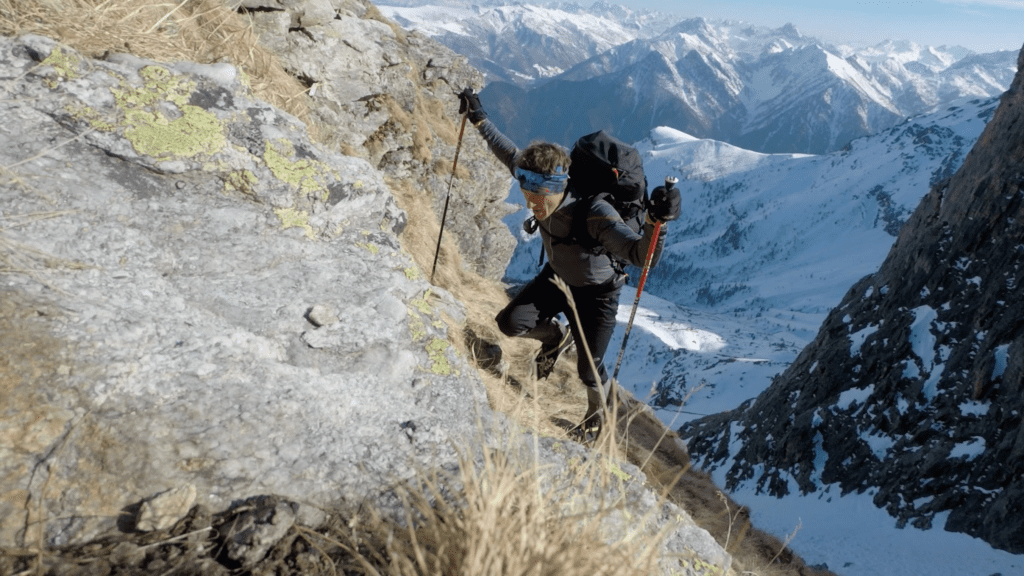
“While nose breathing is not a perfect physiological marker, it will help you keep the intensity in check. Your goal with this technique is a feeling of distinct fatigue in your legs even at relatively low heart rates. If you are able to hike fast enough to get short of breath, you need to add more weight or pick a steeper hill.”
“The point is to have your rate of climb be limited by your legs, not by your breathing.”
 evokeendurance.com
I believe you are misunderstanding what he means by "disregard HR". HR is not a factor in ME workouts, as he states, "While nose breathing is not a perfect physiological marker, it will help you keep the intensity in check. Your goal with this technique is a feeling of distinct fatigue in your legs even at relatively low heart rates." He also states " heavy-legs-while-going-easy feeling.""Disregard heart rate in these ME workouts."
Muscular Endurance: All You Need to Know
Over the past 20 years I’ve written and spoken many thousands of words about Muscular Endurance training. Both Training for the New Alpinism and Training for the Uphill Athlete have entire sections of the book devoted to the topic. Articles like Vertical Beast Mode that remain on UphillAthlete.com.
From the first paragraph in the section titled "How Much Weight".
He has also said it on multiple podcasts.
Which book?I believe you are misunderstanding what he means by "disregard HR". HR is not a factor in ME workouts, as he states, "While nose breathing is not a perfect physiological marker, it will help you keep the intensity in check. Your goal with this technique is a feeling of distinct fatigue in your legs even at relatively low heart rates." He also states " heavy-legs-while-going-easy feeling."
I think he mentions it in this video too, or something to that effect, about how his breathing is at a pace he can easily talk.I believe you are misunderstanding what he means by "disregard HR". HR is not a factor in ME workouts, as he states, "While nose breathing is not a perfect physiological marker, it will help you keep the intensity in check. Your goal with this technique is a feeling of distinct fatigue in your legs even at relatively low heart rates." He also states " heavy-legs-while-going-easy feeling."

That video is really helpful when he says if you are hitting zone 3, you probably need to add more weight to the pack. It matches my experience and makes more sense.I think he mentions it in this video too, or something to that effect, about how his breathing is at a pace he can easily talk.
I have also heard him mention before though to not worry about HR during these ME workouts, but I've listened to him enough to understand (i think) that as he says quite often "HR and breathing should not be the limiting factor during ME work"
Nasal breathing is probably the easiest field method for regulating your intensity; it doesn't require any HR devices. The next would be talking in complete sentences, both indicate you are in the correct zone. Nasal breathing is not perfect; one might have congestion or another factor that makes it difficult, but then fall back to speaking in full sentences or use an HR monitor to stay in the correct zone.Which book?
I do not see what you quote or any discussion of nose breathing during ME in Training for the Uphill Athlete. Ok, found in Training for the New Alpinism page 235.
Nose breathing=below aerobic threshold=Zone 2 and below. See page 65 of New Alpinism.
It is nonsensical to say adhere to only using one method of monitoring and the other is not a factor when both assess the same thing.
In more recent material he doesn't talk about nose breathing, only that breathing shouldn't be what limits you. Perhaps because in ME for runners and Skimo the focus is different, or perhaps because he learned more later.
He also discussed in New Alpinism on page 235 pushing the pase "to the point of breakaway breathing".
Anyway, I have repeatedly shown myself to be incapable of using breathing to effectively modulate my training.
Breathing at an easy pace is the clue that's zone 2.I think he mentions it in this video too, or something to that effect, about how his breathing is at a pace he can easily talk.
I have also heard him mention before though to not worry about HR during these ME workouts, but I've listened to him enough to understand (i think) that as he says quite often "HR and breathing should not be the limiting factor during ME work"
That video is really helpful when he says if you are hitting zone 3, you probably need to add more weight to the pack. It matches my experience and makes more sense.
For those who are doing several Z2 training sessions per week (5-6 hrs) and want to incorporate some strength training, when have you implemented the strength sessions? I'm leaning towards 2 days of full body workouts for strength. Assume this is from someone who is just beginning to build their aerobic capacity.
Are you doing them...
- before/after Z2
- different days than Z2
- doing one in the morning and the other in the afternoon
Or.... should I just focus on Z2 and my aerobic base for a certain period and then work some strength training in later???
 ) and lift in the afternoon/evenings. Honestly I don't think it would make a ton of difference doing it in reverse.
I think for the most part we are misunderstanding each other.I may be misinterpreting you, but I am under the impression you are loading up a pack and going hard, fast, and long for ME workouts. If that is not the case, and you are doing other specific energy system trainings, then we are on the same page, so feel free to tell me to piss off.

How much weight do you pack and how long are the workouts when you do your ME blocks? do you use climbs like intervals? if son, how long would you climb for ? or is this more of like say a heavy 4 mile hike?YMMV but I've been doing this for close to a decade and knock on wood have worked for me—lifting twice a week (a bastardized Wendler combining squats/bench on one day and deadlifts/oh press the other). I usually get my Z2 training in the morning (I'm retired so time isn't an issue
I'm hiking almost everyday—probably 8-12 hours/week (again retired!); mostly in Zone 2, but definitely some Z3 (occasionally Z4) on steeper sections.
I don't start my ME workouts until about 10 weeks out from hunting season—I only am doing these once a week (starting w/ a low weight, progressively working up). This is the only workout I do on these days.
I backpack year round—not really a ME, but definitely some aerobic and muscular benefits.

Curious for anyone who signed onto the 28 week plan, how early in that 28 weeks do they have you doing ME?
Edit, didn't realize I hit send. Week 5 starts loaded hikes, and ME work begins week 20 and ends week 27.Curious for anyone who signed onto the 28 week plan, how early in that 28 weeks do they have you doing ME?

I have a similar background as you and then found training for the new alpinism in 2017.Tactical (Tac) Games...not Crossfit Games lol
Overall, I don't disagree with much you said and is similar to above responses. It will be a juggling act to periodize this optimally but hopefully I can increase the volume and recover as needed to fit what I need in.
Right now I'm starting with 30-60 minutes Zone 2 in the early AM, then a lift in the PM

The over arching message is that you can’t high intensity your way to great endurance performance.I did not listen to the Podcast but I have a grasp of Uphill Athlete as I hired them to coach me for a very specific goal a several years ago. My life was very different and my goal was 100% my focus so take that into context..
When I started my journey with them I had a lifetime base of strength and fitness. Was performing at an almost elite level and devoted all my time and had resources to this. Trainers, coaches, doctors, nutritionist the entire gambit. When people hear zone 2 training, and it is proven to be the best path, I think they take some things for granted.. The biggest thing is TIME. I logged over 2,000 hours of zone 2 training in a 17-18 month period. That was on top of the strength, high intensity and function specific training. The results were almost superhuman but it is a little more than a few hours a couple times a week to achieve great results as people expect. And that is the tip of the proverbial iceberg. You have to have an almost perfect diet, have regular bloodwork done so you know what that diet is, and most importantly know how to recover. On top of that of you're not from and or training at elevation the road is even harder add in age and peaking at the correct time..... 100% possible as over 75% of mine was at sea-level and I was late 20's at the time.
For our specific hunting goal (and I would guess that the podcast focused on that) it is absolutely possible to get in good enough shape to not die in a 28-week period. But I would not expect to knockout 3,000 foot of elevation gain in 90 minutes, choke down a gel and do it again day in and day out for a 5–7-day period.
Absolutely not trying to discourage anyone just letting everyone know that yes zone 2 training IS the most effective mountain training in existence... It is also magnitudes greater the most time intensive.
I start with 35 lbs and do that twice (once a week) then 45 for two weeks, then 55 for two weeks, 65 for two weeks and the last two weeks cut back to 45 lbs.How much weight do you pack and how long are the workouts when you do your ME blocks? do you use climbs like intervals? if son, how long would you climb for ? or is this more of like say a heavy 4 mile hike?


