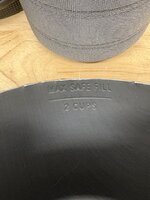
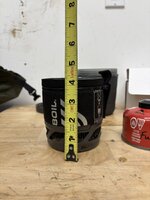
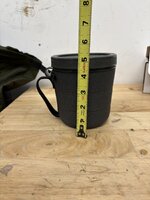
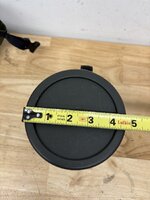
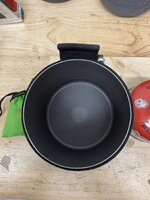
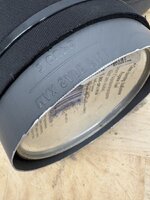
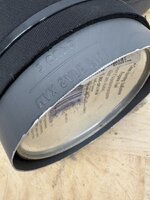
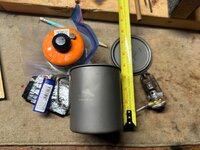
Hoping some of you guys can lend some insight. I’ve been using the toaks 750ml pot below, along with the snowpeak giga that I’ve had for well over 20 years, along with a small wind screen. Its pretty light and the whole kit pictured fits inside the pot, BUT it is slow as heck to boil compared to a jetboil or similar. I’m planning a backpacking trip with the wife, and considering getting a pot with a heat exchanger but not sure which pot or size. Apparently the jetboil pots are not available as parts, at least there are none on their website. Looking at fire maple or others.
My questions are:
-are the newer stoves going to make a difference, or is my current stove still more or less current? Fuel usage being chief consideration.
-looking at a fire maple most likely, heating water for 2 dehydrated meals—from a “how much fuel do I need to bring on a trip” perspective am I better off with a bigger (1.2l ish) pot, or sticking with a smaller pot and doing two boils?
View attachment 1037063
As
@35WhelenAI said, an HX pot will almost always be more efficient than a non-HX pot.
If you wade through my posts from Jan/Feb last year in this thread, you'll find links to some tests about relative performance.
Overall, it looks like the JetBoil Stash Pot is the most efficient. Their whole Stash system is expensive, and the burner is not as good as others, but you can order the pot as parts if you contact them directly - I think details of that are available earlier in the thread. From memory, when I spoke with them, it was only a little more expensive than the Fire Maple - or proportionately more, but still reasonable for a high-performing pot.
I didn't end up ordering one with the hassles of overseas phone calls; if I was doing this all over again from the beginning, I suspect I'd just go with a Stash Pot and Soto Windmaster.
However, the Windmaster plus Fire Maple Petrel G2 (larger than the G3) is a great combination.
I recently used the Windmaster plus Fire Maple Ramen pot, and wasn't hugely impressed by the boil time - but I haven't compared it directly to the G3, so I can' say definitively.
Note that the Ramen pot, although it has a clever slot system for both 3 and 4 prong bases, does not balance well at all on 3 prongs - it's own handle pulls it off balance (or did for me). So a 4-prong base is what you'd need, which adds a small amount of weight.
And if weight is not the issue, the MSR Reactor was far faster at boiling water. We had one of each at camp, so took to boiling in the Reactor, and then transferring the boiled water to the Ramen pot for cooking ramen and meals that needed regulated heat. Of course, the Reactor is no good for cooking meals, so the two complemented each other ... but we had a base camp that allowed us to have one of each.