How much is regrowth affected by the infusion of carbon and calcium as far as species distribution? Dont know much about soil make up out there or how potential ph and calcium shifts could impact regrowth. Controlled burns are a fantastic habitat management tool over here for deer and other wildlife.
Somebody had to ask..... Just kiddin'! Fire is mother nature's logging crew and like all logging, it can be done in multiple ways with multiple results - good and bad.
Fire science is a whole field unto itself. I am not a fire scientist. In college they offered degrees in Fire Management and Forest Management. Fire management was a lot more focused on weather, topography, rehab, and chemistry (nutrients). Forest Management focuses of putting that biomass the acre of ground can grow into usable tree trunks, how to measure those trees, and how to harvest those trees.
Short story from my basic knowledge from books and the field is: lots of nutrients can be released through fire (prescribed or wild) but nutrients can also be lost in a fire is too hot. Lost isn't necessarily the right word - made unavailable is a better way to look at it. When a fire is too hot the soil structure is changed (hydrophobic) and water will not permeate the soil for months/years. Water (inmost cases) is needed to transport nutrients into the roots for organic use. A hot fire can also volatilize nutrients into the air rather than leaving them in the soil, or form chemical bonds in the soil that makes the nutrient unavailable until further soil processes take place. In general, a moderate or low intensity wildfire does increase available nutrients - and also changes pH due to all the ash which changes what species are preferred for regrowth.
Lodgepole pine is a perfect example of how intensity of fire can impact regrowth. Certain genotypes produce cones that are sealed by resin (serotinous cones). Other stands do not produce serotinous cones. The heat needed to "open" those cones via melting the resin just happens to be the temperature of a cone laying on black charred organic matter or soot covered soil.
Assume three fire scenarios. (A) If a fire rages too intensely and too slowly (hot fire - no wind) through a stand of lodgepoles it consumes the cones and seeds - no natural regrowth until area is seeded from the edges. (B) If a fire flashes quickly (hot fire lots of wind) through the crowns often the cambium of the tree is cooked (=dead tree) and the needles are burnt off but the cones remain unhurt on the limbs - just covered in soot. Next windstorm breaks those little twigs - cones fall to earth - cone opens due to solar heating against the dark organic matter/soil. (C) ground fire (cool fire, slow moving) creeps in understory, creating black earth, but since the trees weren't killed no sunlight reaches the ground so natural reproduction is stunted.
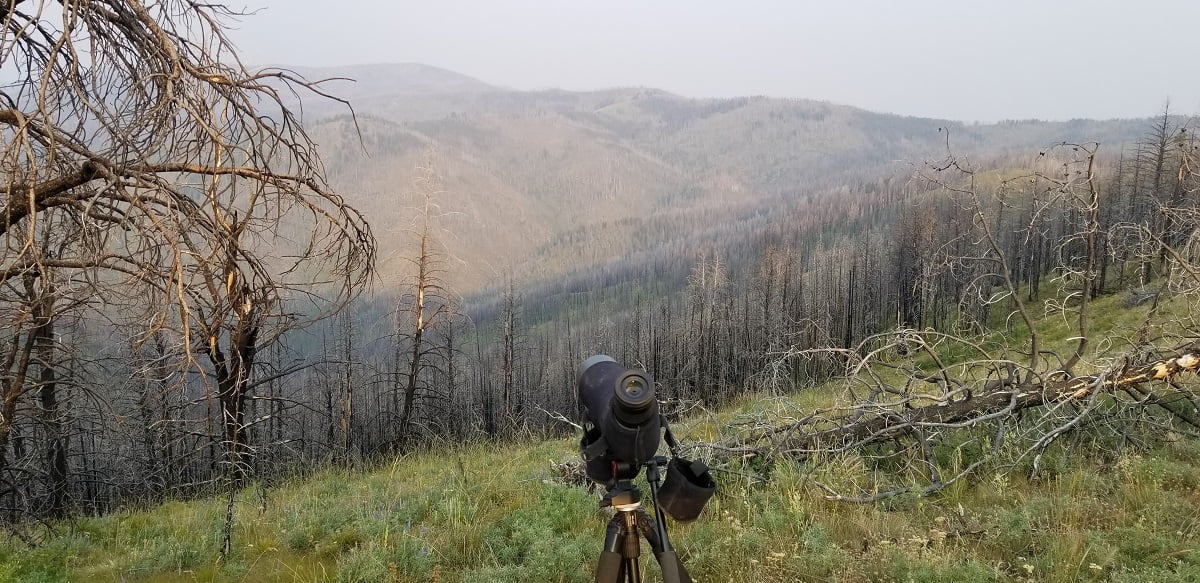
Best thing to happen after a fire is a huge windstorm! If those dead trees are laid down it creates microenvironments for future growth and the decomp process of the trunks benefits everything putting usable nutrients out of the trunks in the air back into the dirt and creating organic matter that makes the soil more absorbent and able to withstand droughts better. A tree standing up may take decades to break down organically, a tree laying on the ground in contact with the soil becomes mush in just a few years.
Excellent article for the science seekers:
soil nutrients and fire.




 If I ever run into people deep in a great spot, that's where they are from if they're from WA... or Monroe area.



