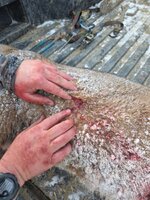
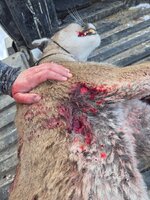
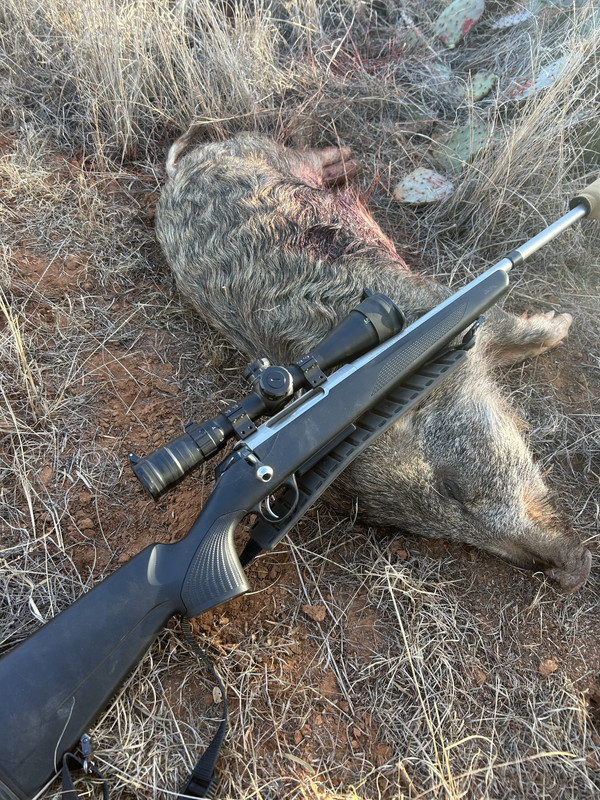
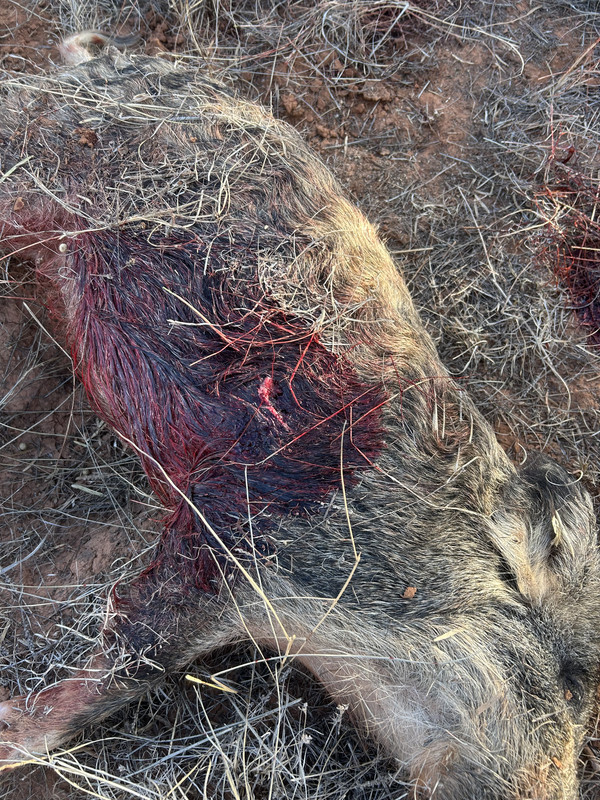
Smaller cull buck yesterday. Had one side of antlers all jacked up. 2835mv with 77 tmk. 100 yard shot. Double lung and had exit with blood trail. Ran 75 yards downhill and down.
Sorry if this has been discussed, but does anyone know if states like CO or WY will ever move away from their .24-caliber minimum on big game? I’d love to rebarrel my 6.5 creed to a 22 creed but I want a western hunting rifle that I can use in every western state (yes I know 6 creed would be the “easy button”.)
Sorry if this has been discussed, but does anyone know if states like CO or WY will ever move away from their .24-caliber minimum on big game? I’d love to rebarrel my 6.5 creed to a 22 creed but I want a western hunting rifle that I can use in every western state (yes I know 6 creed would be the “easy button”.)
Don’t hold your breath for states to loosen restrictions. There’s really only minimal difference between a 22 and 6 Creed in the field with a properly setup rifle.
Don’t hold your breath for states to loosen restrictions. There’s really only minimal difference between a 22 and 6 Creed in the field with a properly setup rifle.
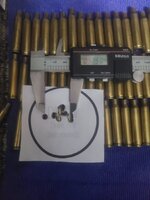
I have to agree. I had some 22 and 24 cal. bullets next to each other and could hardly tell the difference . The 68 gr. 22 cal match and a 24 cal. 75 gr. hollow point was so close I could hardly tell the difference.
I have to agree. I had some 22 and 24 cal. bullets next to each other and could hardly tell the difference . The 68 gr. 22 cal match and a 24 cal. 75 gr. hollow point was so close I could hardly tell the difference.
Sorry if this has been discussed, but does anyone know if states like CO or WY will ever move away from their .24-caliber minimum on big game? I’d love to rebarrel my 6.5 creed to a 22 creed but I want a western hunting rifle that I can use in every western state (yes I know 6 creed would be the “easy button”.)
Like you said 6cm is the easy button. Next easiest would be a 22cm stamped 6cm....grin. I'm sorta joking
I'm not advocating being an outlaw but if I had an itch to use a perfectly capable rifle/bullet and some pencil pushers thought I shouldn't I would struggle with that. I'm happy to use 6mm's because I like them too but if TN said I had to stop using 22's I'm pretty sure I could sleep at night if I continued to do so.
I was going to make a new post in the reloading section but I figured most of the .223 shooters are already here. Has anyone compared accuracy with bulk military brass vs higher quality brass like Lapua. Just curious as to how much of a difference it actually makes
I was going to make a new post in the reloading section but I figured most of the .223 shooters are already here. Has anyone compared accuracy with bulk military brass vs higher quality brass like Lapua. Just curious as to how much of a difference it actually makes
I've never used Lapua 223 brass but will as soon as I find a 30-32" Palma barrel. For service rifle (AR), I've gotten 4-5 firings on LC brass using book max of CFE223 under either hornady 75gr bullet. Accuracy is good enough I can call a shot within a half ring (1/4 MOA).
I was going to make a new post in the reloading section but I figured most of the .223 shooters are already here. Has anyone compared accuracy with bulk military brass vs higher quality brass like Lapua. Just curious as to how much of a difference it actually makes
I was going to make a new post in the reloading section but I figured most of the .223 shooters are already here. Has anyone compared accuracy with bulk military brass vs higher quality brass like Lapua. Just curious as to how much of a difference it actually makes
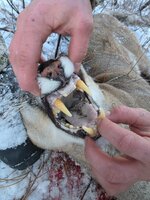
Not my cat but buddy used my gun. L/H tikka 223 was the right tool for the job. 73 eldm turns out to be a perfect lion bullet with minimal damage to hide & an unbelievably quick death- no time to fight the hounds.
I was going to make a new post in the reloading section but I figured most of the .223 shooters are already here. Has anyone compared accuracy with bulk military brass vs higher quality brass like Lapua. Just curious as to how much of a difference it actually makes
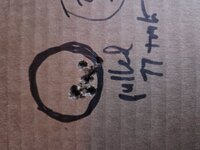
This is some once fired, processed LC brass that I bought cheap off the interwebs. Loaded with some pulled 77TMK. I simply primed and loaded the brass with 23.5 grains of 8208. Apparently it's a slow lot of powder but the accuracy surprised me for the minimal reloading effort. Edit to add: 10 shots
The 75gr ELD-Ms fueled by LVR just keep stacking things up. I got a rare pass through on a smaller pig yesterday (this was the second porker of the day.) Most of the time, the ELD-Ms enter and grenade.
The 75gr ELD-Ms fueled by LVR just keep stacking things up. I got a rare pass through on a smaller pig yesterday (this was the second porker of the day.) Most of the time, the ELD-Ms enter and grenade.
Sorry if this has been discussed, but does anyone know if states like CO or WY will ever move away from their .24-caliber minimum on big game? I’d love to rebarrel my 6.5 creed to a 22 creed but I want a western hunting rifle that I can use in every western state (yes I know 6 creed would be the “easy button”.)
Zero chance that Colorado loosens that restriction.
Wyoming allows .22 for deer, antelope, bear(?) and requires .24 for elk. I don't see that changing.
They have no incentive or real pressure to change. The vast majority of people think .223 is for varmints and have no idea about the bullets most often used in this thread.