I have a 20" T3x shooting the Unknown 77 TMK load with 8208 right at 2700fps. I called them a while back and IIRC, it was around that 23.5-24.0gr charge weight. I'd enter 2725 in your app and hope your impacts are a hair high! I have a pile of the components but haven't loaded any myself to match the unknown load. Its money, tho! And I have stretched it out plenty.I don’t have a chronograph, so I was just guessing based on what others have posted. I was going to see how high or low I was and tinker with the velocity to match the drop.

Navigation
Install the app
How to install the app on iOS
Follow along with the video below to see how to install our site as a web app on your home screen.
Note: This feature may not be available in some browsers.
More options
Style variation
You are using an out of date browser. It may not display this or other websites correctly.
You should upgrade or use an alternative browser.
You should upgrade or use an alternative browser.
.223 for bear, mountain goat, deer, elk, and moose.
- Thread starter PNWGATOR
- Start date

rclouse79
WKR
- Joined
- Dec 10, 2019
- Messages
- 2,343
I ended up going out to shoot and was high at 440. I bumped the velocity up to 2800 on the ab quantum app where I would have been on at that range. I tested it at 650 and was dead nuts. I was happy enough with the results that I took my main 270 hunting rifle in get a threaded 25-06 barrel put on it. If I have any troubles getting a load worked up for the new barrel I will just hunt with the 223 for the rest of bear season.I have a 20" T3x shooting the Unknown 77 TMK load with 8208 right at 2700fps. I called them a while back and IIRC, it was around that 23.5-24.0gr charge weight. I'd enter 2725 in your app and hope your impacts are a hair high! I have a pile of the components but haven't loaded any myself to match the unknown load. Its money, tho! And I have stretched it out plenty.
That's awesome! I think I'll be giving that 23.7gr charge weight a fair shake when I finally run out of the UM ammo!I ended up going out to shoot and was low at 440. I bumped the velocity up to 2800 on the ab quantum app where I would have been on at that range. I tested it at 650 and was dead nuts. I was happy enough with the results that I took my main 270 hunting rifle in get a threaded 25-06 barrel put on it. If I have any troubles getting a load worked up for the new barrel I will just hunt with the 223 for the rest of bear season.
Hey everyone,
I had an interesting experience this weekend hunting bears with an 80 ELDM that I thought I’d share. I found a bear at relatively short range and made a good shot. It was clear the bear was going down, but it didn’t react dramatically. It walked a short distance, fell over, rolled around a bit, and then, because we were on a steep hill, it managed to get back on its feet and started walking again. I took a second shot, and that caused the bear to run off. It eventually died, but it took some time to find it.
My main concern here is the lack of any sign to track. There was no blood trail, and despite being in a pretty open old burn, tracking was nearly impossible. The internal damage from the 80 ELDM was catastrophic, no question there, but the lack of a blood trail made recovery tough. This got me thinking about the suitability of the .224 bullets in different environments. In open terrain, it might be fine, but in thick, old-growth forest where I often hunt a lethally shot bear could easily vanish. Deer I’ve been able to track hooves, bears - not so much.
Speaking of deer, I used my 223 and 22 Creedmoor with 77TMK and 80 ELDM successfully on multiple deer last fall, and it performed well, but the same issue persists: minimal blood trails. It’s clear that the cartridge is lethal, especially with the right bullet, but the tracking challenge is significant.
So, I’m left wondering if my .224 rifles are best reserved for specific conditions. Do I need to choose my hunting grounds more carefully when using it? Are there any suggestions on overcoming this issue, like shot placement adjustments to drop the bear (or deer) more quickly? Obviously, at close range, a head or neck shot is possible, but at longer ranges, which is where, at least my 22 Creedmoor shines, a head shot isn’t ethical. And if I aim for the boiler room, it seems like I’m risking losing the bear in certain environments, potentially even a deer if I can’t pick up prints.
Would appreciate any thoughts or similar experiences!
I had an interesting experience this weekend hunting bears with an 80 ELDM that I thought I’d share. I found a bear at relatively short range and made a good shot. It was clear the bear was going down, but it didn’t react dramatically. It walked a short distance, fell over, rolled around a bit, and then, because we were on a steep hill, it managed to get back on its feet and started walking again. I took a second shot, and that caused the bear to run off. It eventually died, but it took some time to find it.
My main concern here is the lack of any sign to track. There was no blood trail, and despite being in a pretty open old burn, tracking was nearly impossible. The internal damage from the 80 ELDM was catastrophic, no question there, but the lack of a blood trail made recovery tough. This got me thinking about the suitability of the .224 bullets in different environments. In open terrain, it might be fine, but in thick, old-growth forest where I often hunt a lethally shot bear could easily vanish. Deer I’ve been able to track hooves, bears - not so much.
Speaking of deer, I used my 223 and 22 Creedmoor with 77TMK and 80 ELDM successfully on multiple deer last fall, and it performed well, but the same issue persists: minimal blood trails. It’s clear that the cartridge is lethal, especially with the right bullet, but the tracking challenge is significant.
So, I’m left wondering if my .224 rifles are best reserved for specific conditions. Do I need to choose my hunting grounds more carefully when using it? Are there any suggestions on overcoming this issue, like shot placement adjustments to drop the bear (or deer) more quickly? Obviously, at close range, a head or neck shot is possible, but at longer ranges, which is where, at least my 22 Creedmoor shines, a head shot isn’t ethical. And if I aim for the boiler room, it seems like I’m risking losing the bear in certain environments, potentially even a deer if I can’t pick up prints.
Would appreciate any thoughts or similar experiences!

rabbithuntr
WKR
I’m color blind so I’ve never been able to blood trail, the idea of a tracking dog does seem appealing but that does bring up another set of issues perhaps.Hey everyone,
I had an interesting experience this weekend hunting bears with an 80 ELDM that I thought I’d share. I found a bear at relatively short range and made a good shot. It was clear the bear was going down, but it didn’t react dramatically. It walked a short distance, fell over, rolled around a bit, and then, because we were on a steep hill, it managed to get back on its feet and started walking again. I took a second shot, and that caused the bear to run off. It eventually died, but it took some time to find it.
My main concern here is the lack of any sign to track. There was no blood trail, and despite being in a pretty open old burn, tracking was nearly impossible. The internal damage from the 80 ELDM was catastrophic, no question there, but the lack of a blood trail made recovery tough. This got me thinking about the suitability of the .224 bullets in different environments. In open terrain, it might be fine, but in thick, old-growth forest where I often hunt a lethally shot bear could easily vanish. Deer I’ve been able to track hooves, bears - not so much.
Speaking of deer, I used my 223 and 22 Creedmoor with 77TMK and 80 ELDM successfully on multiple deer last fall, and it performed well, but the same issue persists: minimal blood trails. It’s clear that the cartridge is lethal, especially with the right bullet, but the tracking challenge is significant.
So, I’m left wondering if my .224 rifles are best reserved for specific conditions. Do I need to choose my hunting grounds more carefully when using it? Are there any suggestions on overcoming this issue, like shot placement adjustments to drop the bear (or deer) more quickly? Obviously, at close range, a head or neck shot is possible, but at longer ranges, which is where, at least my 22 Creedmoor shines, a head shot isn’t ethical. And if I aim for the boiler room, it seems like I’m risking losing the bear in certain environments, potentially even a deer if I can’t pick up prints.
Would appreciate any thoughts or similar experiences!

- Joined
- Oct 22, 2014
- Messages
- 15,260
Hey everyone,
I had an interesting experience this weekend hunting bears with an 80 ELDM that I thought I’d share. I found a bear at relatively short range and made a good shot. It was clear the bear was going down, but it didn’t react dramatically. It walked a short distance, fell over, rolled around a bit, and then, because we were on a steep hill, it managed to get back on its feet and started walking again. I took a second shot, and that caused the bear to run off. It eventually died, but it took some time to find it.
My main concern here is the lack of any sign to track. There was no blood trail, and despite being in a pretty open old burn, tracking was nearly impossible. The internal damage from the 80 ELDM was catastrophic, no question there, but the lack of a blood trail made recovery tough. This got me thinking about the suitability of the .224 bullets in different environments. In open terrain, it might be fine, but in thick, old-growth forest where I often hunt a lethally shot bear could easily vanish. Deer I’ve been able to track hooves, bears - not so much.
Speaking of deer, I used my 223 and 22 Creedmoor with 77TMK and 80 ELDM successfully on multiple deer last fall, and it performed well, but the same issue persists: minimal blood trails. It’s clear that the cartridge is lethal, especially with the right bullet, but the tracking challenge is significant.
So, I’m left wondering if my .224 rifles are best reserved for specific conditions. Do I need to choose my hunting grounds more carefully when using it? Are there any suggestions on overcoming this issue, like shot placement adjustments to drop the bear (or deer) more quickly? Obviously, at close range, a head or neck shot is possible, but at longer ranges, which is where, at least my 22 Creedmoor shines, a head shot isn’t ethical. And if I aim for the boiler room, it seems like I’m risking losing the bear in certain environments, potentially even a deer if I can’t pick up prints.
Would appreciate any thoughts or similar experiences!
Bears don’t leave a blood trail frequently regardless of caliber. Some bleed a bunch, most don’t.
That has been my experience as well and so I’ve trended to big cartridges. They have died within sight or I’ve had blood or both. My sample of one bear isn’t significant and I’ll try again, but my deer were the same - no blood. All good in open country, but that’s not always where I hunt, so looking for suggestions. CNS the deer? Doesn’t seem to be commonplace for bears.Bears don’t leave a blood trail frequently regardless of caliber. Some bleed a bunch, most don’t.

Matt5266
WKR
If you want to follow a blood trail on a bear shoot them with a bow.

I have noticed the same. An exit hole is definitely preferable on bears. Hell, I’ve even lost one with a 300wsm and one with a 30nosler (almost two with the Nosler). Shot placement definitely helps. The largest bear blood trail I have ever seen was with a 30-06, and it was only an entrance wound, shot full frontal low in the chest at 30 yards. It’s a hard balance to find that right amount of expansion, penetration, and recoil.That has been my experience as well and so I’ve trended to big cartridges. They have died within sight or I’ve had blood or both. My sample of one bear isn’t significant and I’ll try again, but my deer were the same - no blood. All good in open country, but that’s not always where I hunt, so looking for suggestions. CNS the deer? Doesn’t seem to be commonplace for bears.
I have shot one deer with the 60gr nosler partition before knowing about this thread and the tmk/eldms. I got an exit and a good enough blood trail in red madrone leaves to find the deer. I’m sure it’s been discussed earlier in this thread, but what were your thoughts on the 60g partition in terms of expansion and penetration vs the TMK @Formidilosus ?
I’m never sure what my take-away from a comment like this is supposed to be? I have shot bears with bows and absolutely they bleed well. But how does that translate to a rifle, a small caliber, and longer range? Are you subtlety insinuating a big mono that will perform more like a broad head is better? Or?If you want to follow a blood trail on a bear shoot them with a bow.

- Joined
- Apr 29, 2023
- Messages
- 3,097
I think he meant it just as it reads. With a rifle, you aren’t “guaranteed” a blood trail. 223 works just as good as a 30 cal. If you shot a 30 cal, you wouldn’t be guaranteed a trail either.I’m never sure what my take-away from a comment like this is supposed to be? I have shot bears with bows and absolutely they bleed well. But how does that translate to a rifle, a small caliber, and longer range? Are you subtlety insinuating a big mono that will perform more like a broad head is better? Or?
Matt5266
WKR
No I'm simply stating I've shot bears with rifles and bows and I only really ever get a good blood trail when using archery tackle.I’m never sure what my take-away from a comment like this is supposed to be? I have shot bears with bows and absolutely they bleed well. But how does that translate to a rifle, a small caliber, and longer range? Are you subtlety insinuating a big mono that will perform more like a broad head is better? Or?
You wont catch me recommending monos.
KHntr
WKR
Or a spear… That will leave a pretty good blood trail too.If you want to follow a blood trail on a bear shoot them with a bow.
No doubt throwing razor blades through a bear makes for some good bleeding. But why is that? My guess is it's the hole in and out that changes "pressure" in chest cavity (deflating lungs) and also pushing blood out. One thing I've found with all my kills with the 77 and 80 is that when I get an exit it's the basically the size of the entry, they are (relatively) tiny holes.I think he meant it just as it reads. With a rifle, you aren’t “guaranteed” a blood trail. 223 works just as good as a 30 cal. If you shot a 30 cal, you wouldn’t be guaranteed a trail either.
If an arrow makes an 1" to 1.5" cut on the in and out and that leads to great blood trail, would it not follow that a bullet that opens more and exits would exhibit the same characteristics? A .308 isn't expanding to an 1", but it's certainly going to be a lot closer than a .224 isn't it?
Sadly I can't throw a spear at the distances I can accurately shoot a 223, but your arm might be better than mine...Or a spear… That will leave a pretty good blood trail too.
- Joined
- Oct 22, 2014
- Messages
- 15,260
No doubt throwing razor blades through a bear makes for some good bleeding. But why is that? My guess is it's the hole in and out that changes "pressure" in chest cavity (deflating lungs) and also pushing blood out. One thing I've found with all my kills with the 77 and 80 is that when I get an exit it's the basically the size of the entry, they are (relatively) tiny holes.
If an arrow makes an 1" to 1.5" cut on the in and out and that leads to great blood trail, would it not follow that a bullet that opens more and exits would exhibit the same characteristics? A .308 isn't expanding to an 1", but it's certainly going to be a lot closer than a .224 isn't it?
I’ve seen bears killed with .224, 6mm, 6.5mm, 7mm, 30cal, and 338. None have produced consistent blood trails. Even 300 mags producing 2-3” exit holes haven’t bled that much. Fat and hair absorb so much blood, that I didn’t use that as a factor for bears. I want to create massive damage in vitals and limit how far they run.
I’ve never killed nor seen a bear killed with a bow. I’ve seen two with a 300wm and neither produced particularly good blood trails.No doubt throwing razor blades through a bear makes for some good bleeding. But why is that? My guess is it's the hole in and out that changes "pressure" in chest cavity (deflating lungs) and also pushing blood out. One thing I've found with all my kills with the 77 and 80 is that when I get an exit it's the basically the size of the entry, they are (relatively) tiny holes.
If an arrow makes an 1" to 1.5" cut on the in and out and that leads to great blood trail, would it not follow that a bullet that opens more and exits would exhibit the same characteristics? A .308 isn't expanding to an 1", but it's certainly going to be a lot closer than a .224 isn't it?
I just chalked it up to fat filling the holes — but I assume it would do the same with arrows.
KHntr
WKR
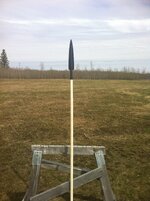
Stabbing spears, not throwing spears… Although a stabbing spear can be thrown accurately enough out to 9 yards.Sadly I can't throw a spear at the distances I can accurately shoot a 223, but your arm might be better than mine...
Before it became illegal in BC I spear hunted bears (successfully) some when I would find one in a good spot for the stalk.
Attachments
That’s badass.Stabbing spears, not throwing spears… Although a stabbing spear can be thrown accurately enough out to 9 yards.
Before it became illegal in BC I spear hunted bears (successfully) some when I would find one in a good spot for the stalk.

So far, my experience with 223 exits, when they happen, have often (not always) been similar to yours. I think that's just one of the tradeoffs. They absolutely kill very well, but good blood trails, IME, seem to be more frequent with various 30 caliber bullets - though not even close to 100% with those either.No doubt throwing razor blades through a bear makes for some good bleeding. But why is that? My guess is it's the hole in and out that changes "pressure" in chest cavity (deflating lungs) and also pushing blood out. One thing I've found with all my kills with the 77 and 80 is that when I get an exit it's the basically the size of the entry, they are (relatively) tiny holes.
If an arrow makes an 1" to 1.5" cut on the in and out and that leads to great blood trail, would it not follow that a bullet that opens more and exits would exhibit the same characteristics? A .308 isn't expanding to an 1", but it's certainly going to be a lot closer than a .224 isn't it?
From what I've seen here, it seems like if you want to maximize exit size from a 223, something like a Maker bullet moves in that direction. Maybe an 80 ELD-X would tend in that direction as well (?). Sounds like @Taudisio saw something similar from a Partition, at least in one case. Seems with almost all bullets of all calibers, there's a tradeoff between internal terminal performance and exits.
Similar threads


- Replies
- 37
- Views
- 3K



Featured Video
Latest Articles
- How to Kill Giant Bulls with Ryan Carter
- Kifaru Enters the Hunting Apparel Space: Review
- From Big Bucks to Bear Hunts: Catching Up with Jordan Budd
- Mule Deer Days Wildlife Conservation Mashup
- A Hidden Gem: Hunting Washington with Kari Thomas
- Prime Divide Bow Review
- Knowledge From Storms: Surviving and Thriving in the Backcountry with John Barklow
- DIY Wyoming Pronghorn Hunt
- Unlock Precision Shooting: Master Your Hunting Game with Competitive Insights
- Topo Topper Rincon Review