Who here doesn’t shoot beyond 300yrds ?

The cold bore challenge is a great data set for this. First round hits are iffy past 400 yards from field positions for most shooters.

Even for the guys who are not most shooters and practice LR regularly... how many of them can consistently make cold bore first round hits past 500 on a potentially moving MOA sized target while sleep deprived, wet and cold with an elevated heart rate from a field expedient position using a sane hunting rig? To my knowledge, there aren't a lot of shooting events in which guys are tested under those circumstances- despite the fact that some or all of those are present in almost every shot opportunity while backcountry hunting.
 
Even for the guys who are not most shooters and practice LR regularly... how many of them can consistently make cold bore first round hits past 500 on a potentially moving MOA sized target while sleep deprived, wet and cold with an elevated heart rate from a field expedient position using a sane hunting rig? To my knowledge, there aren't a lot of shooting events in which guys are tested under those circumstances- despite the fact that some or all of those are present in almost every shot opportunity while backcountry hunting.
When was the last time you hunted big game that had a 1 MOA vitals zone ?
 
When was the last time you hunted big game that had a 1 MOA vitals zone ?

Never because I set a personal MER of 350. But if you're shooting at a Pronghorn at 800 yards, even the edge of MOA could cause a shot that is bad enough to keep you from recovering.
 
Never because I set a personal MER of 350. But if you're shooting at a Pronghorn at 800 yards, even the edge of MOA could cause a shot that is bad enough to keep you from recovering.
Never… ‘cause there isn’t a game animal worth chasing that has an MOA sized vitals zone at 500 yards (your original yardage example)….

All of these hypotheticals and moral superiority soap boxes are great, but for the dudes that shoot a lot, keep track of their gear/fitness/rifle zero’s and dope….. it just isn’t that difficult to slip a bullet into the vitals on a deer, elk, goat, ram, bear at 600 and in.

Carry on with the mental masturbation quests though.

Tanner
 
Depends on where you hunt. For us that live out west and consistently hunt open sage country longer shots sometimes happen. Most shots are 100-250 for me, but sometimes shots in the 450-500 yd range open and you can't do anything about it.
 
Do you understand what migratory mule deer are?
I do. Mule deer are considered migratory by wildlife biologists if they make distinct, seasonal movements between summer and winter ranges, with distances ranging from less than 10 miles (referencing some herds in Oregon) to over 150 miles (referencing some herds in Wyoming). All of the mule deer herds I've hunted in California, Utah, and Colorado fit that academic definition of a migratory mule deer herd.
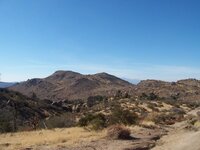
Do I think the mule deer that use the ground in the photo I posted are different then your mule deer? Yes, the fact that they are migrating and dont live where I am hunting them makes the situation infinitely different than hunting resident mule deer.
The herd that uses the terrain in my photo is a migratory mule deer herd, having distinct summer and winter ranges. The center of the summer range is 17.5 miles from the center of the winter range and there's a difference of 3,000' in elevation between them. When on the winter range, the herd doesn't "live" within the frame of my photo any two consecutive days in a row. It does a 64 mile round trip that takes an average of 21 days to complete as it covers an average distance of 3 miles per day. The other migratory herds I've hunted in California, Utah, and Colorado use winter range in a similar way.

You would apparently have us believe that your migratory herd is on some kind of 100 mile non-stop trip and can't be re-connected with because of this. Mule deer biologists from your own state of Wyoming would say that it isn't.

Spring migration takes mule deer 3 to 28 days to complete, with 15 days being the average across populations throughout mule deer country. Fall migration takes 3 to 38 days with a 17 day average across populations throughout mule deer country. According to your Wyoming Game and Fish Department, herds having summer range inside Yellowstone National Park and winter range around Cody take an average of 38 days to get from summer range to winter range, making their seasonal migration among the longest in mule deer country.

While bucks can travel up to 10 miles in a day and does and fawns up to 9, the average daily mileage for migratory mule deer throughout mule deer country is 3 miles. According to your own Wyoming Game and Fish department, that behavior applies to the migratory herds that have their summer range in Yellowstone National Park, as well. Those "three miles" are generally bracketed by "stopover areas" that migratory mule deer will linger in for 1 to 3 days before moving on with the next leg of their journey. Mule deer typically cover relatively short daily distances during migration and spend up to 95% of their total transit time lingering in stopover habitat as an instinctive energy conservation mechanism.

Studies conducted by state wildlife agencies in Oregon, Utah, California, Idaho, and Wyoming have concluded that a mule deer herd will spend about 25 days in "stopover habitat" out of a 38-day migration trip.

If your herd is one that winters around Cody, the findings of those studies apply to it as much as long-distance migrating herds in other states.
You want me to go into Yellowstone park to pattern deer where I cant hunt them?

No. I wanted to offer a counter-point to statements of yours like these:

I repeatedly see a lot of guys on here saying the same. 300 yards and in, just get closer ect. I thought that way for a while too until I realized if I dont learn to shoot farther and get proficient dialing, I am not going to kill anything very often. The terain in NW Wyoming just doesnt allow it. You could wind up close to an animal, but more often than not, you wont.
But if you think you are going to consistently kill migratory animals at 300 and in, your being dishonest or you just dont get it.
Hunting migratory mule deer, there is no catching up to them when they are moving,
If I am "clueless" for rejecting the veracity of the statements above, so are the majority of wildlife biologists studying migratory mule deer in multiple states.

According the THEM, your herd spends about 25 days out of a 38-day migration essentially going nowhere, and is only going to move an average of 3 miles per day between "stopover habitat" where it will linger from 1 to 3 days before embarking on the next leg of its migratory journey. Statistically speaking, when your herd breezes through your drainage, it isn't likely to travel more than three sections on a topo map before it stops.

Mule deer are renowned for their engagement in crepuscular activity and thus equally renowned for spending most of their mid-day hours and some of their night-time hours bedded down. Their status as "resident" or "in transit" or "on seasonal range" doesn't change that.

All mule deer, whether engaged in seasonal migration or not, sleep an average of about 4.5 to 5 hours in a 24 hour period, That sleep is spread out over multiple sessions, whether they're migratory, or not. As temps drop, all mule deer exhibit a strong propensity to do their bedding on south-facing slopes, whether they're migratory, or not, and they do that because south-facing slopes receive the first and most intense sunlight, aiding in melting snow and keeping the ground drier and softer.

You would have us believe that there are no primary or secondary bedding areas within 3 miles of the drainage in your photo, even though the body of research conducted by wildlife management agencies in multiple states, including Wyoming, doesn't support that notion

Mule deer can travel up to 3 miles for water, but all mule deer, migratory or not, need to consume a half-gallon of water for every 100 pounds of body weight per day and thus no mule deer, whether resident or migratory, likes to be more than 1.5 miles away from standing water at any time.

"Mule deer exhibit remarkable fidelity to seasonal ranges and migration routes" (Sawyer etal 2019, Wheat and Whittaker 2023). According to all three, that "remarkable fidelity" includes the utilization of the same "stopover habitat," year after year, and lingering for about the same amount of time in each stopover area, year after year.

You would have us believe your particular migratory herd doesn't exhibit this commonplace "remarkable fidelity" and it can't be "patterned" in its transit corridor zone because of that.

"Rarely do they deviate from their route, even when encountering disturbance or when alternative routes exist (Wycoff et al. 2018, Sawyer et al.2019)." That lack of deviation includes the stopover habitat.

You apparently want us to believe that your herd exhibits behavior that no other migratory mule deer herd exhibits; that it doesn't travel a relatively short distance between stopover areas that it lingers in for 1 to 3 days, like every other migratory mule deer herd does when in transit between seasonal ranges. You apparently want us to believe that it doesn't have the same renowned fidelity to all aspects of its migration that every other migratory mule deer herd exhibits and that it doesn't have the same needs for standing water sources and bedding areas that every other migratory mule deer herd has.

Migratory mule deer are generally considered by hunters to be more difficult to "pattern" than resident deer are, but basic mule deer biology doesn't support the idea that "patterning" them is impossible, even in transit corridor zones between seasonal ranges.

In contrast with your opinion on the matter, every one of the wildlife biologists I have spoken to believe that resident mule deer in high-pressure areas are the most difficult to "pattern" and hunt, with a sudden influx of hunters causing them to interrupt crepuscular activity and become "ghosts" that only move at night, making them more challenging to hunt than any migrating herd engaged in normal crepuscular activity is.

Basic mule deer biology definitely doesn't support the notion that re-connecting with a migrating herd is as impossible as you would have us believe it to be, even if you're hunting a transit zone between seasonal ranges. It says that a migratory herd will spend up to 95% of its transit time not actually going anywhere, and when they are going somewhere, it says that they're moving at an average rate of just 3 miles per day.

 

Attachments

  • Luna Mountain.jpg
    Luna Mountain.jpg
    71.3 KB · Views: 20
  • PIGS SLO 2.jpg
    PIGS SLO 2.jpg
    57.5 KB · Views: 20
Never… ‘cause there isn’t a game animal worth chasing that has an MOA sized vitals zone at 500 yards (your original yardage example)….

All of these hypotheticals and moral superiority soap boxes are great, but for the dudes that shoot a lot, keep track of their gear/fitness/rifle zero’s and dope….. it just isn’t that difficult to slip a bullet into the vitals on a deer, elk, goat, ram, bear at 600 and in.

Carry on with the mental masturbation quests though.

Tanner
My dad only shot a couple of deer at under 400 yards. Most of the deer he shot were over 400 and he had zero problem pulling the trigger out to 660. He was one of those "dudes" that shot A LOT from field positions out to 600 yards and he was really good at doping wind.

My dad liked commanding-vista kinds of spots in wide open terrain because he couldn't miss the herd moving through them.

That mattered to him, because he could only hunt on the weekends, and very often couldn't hunt all of them in a season. For him, with the time constraints he had, a commanding perch from which to shoot from 660 yards and in was the most efficient means of filling his tag.

I don't see anything immoral or unethical in my dad's approach. In there here and now, a lot of folks hunt like my dad did and prepare for it like he did and get the same "one and done" results he did. They're not going around wounding game by default because they're shooting at over 400 yards, any more than my dad was.
 
it just isn’t that difficult to slip a bullet into the vitals on a deer, elk, goat, ram, bear at 600 and in.

Dang that's sick! Just for this thread's collective learning experience, how about posting a video of you consistently hitting a 6" target at 600? You mention that fitness is pretty easy too- how about breaking your cold bore shot within 30 seconds of finishing a mile run?

Can't wait to see!
 
Interesting thoughts across the board. I’m in the boat where terrain and conditions matter more than the distance boundary. But in general, the closer the better. The more sure the shot the less wasted time, effort, blood, sweat, and tears. I set a personal best this year with a 7 yard shot. Turns out you can kill em with an open sight 30-30 still.
 
I shot a buck antelope at ~25 ... sucker was running right at me, and I wasn't sure he was gonna stop. .30-06 and 180 accubonds was overkill.

Should have Glocked him... just for the street cred.
 
  • Haha
Reactions: RME
Dang that's sick! Just for this thread's collective learning experience, how about posting a video of you consistently hitting a 6" target at 600? You mention that fitness is pretty easy too- how about breaking your cold bore shot within 30 seconds of finishing a mile run?

Can't wait to see!
I’d love to know how either of those are a necessary part of killing animals with a 2 MOA kill zone at 600 yards. I’m sure you have run a mile before killing lots of critters in the mountains…


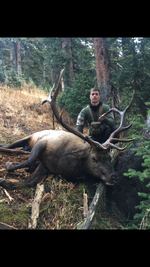
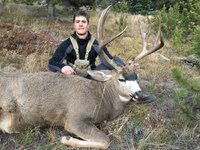
More mental masturbation. It’s all you know, so carry on… here’s a couple animals taken at 525-550 at just shy of 12,000 feet in the same week. Fitness not required, rode my Segway right up to em.

IMG_6860.png
IMG_6750.jpeg
 
I’d love to know how either of those are a necessary part of killing animals with a 2 MOA kill zone at 600 yards.


I think most ethical hunters would say that missing by half a foot or more is not acceptable- you know, because that frequently means either spining an animal, shooting it through the guts or missing completely. Guess that's no sweat in your book, though.

Also, you're the one lecturing the thread about "mental masturbation" while posting hero pictures of yourself on the internet for strangers 😂
 
I think most ethical hunters would say that missing by half a foot or more is not acceptable- you know, because that frequently means either spining an animal, shooting it through the guts or missing completely. Guess that's no sweat in your book, though.

Also, you're the one lecturing the thread about "mental masturbation" while posting hero pictures of yourself on the internet for strangers 😂
I think you are way off the mark here.
 
I think most ethical hunters would say that missing by half a foot or more is not acceptable- you know, because that frequently means either spining an animal, shooting it through the guts or missing completely. Guess that's no sweat in your book, though.

Also, you're the one lecturing the thread about "mental masturbation" while posting hero pictures of yourself on the internet for strangers 😂
Everything seems difficult to guys that would rather yap and lecture than just go out and actually shoot and see for themselves how simple it is to become proficient at range.

Bottom line is, you know not of which you speak and it’s apparent by the straws being grasped at and absurd hypotheticals tossed around.

Now about that mile run…
 
Dang that's sick! Just for this thread's collective learning experience, how about posting a video of you consistently hitting a 6" target at 600? You mention that fitness is pretty easy too- how about breaking your cold bore shot within 30 seconds of finishing a mile run?

Can't wait to see!

I sat next to him two week ago while he cold-bore hit an 8" plate at 545 yds, then followed it up with three more hits in a row. That was from seated supported. Winds were variable, .5-1 mil holds if I remember right (7-15 mph), rolling sage/mountain terrain at 8,000 ft after hiklng around making a few sets for coyotes. Not quite the gauntlet you threw down, but then again if someone has to run a mile on a backcountry hunt then shoot things have gone horribly, horribly wrong. And it was not the original premise of the thread.

Not everyone on Rokslide is a CPA with a western hunting hobby that makes them the office badass. You might just find yourself interacting with guys who live, breath, and eat western mountain hunting at a very high personal and professional level.
 
I “may” have shot 5 animals out to 250. That’s being generous. Probably 90% of the animals I have shot have all been under 100yds with a lot being less than 50yds. I’d certainly like to have the opportunity to have try some longer range shooting.

With a few trips that I had out West, I certainly could have benefited a LOT from some confidence shooting out to 400yds.
 
I haven't read through every reply to this thread but whatever the lowest max range is that someone has posted, mine is inside that. In fact, I take all my shots after doing 3 miles of parkour to get to my shooting spot so shooting past my very close max range would be unethical. And that standard applies to everyone else too.
 
those who have put in the work and are confident to 6-700 yards, but I’m not taking a 600 yard shot, and I suspect 90% of hunters should not.
This right here with a proviso:

smacking anywhere on steel at 600+ is not the same as being capable of ethically killing an animal at 600+. Which means "confidence" could be unfounded.

EC's Ethical Hunter challenge proves how few are capable of this. I will, however, concede that a deer's vital area is larger than 1moa @500. But it does highlight the massive gap between a 1MOA rifle at 100 and a 1MOA rifle/shooter at 500+.
 
Back
Top