- Joined
- Oct 22, 2014
- Messages
- 15,237
Shoot2Hunt held a Winter version of the 0-600 Yard Hunting Course last week. Below will follow some of the notable experiences/information.
@Tommyhaak, @WDO, @Nine Banger, @RancherJohn, @Cliff Gray, @longrangelead, @Livinfree77, @nephewjephew, @24valve
Were all in attendance and I hope they share their observations.
Weather for the week:
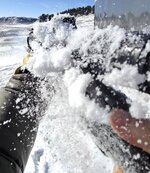
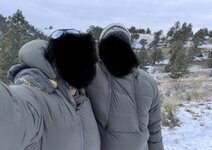
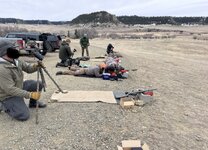
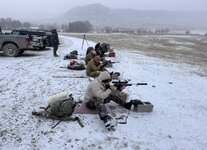
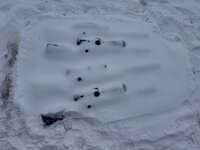
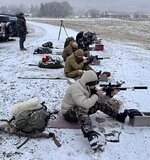
The first couple of days was warm- 50° F and windy. Then the temps dropped on day 3 or 4, and it snowed approx 5”, and got to below 0° F for lows. Highs those days were single digit or in the teens.
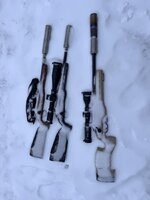
Early in the week-
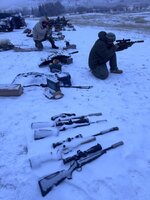
Middle of the week-
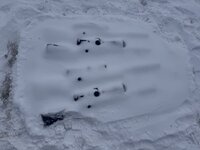
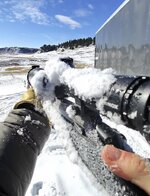
Later-
Equipment and training:
This was class was a mixed bag of conditions. Not nearly the cold and snow of last years, but the rapid and dramatic change caused issues all its own.
Most do not, shoot, backpack camp, or hunt in real winter conditions, though many claim to. This is reflected in their belief about equipment, clothing, rifles/optics, packs, etc. that fall flat when tested. Those I hunt with do- to the tune of 20,000+ rounds a season, and we have killed 15-20 elk and near countless deer in deep winter conditions.
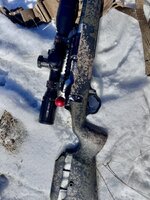
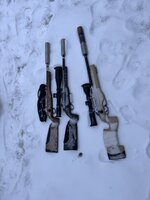
Most used Tikka’s, however there were two R700 pattern rifles, one MRC Marshall, and three UM/S2H Raven actions used. Also a Blaser R8 for a bit.
Everyone got to see in real life the difference in rifle platforms when actually used in the field.
Clothing:
This class had a heavy trend of natural material clothing more than last years. Wool sweaters and pants were common, and it was a veritable Ranger Sweater convention.
Base layers were mostly standard wool, with a couple woolnets.
There were a few proto true winter down parkas for people to wear and try. 24oz in a true large, 14oz down. Specifically made to work with a bino harness. There is nothing like them on the market. A true one and done cold weather jacket. The general response was “this fuggin thing is awesome/the best I’ve ever worn”.
Much like last year, wool, down, waxed cotton, and Ventile cotton materials seemed to rule the roost. There were synthetics of the standard Kuiu, Stone Glacier, etc persuasion; but overall the materials seemed to show as good or better performance.
Feet:
Foot issues were way less this year- partly due to less extreme weather, but mostly due to most people having Mukluks, or Vivo Tundras. Even on the days with single digit or negative temps, those with Mukluks and Tundras were completely fine. A few tried their regular shoes/boots a couple days where we were moving more, but most had to swap back to the Mukluks/Tundras.
The Vivo Barefoot Tundra ESC’s are likely the best choice overall for warmth and traction. They are not quite as good as the Steger Arctic due to a very thin sole, but are about the same as the standard Mukluks they make. I will try a foam footbed that can be slipped in for when I am stationary for long periods. They weren’t cold ever, but the sole would get cool when standing on ice for long periods without moving.
Socks are best when fluffy and thicker, and boots must be loose enough all-round to not squish your feet at all. Good fluffy merino works fine. Alpaca, and Camel wool are better, and several had the Mongolian versions.
Baselayers:
No surprises here- synthetic dries faster, merino is warmer and more comfortable. Woolnet generally is the best of both worlds. The layer touching one’s skin needs to be extremely thin for quick drying. Most seemed to be wearing regular merino base layers, and really their issues came in the rewarming drill.
Outer layer:
Most seemed to be using Fjallraven Keb Trousers, or other wool pants such as the Varustaleka TST’s, Big Bills, and Micklegaard.
A few wore shells are, but they lose water repellency very quickly, and so not dry out all that fast. The Kebs are great with the G1000 waxed canvas portions, but are a bit thin for below 0° F use. The modern wool pants are the best overall pants that I have seen for below 45° F or so. Very warm even when wet, breath well, fit well, durable.
Mid layers:
A mix of synthetic and wool fleeces, but a lot of wool sweaters. Almost everyone had and wore woolen sweaters this year and I think most were very pleased with them. There were 5 or 6 people that wore the Atlantic Rancher Ranger Sweater- still the best sweater I’ve seen and used.
We generally see people that live and work in very cold winter conditions (I.E. Finland, Scandinavia, etc.) trend towards wool sweaters for a top mid layer.
There are several reasons for that. One is just simple longevity and durability- lots of “lightweight” backpacking and hunting clothing have relatively short lifespans/usefulness. Good natural materials just last year after year- quality wool sweaters last years/decades.
As well, they are more comfortable- especially under other layers. They feel less clammy when damp, they breathe very well, they don’t stink, they are more comfortable in a broader range of weather, warmer, etc, etc.
Not to be misunderstood- modern synthetic clothing definitely has its place and uses, but it is a far more narrow range of uses than marketing and people try to push. For extremely high exertion, short duration use- it works very well. For continuous living in, and thriving in the elements- not as well.
Insulation/puffy layers:
Both synthetic and down were used and there were a variety of brands/makes/models.
Despite marketing and common belief, synthetic is not all around superior to quality down. Synthetic is less warm, heavier, bulkier, and with a drastically shorter lifespan for full insulation. The lifespan of a synthetic puffy is measured in weeks, not months or years when used everyday- they lose loft very, very quickly. What they are good at is durability with tears and rips- so for range use that is what I/we tend to use.
Several used surplus US military ECWS puff jacket and pants. They are heavy and bulky and lose half their loft pretty quickly, but can get beat up all day every day and not get shredded. For the general training/shooting they are a good choice.
For actually carrying and using when hunting/backpacking, good quality down is far superior.
This class predominantly used down insulation from a variety of makers.
A note on insulation- there’s a very large difference between “warm when moving, or stationary for short periods”, and “warm when stationary for long periods and living in it”. You need far more insulation for all day comfort than most jackets/pants. A jacket with 5oz of down fill with a base layer and a fleece isn’t working for 0° F weather all day. For true cold weather 10+ ounces of high quality down in a parka is required.
I have been trying to get a purpose built puffy jacket made for years. @Ryan Avery and I have been working with a company for over a year now, and we had 5 proto jackets to be used for the class- 1x gen 1, and 4x gen 2’s.
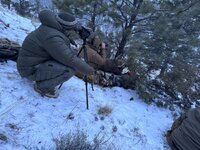
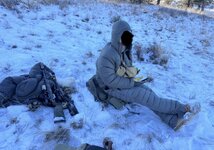
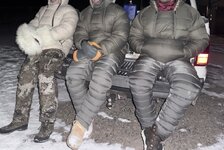
The jackets designed as they should be- cut long in front and back with a long tail, made specifically to go over a bino harness and allow access to it, kangaroo pocket on front for hands, real hood that stays in place, etc. 14oz high quality down, and weighs 24oz in true large. These aren’t just for “extreme conditions”. They work great in anything from 40’ish degrees and below for static use. And they allow the ridiculous 26 layers of clothing nonsense to stop- base layer, mid layer, puffy. Done.
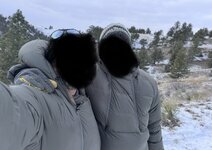
White in front, and dark grey back left-
As you can see here- not riding up in the back:
Bino harness exposed-
Gen 1 is white/cream, the greys are all Gen 2-
@Tommyhaak, @WDO, @Nine Banger, @RancherJohn, @Cliff Gray, @longrangelead, @Livinfree77, @nephewjephew, @24valve
Were all in attendance and I hope they share their observations.
Weather for the week:
The first couple of days was warm- 50° F and windy. Then the temps dropped on day 3 or 4, and it snowed approx 5”, and got to below 0° F for lows. Highs those days were single digit or in the teens.
Early in the week-
Middle of the week-
Later-
Equipment and training:
This was class was a mixed bag of conditions. Not nearly the cold and snow of last years, but the rapid and dramatic change caused issues all its own.
Most do not, shoot, backpack camp, or hunt in real winter conditions, though many claim to. This is reflected in their belief about equipment, clothing, rifles/optics, packs, etc. that fall flat when tested. Those I hunt with do- to the tune of 20,000+ rounds a season, and we have killed 15-20 elk and near countless deer in deep winter conditions.
Most used Tikka’s, however there were two R700 pattern rifles, one MRC Marshall, and three UM/S2H Raven actions used. Also a Blaser R8 for a bit.
Everyone got to see in real life the difference in rifle platforms when actually used in the field.
Clothing:
This class had a heavy trend of natural material clothing more than last years. Wool sweaters and pants were common, and it was a veritable Ranger Sweater convention.
Base layers were mostly standard wool, with a couple woolnets.
There were a few proto true winter down parkas for people to wear and try. 24oz in a true large, 14oz down. Specifically made to work with a bino harness. There is nothing like them on the market. A true one and done cold weather jacket. The general response was “this fuggin thing is awesome/the best I’ve ever worn”.
Much like last year, wool, down, waxed cotton, and Ventile cotton materials seemed to rule the roost. There were synthetics of the standard Kuiu, Stone Glacier, etc persuasion; but overall the materials seemed to show as good or better performance.
Feet:
Foot issues were way less this year- partly due to less extreme weather, but mostly due to most people having Mukluks, or Vivo Tundras. Even on the days with single digit or negative temps, those with Mukluks and Tundras were completely fine. A few tried their regular shoes/boots a couple days where we were moving more, but most had to swap back to the Mukluks/Tundras.
The Vivo Barefoot Tundra ESC’s are likely the best choice overall for warmth and traction. They are not quite as good as the Steger Arctic due to a very thin sole, but are about the same as the standard Mukluks they make. I will try a foam footbed that can be slipped in for when I am stationary for long periods. They weren’t cold ever, but the sole would get cool when standing on ice for long periods without moving.
Socks are best when fluffy and thicker, and boots must be loose enough all-round to not squish your feet at all. Good fluffy merino works fine. Alpaca, and Camel wool are better, and several had the Mongolian versions.
Baselayers:
No surprises here- synthetic dries faster, merino is warmer and more comfortable. Woolnet generally is the best of both worlds. The layer touching one’s skin needs to be extremely thin for quick drying. Most seemed to be wearing regular merino base layers, and really their issues came in the rewarming drill.
Outer layer:
Most seemed to be using Fjallraven Keb Trousers, or other wool pants such as the Varustaleka TST’s, Big Bills, and Micklegaard.
A few wore shells are, but they lose water repellency very quickly, and so not dry out all that fast. The Kebs are great with the G1000 waxed canvas portions, but are a bit thin for below 0° F use. The modern wool pants are the best overall pants that I have seen for below 45° F or so. Very warm even when wet, breath well, fit well, durable.
Mid layers:
A mix of synthetic and wool fleeces, but a lot of wool sweaters. Almost everyone had and wore woolen sweaters this year and I think most were very pleased with them. There were 5 or 6 people that wore the Atlantic Rancher Ranger Sweater- still the best sweater I’ve seen and used.
We generally see people that live and work in very cold winter conditions (I.E. Finland, Scandinavia, etc.) trend towards wool sweaters for a top mid layer.
There are several reasons for that. One is just simple longevity and durability- lots of “lightweight” backpacking and hunting clothing have relatively short lifespans/usefulness. Good natural materials just last year after year- quality wool sweaters last years/decades.
As well, they are more comfortable- especially under other layers. They feel less clammy when damp, they breathe very well, they don’t stink, they are more comfortable in a broader range of weather, warmer, etc, etc.
Not to be misunderstood- modern synthetic clothing definitely has its place and uses, but it is a far more narrow range of uses than marketing and people try to push. For extremely high exertion, short duration use- it works very well. For continuous living in, and thriving in the elements- not as well.
Insulation/puffy layers:
Both synthetic and down were used and there were a variety of brands/makes/models.
Despite marketing and common belief, synthetic is not all around superior to quality down. Synthetic is less warm, heavier, bulkier, and with a drastically shorter lifespan for full insulation. The lifespan of a synthetic puffy is measured in weeks, not months or years when used everyday- they lose loft very, very quickly. What they are good at is durability with tears and rips- so for range use that is what I/we tend to use.
Several used surplus US military ECWS puff jacket and pants. They are heavy and bulky and lose half their loft pretty quickly, but can get beat up all day every day and not get shredded. For the general training/shooting they are a good choice.
For actually carrying and using when hunting/backpacking, good quality down is far superior.
This class predominantly used down insulation from a variety of makers.
A note on insulation- there’s a very large difference between “warm when moving, or stationary for short periods”, and “warm when stationary for long periods and living in it”. You need far more insulation for all day comfort than most jackets/pants. A jacket with 5oz of down fill with a base layer and a fleece isn’t working for 0° F weather all day. For true cold weather 10+ ounces of high quality down in a parka is required.
I have been trying to get a purpose built puffy jacket made for years. @Ryan Avery and I have been working with a company for over a year now, and we had 5 proto jackets to be used for the class- 1x gen 1, and 4x gen 2’s.
The jackets designed as they should be- cut long in front and back with a long tail, made specifically to go over a bino harness and allow access to it, kangaroo pocket on front for hands, real hood that stays in place, etc. 14oz high quality down, and weighs 24oz in true large. These aren’t just for “extreme conditions”. They work great in anything from 40’ish degrees and below for static use. And they allow the ridiculous 26 layers of clothing nonsense to stop- base layer, mid layer, puffy. Done.
White in front, and dark grey back left-
As you can see here- not riding up in the back:
Bino harness exposed-
Gen 1 is white/cream, the greys are all Gen 2-