So for all you rattlesnake experts out there, maybe you can clear something up for me. It seems like I've heard conflicting information about just how bad rattlesnake bites are for humans. In the past, I thought everyone sounded like it was a death sentence. Now, it seems like more people seem to be saying that the bite isn't that bad and very few are actually fatal. Which is it? I understand that a lot of it depends on whether or not you actually get venom and how much, but is that all it is? If you really get popped by one with an average amount of venom are the odds against you?
This is a great question, and I suppose the best answer is "it depends". As you mentioned sometimes it is a "dry bite" and no venom. Consider the subspecies as well since some have neurotoxins in their venom! Also the location on the body of the bite (proximity to heart, major arteries, etc.) Also the size of the person, and their body's unique circulation system. Next is the proximity to help.
Modern technology and the ability to generally get to medical Aid within "the Golden Hour" has most likely saved a lot of people and/or their extremities which could have been lost to the bite if left untreated for an extended time.
Many people who live in the flatter, more settled portions of the US just don't understand how far from help someone can be out west in snake country. Imagine being 10-30 miles on foot into a 3000' deep basalt canyon, hours from any kind of cell service, or even from a place a helicopter can land, and getting a full on bite from a rattler! My Garmin inReach is half the reason I feel safe going such places solo, and it still isn't a guarantee!
I grew up near Imnaha Oregon, look it up

My half brother is from Arizona and lives out of a bedroll with his horse there (there's more than 13 species of Rattler in Arizona). He spent one summer at Imnaha and said "you have the most, and the nastiest pile of rattlesnakes I have ever seen".
I heard enough stories and saw enough snakebit tombstones as a kid to know they are no joke. In 39 years I have only ever let 2 snakes "walk". One I stepped over archery hunting got a pass for not biting me, and another was in a spot where I couldn't safely dispatch him. Non-venomous snakes always get a pass, and bull snakes are appreciated for what they do!
I highly recommend having plenty of good dogs around if you live in snake country, especially with children. Our border collie saved us from several instances where we would have most likely gotten bit. He would growl or bark and point out rattlesnakes, knowing instinctually they were dangerous.
I do not understand how anyone can give a venomous snake a pass in any place a kid may walk an hour, day or month later. The world has plenty of them, why allow the risk!


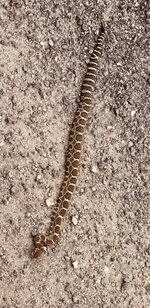

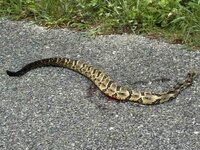

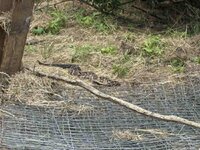


 had one at our local 3d range a few years ago, my buddy overshot a target and we were searching for his arrow, staring at the ground, beating brush, I found his arrow, reached down to pick it up and only then did the snake 6 inches from his arrow decide it should rattle at me. I about had a heart attack. He could’ve kept that arrow had he let me know ahead of time.


