PRS scope that passes drop eval?

This is a valid thing to want, however i postulate that its an unnessary thing on a PRS rifle and as such, its not expected that a match rifle/scope that weighs 26 lbs should have to also withstand a 3 foot drop. And if you ever did drop your rifle at a match... you could just go re-check zero...My point is that there are plenty of scopes that dont "pass the drop eval" but will easily make it through a PRS match. Im never not checking zero at the start of a match. Im never dropping my rifle in a match. If for some reason my rifle sustained an impact... id just go check it. The minimum standard are just so different.
IME, that's not always possible. I've been shooting PRS-style matches since soon after their inception. A zero board and its accessibility and the time needed to check zero depend on the match, its layout, and its cadence. I would also argue that it's common for the front of rifles to slip off of sloped and awkward barricades, so they get bumped a lot.

the dropping portion of the tests and the road work portions of the tests really only test the Zero retention. Tracking is uneffected.

If you are losing zero on your rifle with 100 shots, you need to look into a different caliber/brake/chassis combination. Most competitive PRS rifles weigh in the 20+ range and are shooting 6mm projectiles with massive brakes....there is virutally no recoil.

Additionally, I dont know what matches you are shooting, but your bumps into baricades shouldent be throwing off your zero while you are shooting your stage. This is likely a an issue with how youre approching/building positions or perhaps a ring failure?

Last, why are you driving on gravel roads between stages?
Tracking can definitely be affected by dropping and rough roads. Lenses can shift and reticles can cant, causing tracking issues.

No. I've seen multiple scopes with shifting zeroes at matches caused by shooting, not drops. Braked rifles have a different recoil impulse function than unbraked rifles, but they still subject the scope to forces and acceleration. Not only that, but a loss of zero can sometimes be the result of the scope's failure to properly RTZ when dialed.

Perhaps you misunderstood my post. I'm not saying that I'm bumping and banging barricades constantly, but I've see it a LOT at PRS matches. Banging into barricades can certainly cause scopes (and, to your point, mounting systems) to have minor zero shifts. Nothing to do with building solid positions.

Not driving on gravel between stages, but between days. Most people with solid scopes and mounting systems don't have the need nor desire to constantly be checking zero, even at the beginning of each day.
 
Does every PRS match have a zero board? Most of the matches I have been to this has not been an option.

...I’d still rather have a rifle that I can count on to hold zero. I also wonder why so many guys seem to have to zero so often. I do understand barrels change through their life but that shouldn’t be happening between a couple one day matches.
Exactly.
 
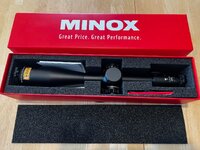
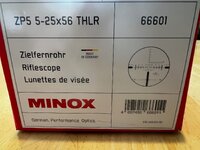
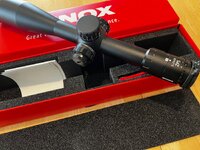
I'm genuinely surprised nobody's mentioned the Minox ZP5 yet, given that it's passed the drop test, and has such high reviews, especially for its THLR reticle. I have one for sale here:

That would not be a good choice for a PRS scope. I have shot plenty of "holdover only" stages, and that reticle wouldn't work very well.
 
1) Zero boards - in the Southeast and Atlantic regions, always seen a zero board; BUT, that zero board may not be convenient to access during the event - like way on the other side of the range and you have limited tine before you are up to shoot again
2) Getting knocked over - couple a weeks ago at a 2 day match, my rifle got knocked over hard by a buddy. Whole squad gasped in unison. Last stage and I was not going to check zero. Rifle ran fine - Vortex Razor G3. My buddy will never live it down.
3) Last Sunday, guy on my squad with a Kahles would not focus parallax. Finished match. Some pros who use Kahles told him to pull it as the parallax issue was followed with a tracking issue.
4) March scopes were getting a lot of attention as the new cool kid top tier scope - that seems to have exploded in a few weeks as multiple people flooded the used PRS scope market with March and the tracking, zero issues came to light.
5) Kahles - multiple reports of tracking/zero issues with Kahles hitting the internet with sponsored shooters admitting mea culpa.
 
General question that seems appropriate for this thread as I start my NRLH journey. What do you guys typically look for in the way of scope requirements?

Thinking of things like scope power, reticle, tube diameter, weight, etc. Please include a little bit of the "why" with your answer. Thank you!

I'm looking for scope that is light enough to make weight for the lightweight division while still having a good magnification range and enough travel for the farther targets. Typically that means 26oz-32oz, FFP so that you can use your reticle to call wind at all powers, 30mm tube, I want to have a max magnification of at least 16x but I prefer higher so I'm not running my scope turned all the way up.

Reticle is largely personal preference as long as you can use it to hold wind. I'm not a huge fan of Christmas tree reticles so my current favourite is the Mil-C from Nightforce.
 
3) Last Sunday, guy on my squad with a Kahles would not focus parallax. Finished match. Some pros who use Kahles told him to pull it as the parallax issue was followed with a tracking issue.
4) March scopes were getting a lot of attention as the new cool kid top tier scope - that seems to have exploded in a few weeks as multiple people flooded the used PRS scope market with March and the tracking, zero issues came to light.
5) Kahles - multiple reports of tracking/zero issues with Kahles hitting the internet with sponsored shooters admitting mea culpa.


This is my shocked face…
 
That would not be a good choice for a PRS scope. I have shot plenty of "holdover only" stages, and that reticle wouldn't work very well.

Why would the Minox ZP5 with the THLR reticle not be good for PRS?

Is "holdover only" a rule, or do you literally shoot better using holdovers on those stages over dialing?
 
Why would the Minox ZP5 with the THLR reticle not be good for PRS?

Is "holdover only" a rule, or do you literally shoot better using holdovers on those stages over dialing?
There are - on occasion - mandatory holdover stages where you are not allowed to dial
 
Why would the Minox ZP5 with the THLR reticle not be good for PRS?

Is "holdover only" a rule, or do you literally shoot better using holdovers on those stages over dialing?
It's mandated on some stages, and optional but faster on others. It's fairly necessary to have the option of dialing or holding.
 
  • Like
Reactions: BLJ
Why would the Minox ZP5 with the THLR reticle not be good for PRS?

Is "holdover only" a rule, or do you literally shoot better using holdovers on those stages over dialing?

We don’t see many mandated hold over stages around locally anymore. I think the MDs prefer to let the shooter decide how they want to shoot the stage and do prefer it.

However l hold over farily often, especially on stages with many different distances that I know I’ll time out dialing. I may also hold if the target is large to save on some time to focus on hitting smaller or harder targets. All depends. Not hard for a MD to force a hold over type situation for most shooters, not uncommon to be shooting 6 different distances in a stage and needing to dial 10 plus times. In 105 seconds that can get tight.

I’m a farily slow shooter by PRS standards, and find myself holding a couple stages through a one day match. Holding is never more accurate or easier than dialing, but can be a time saver. Just another tool. I personally wouldn’t use a scope without the ability to hold over, but don’t prefer a Christmas tree, atleast locally.
 
Why would the Minox ZP5 with the THLR reticle not be good for PRS?

Is "holdover only" a rule, or do you literally shoot better using holdovers on those stages over dialing?
On top of the mandatory hold stages, you don’t want to dial wind. Dialing wind is a tell tell sign someone doesn’t know what they’re doing and along the same lines of holding edge of plate.

Eventually, you want to start learning how to bracket wind, and time shots within reason as wind is not constant. Otherwise you’re leaving points on the table.

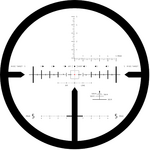
Additionally, you want a reticle that you can measure the miss for the correction so you’re not guessing. That reticle has a lot going on. Movers scale in m/s, 1/2 1/10 mil scale, .5 mil scale, wind dots. Sounds like it’s super useful, but really it just clutters things and gets in the way. IMO
 
On top of the mandatory hold stages, you don’t want to dial wind. Dialing wind is a tell tell sign someone doesn’t know what they’re doing and along the same lines of holding edge of plate.

Eventually, you want to start learning how to bracket wind, and time shots within reason as wind is not constant. Otherwise you’re leaving points on the table.

Additionally, you want a reticle that you can measure the miss for the correction so you’re not guessing. That reticle has a lot going on. Movers scale in m/s, 1/2 1/10 mil scale, .5 mil scale, wind dots. Sounds like it’s super useful, but really it just clutters things and gets in the way. IMO
The JTAC crew teaches dialing wind - they may know a thing or two. I agree that many top pros do not dial wind but that Okie crew teaches it.
 
I’ll dial wind occasionally. It’s easier to make a .2-.4 mil correction versus a 1.2-1.4. Atleast for me it is. I’m just another mid pack shooter though.
 
I'm genuinely surprised nobody's mentioned the Minox ZP5 yet, given that it's passed the drop test, and has such high reviews, especially for its THLR reticle. I have one for sale here:


I got one in MR4 just for PRS, i think most would prefer that reticle for the discipline but I doubt I'd shoot worse with a THLR. While Minox did well in the rokslide drop test, the issues in the batches recently sold by EO and a quick search online indicates they aren't exactly top tier for being issue free.
 
1) Zero boards - in the Southeast and Atlantic regions, always seen a zero board; BUT, that zero board may not be convenient to access during the event - like way on the other side of the range and you have limited tine before you are up to shoot again
2) Getting knocked over - couple a weeks ago at a 2 day match, my rifle got knocked over hard by a buddy. Whole squad gasped in unison. Last stage and I was not going to check zero. Rifle ran fine - Vortex Razor G3. My buddy will never live it down.
3) Last Sunday, guy on my squad with a Kahles would not focus parallax. Finished match. Some pros who use Kahles told him to pull it as the parallax issue was followed with a tracking issue.
4) March scopes were getting a lot of attention as the new cool kid top tier scope - that seems to have exploded in a few weeks as multiple people flooded the used PRS scope market with March and the tracking, zero issues came to light.
5) Kahles - multiple reports of tracking/zero issues with Kahles hitting the internet with sponsored shooters admitting mea culpa.

I squaded with a guy last year that just put a new $5k kahles i540. He jerked his 20+ lb rifle from prop to prop by the bell of the scope all day and i was surprised he wasn't causing any problems doing so. Sounds like there are lots of issues with that model and they had to release a new "enhanced" version to address them.

Also feel good about not falling for the march 5-42 prs gen 2 scope hype. March was the biggest scope purchase mistake i ever made years ago but there was a lot of hype about that new one (like there was about the 3-24x52 back when). Now the zero retention issues are out and the company hypesters are acting like it's normal to have to adjust parallax if you adjust magnification, Ha! f that.
 
The JTAC crew teaches dialing wind - they may know a thing or two. I agree that many top pros do not dial wind but that Okie crew teaches it.
“They” being credible people don’t. Especially if you’re referring to the Air Force. Lol bro. A course, and the scope of what they do as a job are not equal.

Some of us came from the military too…. What’s taught and what equipment is available and what works is less debatable. SOCOM is still using a ATACR (R-VPS). The USMC has adopted a similar set up and also using the Tremor 3, which uses wind dots, and requires its own understanding of its efficiency. However, it is designed to held. As many discover, it’s a difficult reticle to use in some environments, namely jungle but I digress. Holding is a common doctrine.

The army’s in house made grid reticle on the mark5’s is no different.

The military is where I learned the concept of wind bracketing…and quick wind is a testable subject in SFSC (level 1) course which is another useful topic that’s clearly outside the scope of this forum.
 
On the thlr...

It looks to be the case...but does the measuring reticle align/correlate to the reticle?

I.e... Aim short is 1 mil. Is the milling reticle at 2 mils? It looks like it, but its a bit visually confusing.
 

Attachments

  • images.png
    images.png
    11.2 KB · Views: 14
“They” being credible people don’t. Especially if you’re referring to the Air Force. Lol bro. A course, and the scope of what they do as a job are not equal.

It helps if you know the subject you are arguing.


Some of us came from the military too…. What’s taught and what equipment is available and what works is less debatable. SOCOM is still using a ATACR (R-VPS). The USMC has adopted a similar set up and also using the Tremor 3, which uses wind dots, and requires its own understanding of its efficiency. However, it is designed to held. As many discover, it’s a difficult reticle to use in some environments, namely jungle but I digress. Holding is a common doctrine.

The army’s in house made grid reticle on the mark5’s is no different.

The military is where I learned the concept of wind bracketing…and quick wind is a testable subject in SFSC (level 1) course which is another useful topic that’s clearly outside the scope of this forum.

Neat.
 
Back
Top