Ok…I need to clean my 22CM after 307 rounds

ChrisAU

WKR
Joined
Jan 12, 2018
Messages
7,686
Location
SE Alabama
Or part of it anyway. Noticed bolt was hard to close towards end of hunting season, got the bore scope out a couple weeks ago and started working on this spot where the chamber begins to neck down:

IMG_2693.jpeg

Some C4 carbon remover and a lot of elbow grease later with chamber brushes and it’s almost all gone. One more evening session with it and I bet it will be fully removed.

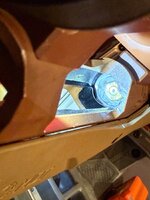
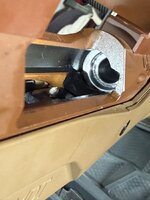
However, area 2, the breech face, is being more stubborn - this pic is after a lot of 15 minute soaks with C4, a brass pick, and long pointy swabs:
IMG_2880.jpeg

I suspect this is the area actually giving me a hard bolt as the bolt face rim rotates on this surface when opening/closing the bolt.

Any tips? Longer soaks? I can’t scrub it like I could the other area. I don’t really want to take off the barrel but I could. I did get some Iosso Bore Paste and it seemed to dissolve more than the C4 but I’ve only done a couple sessions of it. Should I leave some caked on over night?

I believe this is from walking around with the rifle slung over my shoulder and Carbon falling out of the suppressor and into the chamber. I’m open to other theories though. The rifle is not stored upright in my truck or at my house.
 
Not sure what it is...but if I have carbon to clean...I pull out a q-tip and CLR. Do not let the CLR marinate, clean it off then follow it with alcohol to remove all the CLR. It will etch stainless and is not good...but it will suck carbon off a suppressed muzzle like nothing I've ever tried.

Saying that, you commented about the bolt face rim...there is clearance there, the bolt should not touch any part of the barrel. 7 thousandth on the tight side and 15 thousandth on the higher side. That's not a bunch of room and I suppose if your theory is right that it's a carbon chunk...the bolt could be grinding it up. Who knows where it came from...your theory is as good as any.

Should've added good luck...also, is the cerakote color you used FDE AI? I recently used that color the first time recently and it came out way better than I expected...I like it.
 
Not sure what it is...but if I have carbon to clean...I pull out a q-tip and CLR. Do not let the CLR marinate, clean it off then follow it with alcohol to remove all the CLR. It will etch stainless and is not good...but it will suck carbon off a suppressed muzzle like nothing I've ever tried.

Saying that, you commented about the bolt face rim...there is clearance there, the bolt should not touch any part of the barrel. 7 thousandth on the tight side and 15 thousandth on the higher side. That's not a bunch of room and I suppose if your theory is right that it's a carbon chunk...the bolt could be grinding it up. Who knows where it came from...your theory is as good as any.

Should've added good luck...also, is the cerakote color you used FDE AI? I recently used that color the first time recently and it came out way better than I expected...I like it.

It’s standard H265 FDE

IMG_1036.jpeg
 
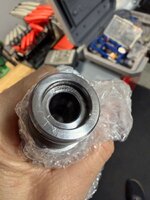
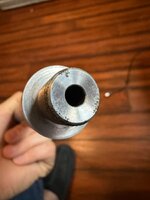
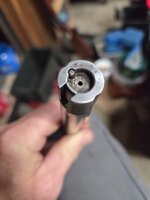
Update here, the carbon was clinging to pitting it would seem. What in the world would cause this on an 18 month old barrel with 307 rounds? It never saw any chemicals. There is even pitting on the muzzle end, but the rifling is a pretty as the day it was cut. I am befuddled.

IMG_2266.jpeg

IMG_2268.jpeg
 
Bad batch of metal? Seems hard to believe anything you/ammo/suppressor/cleaning would do that type of damage.
 
Frank green would probably tell you carbon fouling holds moisture and results in corrosion. I imagine there is plenty of humidity in your part of the country. A recent related thread.

 
I had some gunk sitting on my bolt. I assume some stuff fell out of my supressor and sat there for awhile. It was stored muzzle up, leaned against the wall. Picture is after I cleaned the blue gunk off. It's a tikka 223, still shoots great but marks up the brass. 20251118_050946.jpg
 
Update here, the carbon was clinging to pitting it would seem. What in the world would cause this on an 18 month old barrel with 307 rounds? It never saw any chemicals. There is even pitting on the muzzle end, but the rifling is a pretty as the day it was cut. I am befuddled.

View attachment 1049736

View attachment 1049737

These are the posts that keep me up at night.

Hope you can get this figured out and remedied!
 
Yep, but, it is stored horizontally, not vertically.

I know there’s ten guys that will come on here and say it dosnt matter and that your gun can sit on the floor of the garage all year but here I go.


Think about what’s happening when you shoot a suppressed rifle in fall/winter conditions. You’re essentially creating an environment where you can easily get condensation in your rifle/suppressor. A suppressor exacerbates this and hangs onto that heat. This sits in your barrel and you get corrosion.

Good example of way less extreme temp gradients would be a garage, Iv seen what happens to a rifle left in a garage in the winter in the Midwest exposed to thaw freeze cycles. It rusts.

I’m not one to clean my rifle all that much. But I do a few things.

-My rifle suppressors come off get tapped to remove whatever loose carbon is in them, and are stored separate from the rifle. Depending on conditions I have seen times my muzzle looks wet when I remove the can.

-Besides tapping the suppressor out I clean it every 1-2k rounds depending on the cartridge. My goal is to keep carbon from coming down into my action. Carbon in your action can end up in everything from your chamber to trigger.

-Rifles out during cold weather that are going to be stored for a couple weeks plus get an oil patch down the barrel. Cold wet hunt I’ll torch a round in the back yard and leave the action open inside to dry and cool in a controlled environment if I’m between hunts.
 
I know there’s ten guys that will come on here and say it dosnt matter and that your gun can sit on the floor of the garage all year but here I go.


Think about what’s happening when you shoot a suppressed rifle in fall/winter conditions. You’re essentially creating an environment where you can easily get condensation in your rifle/suppressor. A suppressor exacerbates this and hangs onto that heat. This sits in your barrel and you get corrosion.

Good example of way less extreme temp gradients would be a garage, Iv seen what happens to a rifle left in a garage in the winter in the Midwest exposed to thaw freeze cycles. It rusts.

I’m not one to clean my rifle all that much. But I do a few things.

-My rifle suppressors come off get tapped to remove whatever loose carbon is in them, and are stored separate from the rifle. Depending on conditions I have seen times my muzzle looks wet when I remove the can.

-Besides tapping the suppressor out I clean it every 1-2k rounds depending on the cartridge. My goal is to keep carbon from coming down into my action. Carbon in your action can end up in everything from your chamber to trigger.

-Rifles out during cold weather that are going to be stored for a couple weeks plus get an oil patch down the barrel. Cold wet hunt I’ll torch a round in the back yard and leave the action open inside to dry and cool in a controlled environment if I’m between hunts.

I get it. But, I also say 5-6 other rifles that are shot as much or more, in the same environment, stored the same way with suppressor never taken off, rarely if ever cleaned, and all have beautiful smooth breech faces and muzzle crowns.
 
  • Like
Reactions: LoH
I get it. But, I also say 5-6 other rifles that are shot as much or more, in the same environment, stored the same way with suppressor never taken off, rarely if ever cleaned, and all have beautiful smooth breech faces and muzzle crowns.
Moisture got in there somehow. Whether it was attracted to the carbon, from condensation or from a wet hunt.

Keeping carbon out of my action is a variable I can control by taking the can off and cleaning it regularly. Though I do the same with my rifles as well, within reason.

I’m much less worried about a rifle I shoot often than one that goes out during hunting season and then sits.
 
I get it. But, I also say 5-6 other rifles that are shot as much or more, in the same environment, stored the same way with suppressor never taken off, rarely if ever cleaned, and all have beautiful smooth breech faces and muzzle crowns.
What powder are you using?
 
Update here, the carbon was clinging to pitting it would seem. What in the world would cause this on an 18 month old barrel with 307 rounds? It never saw any chemicals. There is even pitting on the muzzle end, but the rifling is a pretty as the day it was cut. I am befuddled.

View attachment 1049736

View attachment 1049737


That is bad barrel steel- or chemicals. I have a Bartlein that has the same- right next to dozens of rifles and barrels that didn’t.
 
That is bad barrel steel- or chemicals. I have a Bartlein that has the same- right next to dozens of rifles and barrels that didn’t.

The area of the breech that is affected is the bottom of the barrel when it was installed if the rifle were resting horizontally. There was no rust anywhere in the entire barrel, and it never had a chemical touch it until I saw this and went to remove what I thought was caked on carbon. The photo in the OP with carbon in the neck area was easily cleaned out. The barrel killed 2 mule deer, 23 whitetails and countless hogs and coyotes in two hunting seasons. Stored horizontally during hunting season in a soft rifle case hanging on the backseat of my truck or horizontally on a rack in my game room. Practiced with pretty regularly both summers before hunting seasons. Just very strange to be pitted at both ends. Gonna screw it back in and shoot some more I suppose ha.
 
Back
Top