MRAD reticle yardage measuring: tips & experience

Joined
Jul 21, 2024
Messages
44
I’m looking to practice using my reticle to range deer while I can verify with a working rangefinder.

My thought is to keep a card (like dope) with:
“500/Mrad = yards” but also a listed chart of solved equations for yard increments 0-600.
Obviously a big part of this is to pattern in some memorization.

BUT, any considerations to: belly to back variations (specifically, does and young deer to mature bucks)
Is there a known range point where reticle accuracy is completely compromised (on a 14x or 18x zoom max)?
Any other tips or experience to speak to?

Yes I had a rangefinder go down on me and yes I am very salty about it. Looking to add a parachute ranging plan to my skill set.
 
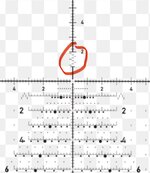
The mil relation formula is below, you’ll need the average size of a deer say from top of back to belly then multiply that by the constant (27.77) then divide by mils. It works best when using a reticle that has the mils broken down to 1/10ths somewhere on the reticle and always estimate to two decimal places (ie: 1.25) for best accuracy. I posted a pic of the tremor 5 reticle as an example of the 1/10th section.

You could do the math prior to give you the mil sizes for a dope card.

Yards
size of target in inches * 27.77 / size of object in mils = range in yards
 

Attachments

  • IMG_9508.jpeg
    IMG_9508.jpeg
    151.5 KB · Views: 13
If it’s smaller than 2 mils you’ll probably measure wrong enough to miss.

Wobble zone plus size variance and angle of observation are plenty enough variables to make it generally a bad idea to try to mil-range past ~300 yards.
 
If it’s smaller than 2 mils you’ll probably measure wrong enough to miss.

Wobble zone plus size variance and angle of observation are plenty enough variables to make it generally a bad idea to try to mil-range past ~300 yards.
Makes sense, and would agree having never practiced it. Even at a glance of what this is in application, 400 yards seems like the upper threshold of what’s possible in accurate ranging as far as shooting goes, (all variables controlled).
Routing a stalk with known ranges also has its benefits. I’ve certainly been guilty of thinking: “that deer is about 400 yards” - to pull up the range finder and get 280.
I’ll practice it either way.
I guess I am looking for upper limit opinions just like this and also short-hand ways to accommodate variance in deer chest size from an 18” standard - or if that’s even worth considering.
 
I have been forced to Mil range on animals before. The farthest shot being an Antelope estimated with this method at 460 yards. It worked great, but I have been trained to do it, and teach the method in a formal class setting regularly. Not that it is difficult, just that I likely practice it more than others.

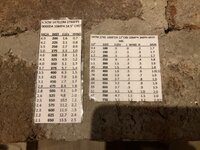
This method of finding an accurate range requires practice and preparation before hand. Best thing to do is have a pre-calculated range card with the Mil measurement for the expected animals body size for the expected distances. On that Antelope hunt my card was set for 25 yard increments to 650 yards, and a 14.5” chest height for the calculation. Different animal, different card. My standard “every use” cards are set for 12”. I can easily break that length down to what I need in the moment.

Practice will inform you of your error percentage when confirmed with a LRF. The more you practice the more accurate the range estimation will be with Mil ranging. From there you will be able to figure out the maximum yardage that your error percentage still allows for a hit within the vitals.

The electronics (LRF, ballistic app, Kestrel) are wonderful pieces of equipment, but don’t let their failure at the moment stop you from possibly making an accurate shot. You have the tool required to get an accurate range built in to your scope. Learn to use it properly and have the measurements pre-calculated to make it easier/quicker.
 

Attachments

  • image.jpg
    image.jpg
    681.4 KB · Views: 1
Back
Top