1911’s in general, 9mm versions specifically

The average on demand clean bill drill shot cold from “special” people is around 6 seconds- if it has to be clean.
W...T....H?? This has to be a typo.....

You generally share some great info on here, but man, 6 seconds? Maybe "special ed"

I wonder where your opinion on tier 1 unit/"special" shooting standards comes from. There are absolute standards, and 6 seconds would get a guy laughed off the range. Hell 3 isn't special.

For reference, I don't normally train civilians, but this past Monday had 6 guys and 4 gals in the course. One had prior pistol training. Right out the gate we timed first round hits from holster, neutral stance, not HOG. This was working draw stroke/handling/economy of motion only. Zero rounds fired the first hour. 3.5 hours later everyone cut their times in half. 5 of the 10 then did bill drills under 5 seconds. Civilians. None former MIL/LEO. Not a brag-giving example of recent data.

Someone else mentioned contract work-eval day 1 hour one your proficiency is tested. If you can't meet the standard, you are escorted off property. I'm not going to publish times, but 3 second bill drill won't blow doors off.

In general, speaking of "special" dudes and 2.5 seconds, yes that is skilled. Going from 3 to 2.5 takes work and good amount of proficiency. I'd argue going from 6 down to 4 is faster than losing .25 under 3 seconds on a bill. Shaving a tenth under 2 is monumental, and now were talking .2 splits or better. I do agree cold makes a significant difference.

Add in reloads? Now were talking special and skills. I find the bill drill is a decent gauge, but drills involving reloads is a better representation of overall skills.

*edited for spelling
 
About the only time I use an oil is for a quick application on a more-or-less assembled gun, or if I need the oil to crawl deep into a spot on its own. Oils have a hard time staying put, especially compared to an appropriately weighted grease - the same action that allows oils to crawl into deeper parts of the gun has it crawling away from your bearing surfaces too over time, with gravity, cycling, and its own molecular action. That, or just drying out when exposed to the air. And the lighter the oil, the worse all that usually is. I'd take just about any motor oil over CLP anytime, but a lighter motor oil in winter and a heavier one in summer (0w20 vs 20w50, for example), because of how they perform differently in cold temps vs hot ones. But with a good lightweight grease you can generally expect at least 5x the round count or just time on a gun before you need to relubricate, over most oils. The key thing to remember is just about anything will work better than running a gun dry, it's mostly an issue of how well it works and for how long. Just keep reapplying whatever you're using as needed and you'll be fine, in most cases. The more demanding a gun's performance needs are though, the more specialized the lube should be.
That all tracks and is just the info I was hoping to get. Thank you for taking the time for a nuanced explanation. Much appreciated.
 
Anyone picked up or been able to check out some of the Tisas models? Always wanted a 1911 and this thread gave me a kick in the pants to make it happen. I see a few people have or talked about getting the nightstalker.

I'm leaning towards the stainless A1 TC model but wonder if there's any good reason to spend a little more for one of the "gucci" models. These are all the single stack 9mm options.

Don't have a center fire pistol can and doubt I ever will (but I could be pretty easily convinced if there are some good reasons to shoot with one, lol).

View attachment 917579
If you don't settle on one of those options, or want to look at others, could be worth checking out Bul Armory. Not sure what they run in the US, but the quality is a step up.
 
W...T....H?? This has to be a typo.....

You generally share some great info on here, but man, 6 seconds? Maybe "special ed"

I stated clean, on demand and cold. “On demand” as in something like 3 times in a row clean, and lose your job type thing if you miss a single round out of the 8 ring on a B8 bull (or 8 inch circle).

That is very different than “can miss a single shot, or you get 2 out of 3 attempts, or the coke bottle target, or “C” zone counts, etc.

Maybe I’m guessing.


I wonder where your opinion on tier 1 unit/"special" shooting standards comes from.

I don’t generally state opinions. As well, the neat thing about matches, is the scores are public.


There are absolute standards, and 6 seconds would get a guy laughed off the range. Hell 3 isn't special.


Oh of course clean 3 second bill drills are easy…. Not too long ago they put a bill drill version in a major match, but everything outside the A zone was a No shoot. If I recall correctly, the average clean run by all GM’s was mid 3 seconds- and there were a bunch that had at least one C zone hit. The fastest clean was high 2’s.
 
Oh of course clean 3 second bill drills are easy…. Not too long ago they put a bill drill version in a major match, but everything outside the A zone was a No shoot. If I recall correctly, the average clean run by all GM’s was mid 3 seconds- and there were a bunch that had at least one C zone hit. The fastest clean was high 2’s.
That's a great gut check on a few levels. I'm going to throw it in our local Saturday match later this month and report with hit factors and pistols used. Thanks for the idea.

I know that if my job was on the line and this was the standard, I'd be taking 2 seconds to break the first shot and I'd be shooting .3 splits to be safe. Breaking 3 with that kind of pressure would be indeed doable but difficult.

-J
 
From what I'm seeing, there's a couple of investigations pending, so best to wait in this case rather than engage in speculation.

However, for a wider history about Sig Sauer (USA), this video from Misha helps disambiguate Sig Switzerland, Germany, and the US, and covers some of the challenges of the US company:

And his video prior to that one covers some of their practices, and takes a look at the 320 issue, placing it in a longer history of problems with issued sidearms, and how other companies have chosen to fix, rather than deny, the problems:
Wow, amazing how things change in a week. Now an arrest has been made in the death of the airman for involuntary manslaughter. You also nailed it when you stated it is best to wait than engage in speculation. I think it isn't over yet.
 
Wow, amazing how things change in a week. Now an arrest has been made in the death of the airman for involuntary manslaughter. You also nailed it when you stated it is best to wait than engage in speculation. I think it isn't over yet.
Yep, a lot of people jumped on this one without knowing may of the facts ...

But that doesn't change the facts of the previous events.
 
Thought this is worth a share - Rob (RCSchauland) is the pistol smith that built Springfield Professionals, Les Baers, and designed ACWs.

Truly one of if not THE most knowledgeable men on earth regarding this subject. His custom guns are 6-10k + 12 months.

Someone asked him what it takes to get a 9mm running and this is his response
They main handicaps for the 9mm are the magazine that has to be used for the shorter cartridge and the extractor being a Band-Aid revamp of the .45 extractor. 9mm extractors have gotten quite good over the years in regard to 9mm so that's not so much of a problem. The magazine needs to use a spacer in the back to make up for the lack of cartridge length. Not really a huge problem. The other issue is not having enough muzzle energy to briskly cycle a full-sized slide. This is why, when Colt designed the 9mm, they lightened the slides internally and used a "pencil" barrel which has much less mass than a traditional barrel. You have to remember that the slide AND the barrel begin to move rearward as a unit until the link pulls the barrel down. That's why they went with the lighter barrel. Nowadays people use full profile and even bull barrels WITH the added mass of a supported feed ramp. In addition, you have "heavy" slides being used with the caliber.

The way I overcome all of this is a down the rabbit hole process of adding together all of the ways that I can reduce friction.
1.) Fully polish the O.D. of the barrel using techniques employed in the tool and die trade.
2.) Fully polish the Guide Rod
3.) Employ the use of the Marvel Disconnector Ramp modification
4.) Proper disconnector head profile, polish and spring tension.
5.) Prep the I.D. of the slide and locking lugs using various honing techniques prior to barrel fit and then prior to finish application.
6.) Polish the breech face areas that contact the case and create an ideal environment for the cartridge rim to slide into place with minimal interference
7.) Don't cut the supported ramp too deep. This can cause the barrel to drop far enough to cause the case to slip off the extractor. (big problem with some manufacturers these days)
8.) Polish any surface that can add friction to the unlocking of the pistol upon firing. That means all the way down to the mainspring cap and even inside the housing itself.
9.) Choose the correct recoil spring/mainspring recipe to run a wide range of ammo.
10.) Use ammo that agrees with your gun (this is on the owner)

9mm ammo can vary greatly through 3 different bullet weights and velocities ranging from 925 to 1500 feet per second. If you aren't able to think logically and have a bit of mechanical aptitude, it will seem like a very complicated situation to be in. But, for the most part, if you stick with commonly available ammo, you'll be fine.

On the extractor question, yes, I did design a completely different extractor for 9mm. Cabot kept the design, and it gets used on all of their guns regardless of caliber. For it to be effective, it has to be set up properly. Once it's set up, it should never need tension adjustment and should only need to be cleaned periodically
 
  • Like
Reactions: NSI
I stated clean, on demand and cold. “On demand” as in something like 3 times in a row clean, and lose your job type thing if you miss a single round out of the 8 ring on a B8 bull (or 8 inch circle).

That is very different than “can miss a single shot, or you get 2 out of 3 attempts, or the coke bottle target, or “C” zone counts, etc.

Maybe I’m guessing.


I don’t generally state opinions. As well, the neat thing about matches, is the scores are public.


Oh of course clean 3 second bill drills are easy…. Not too long ago they put a bill drill version in a major match, but everything outside the A zone was a No shoot. If I recall correctly, the average clean run by all GM’s was mid 3 seconds- and there were a bunch that had at least one C zone hit. The fastest clean was high 2’s.
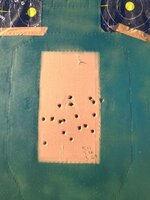
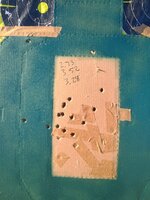
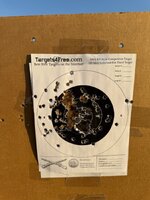
Thought this topic was interesting, so I shot 3 bill drills this morning, completely cold. 7 yards, from concealment with my p365xl w/ holosun 507k. First run went consciously slow. Second sped up a bit but still kept high confirmation. Third went a little faster, I'll leave that 1 round to the judges, but I think it's outside the perf.

Still out here, so I'm going to run it with my Springfield emissary 9mm w/ irons from concealment and then from a comp holster. Granted I'll be warmed up also, but interested to see how it changes.
IMG_20250811_091253006_HDR.jpg
 
Thought this is worth a share - Rob (RCSchauland) is the pistol smith that built Springfield Professionals, Les Baers, and designed ACWs.

Truly one of if not THE most knowledgeable men on earth regarding this subject. His custom guns are 6-10k + 12 months.

Someone asked him what it takes to get a 9mm running and this is his response

Dude makes some cool guns, and I can respect that. And his reliability points are solid, though he'd be better off focusing on minimizing friction surface with fluting and surface texturing, and low-friction coatings, than just polishing - if reliability is his main focus.

But if I had to speak truth...frankly, he's about 20 years too late to the party. I literally saw nothing on his website that wasn't being done in the 1990s, and there was quite a bit being done back then that I also don't see on his guns.

Here's the thing - technology and engineering have moved far beyond the capabilities of hand-built 1911s and the tools available to one-man shops, making the custom smiths almost irrelevant to CCW and duty users. That's also why they're a dying breed.

Not talking about the semi-custom stuff coming out of places like Atlas, Nighthawk, etc, which is closer to "building" than "gunsmithing", once they figured out the engineering and precision-machining of each part. And while Staccato seems to be the first to have Glockified 1911s in terms of precision scaled-machining, engineering reliability insights, and cost-effectiveness - they won't be the only ones to figure it out. Competition will continue to go up as costs continue to go down.

And it's going to cause a near-extinction event for genuine, custom 1911 gunsmiths. Real ones, not builders. And that's sad. Eventually, the survivors will become some American analogue to the British bespoke-gunmaking industry, like Westley Richards or Holland & Holland. Because there won't be an ecological space left for them to survive in otherwise.

Hand-built 1911s are pretty much getting relegated to 3 categories, at this point: 1) they're becoming "art guns" and status symbols; 2) they're being made as paeans to the dying-out Fudds of yesteryear, who are often the heroes of these younger smiths or the guy commissioning the work; and 3) most rarely, there are some functional guns being built in high-performance calibers, to some unrealistic fantasy-spec the owner commissions them for (think, 9x23 Win, .40 Super, etc). Or, as "grail guns" that were the childhood fantasy of a middle-aged guy who now has money - buying what was considered cool back when he was in high school.

The car world saw something similar - the horsepower and performance that used to require savant-like motorhead genius is now simply bolt-on horsepower you can order off a website. EGW's 1911 parts lineup would have been almost impossible for even the best custom 1911 smiths to do, given the precision machining, heat-treating, metallurgy, and low-cost-through-scale that EGW just builds into their stuff, partially just as an artifact of their tooling. The stuff that Terry Tussey, Heine, Novak, Les Baer, and Bill Wilson would have been hard-pressed to accomplish in the 1970s, 80s, and even 90s is now, quite often, just relatively cheap plug-and-play parts installation.

There's nothing today's custom smiths are doing that's going to enhance reliability more than what you're already seeing Staccato do, or even what Dan Wesson did in its reliability engineering around the DWX line. Even Kimber, finally, seems to have nailed it as well with its 2K11 - a gun that would have been a $6000-$8000 minimum from a custom smith, with 6-12 months wait, is $1800, available in hundreds of local gun shops today, cash and carry out the door.

The world has changed and is moving on. I genuinely hope the younger custom smiths find a way to survive. One thing I'm certain of though - it won't be through improving the 1911 as a carry or duty gun, especially at carry or duty prices.

 
Dude makes some cool guns, and I can respect that. And his reliability points are solid, though he'd be better off focusing on minimizing friction surface with fluting and surface texturing, and low-friction coatings, than just polishing - if reliability is his main focus.

But if I had to speak truth...frankly, he's about 20 years too late to the party. I literally saw nothing on his website that wasn't being done in the 1990s, and there was quite a bit being done back then that I also don't see on his guns.

Here's the thing - technology and engineering have moved far beyond the capabilities of hand-built 1911s and the tools available to one-man shops, making the custom smiths almost irrelevant to CCW and duty users. That's also why they're a dying breed.

Not talking about the semi-custom stuff coming out of places like Atlas, Nighthawk, etc, which is closer to "building" than "gunsmithing", once they figured out the engineering and precision-machining of each part. And while Staccato seems to be the first to have Glockified 1911s in terms of precision scaled-machining, engineering reliability insights, and cost-effectiveness - they won't be the only ones to figure it out. Competition will continue to go up as costs continue to go down.

And it's going to cause a near-extinction event for genuine, custom 1911 gunsmiths. Real ones, not builders. And that's sad. Eventually, the survivors will become some American analogue to the British bespoke-gunmaking industry, like Westley Richards or Holland & Holland. Because there won't be an ecological space left for them to survive in otherwise.

Hand-built 1911s are pretty much getting relegated to 3 categories, at this point: 1) they're becoming "art guns" and status symbols; 2) they're being made as paeans to the dying-out Fudds of yesteryear, who are often the heroes of these younger smiths or the guy commissioning the work; and 3) most rarely, there are some functional guns being built in high-performance calibers, to some unrealistic fantasy-spec the owner commissions them for (think, 9x23 Win, .40 Super, etc). Or, as "grail guns" that were the childhood fantasy of a middle-aged guy who now has money - buying what was considered cool back when he was in high school.

The car world saw something similar - the horsepower and performance that used to require savant-like motorhead genius is now simply bolt-on horsepower you can order off a website. EGW's 1911 parts lineup would have been almost impossible for even the best custom 1911 smiths to do, given the precision machining, heat-treating, metallurgy, and low-cost-through-scale that EGW just builds into their stuff, partially just as an artifact of their tooling. The stuff that Terry Tussey, Heine, Novak, Les Baer, and Bill Wilson would have been hard-pressed to accomplish in the 1970s, 80s, and even 90s is now, quite often, just relatively cheap plug-and-play parts installation.

There's nothing today's custom smiths are doing that's going to enhance reliability more than what you're already seeing Staccato do, or even what Dan Wesson did in its reliability engineering around the DWX line. Even Kimber, finally, seems to have nailed it as well with its 2K11 - a gun that would have been a $6000-$8000 minimum from a custom smith, with 6-12 months wait, is $1800, available in hundreds of local gun shops today, cash and carry out the door.

The world has changed and is moving on. I genuinely hope the younger custom smiths find a way to survive. One thing I'm certain of though - it won't be through improving the 1911 as a carry or duty gun, especially at carry or duty prices.
I'm sure you know a lot of things and can do a lot of things, but these diatribes are so self aggrandizing I can't even begin to take you seriously.

This is a 9mm 1911 thread. Rob builds a good one. If you do too please drop a link, I might buy one.
 
Well done commanders are very reliable. The shootability difference isn’t going to be noticed by most.

What about with the cheaper off the shelf options that will likely need a little work? Would a commander 9mm have better odds of functioning with less effort than a government 9mm, or vice versa? Not so much can one make it work, but does one slide size inherently pair better with the 9mm cartridge over the other with less tuning.

The reason I ask is from what I’ve read, part of the reason colt reduced slide length on the first 9mm/commanders was to lighten slide mass to better accommodate the lighter 9mm. But that was a long time ago, and I’m sure a lot of factors have changed since then.
 
What about with the cheaper off the shelf options that will likely need a little work? Would a commander 9mm have better odds of functioning with less effort than a government 9mm, or vice versa? Not so much can one make it work, but does one slide size inherently pair better with the 9mm cartridge over the other with less tuning.

The reason I ask is from what I’ve read, part of the reason colt reduced slide length on the first 9mm/commanders was to lighten slide mass to better accommodate the lighter 9mm. But that was a long time ago, and I’m sure a lot of factors have changed since then.

I'm curious about this as well. Generally, is one easier to deal with than the other?
 
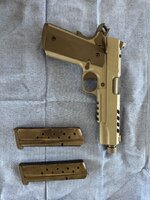
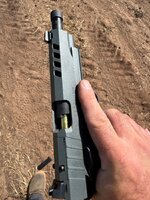
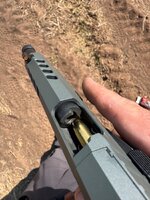
In my continued quest to prove @Formidilosus wrong and an insatiable desire to tinker I bought a Tisas Night stalker 9mm with the threaded barrel (@Unknown Suppressors promised to make a cool option).
IMG_8781.jpeg
Took it apart, wiped some oil off and took it out back.
First 50 rounds cheap federal 147 gr, no issues.

Next up 115gr Norma, the cheap stuff. IMG_8774.jpegIMG_8775.jpeg
2 malfunctions

Next ZSR 9mm, cheapest brass med case 9mm to be found at the time. IMG_8777.jpeg

Let’s see if I can follow directions and if Form can help a blind squirrel. Big surprise, I’m no gunsmith, not terribly patient either.

Post 150 rounds.
IMG_8782.jpegIMG_8783.jpeg

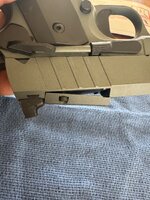
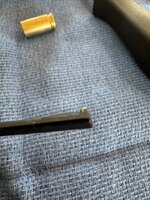
A little blunt persuasion until the BPE arrives. IMG_8784.jpeg

This looks familiar
IMG_8785.jpeg
Dremel
image.jpg

Included mags feel cheap, mail lady refusing to deliver new mags/mail until I raise the mailbox, so I’ll continue w these.

Time to go annoy the neighbors.
 
Well. Not 💯. 105 rounds in w the 147gr
IMG_8787.jpeg

150 rounds, the one failure to eject. I might need to polish the feed ramp a little, the first couple rounds wanted to catch? Seemed fine after it got a little dirty.

Working on impacting center (instead of left) from draw and shoot single round, this is a known personal IMG_8788.jpegissue You can tell where I was getting ahead of my self on speed. I should say I’ve done a little training w red dot, very little shooting iron sights.
 
Well. Not 💯. 105 rounds in w the 147gr
View attachment 920837

150 rounds, the one failure to eject. I might need to polish the feed ramp a little, the first couple rounds wanted to catch? Seemed fine after it got a little dirty.

Working on impacting center (instead of left) from draw and shoot single round, this is a known personal View attachment 920838issue You can tell where I was getting ahead of my self on speed.

Cool gun. How are you lubricating it?
 
I left the factory oil on the friction points. I suppose I could give it a little evo or light weight synthetic at this point. Just wanted to see how it did out of the box.

1911s have a lot of friction surface compared to other designs, and generally have higher lubrication needs. If you only got a couple of malfunctions with that gun out of the box after wiping it down, that's actually a good sign. Try a heavier weight motor oil on it, anywhere you now see rub wear, and anywhere you know the parts are moving against each other. 10w or even 20w-something would be great, but 0w or 5w would work better than almost anything marketed as a gun oil. It'll make a big difference.
 
Back
Top