
WyoWild
WKR
- Joined
- Oct 26, 2021
- Messages
- 695
When considering the performance of different bullets & cartridges there is often a contested and emotional debate about what constitutes optimal killing performance. After reading the Hornady LEM test & application guide I thought this would serve as a more objective way to estimate some aspects of would channel size and performance. These test are done using organic calibrated ballistic gel. This is known to be the best analog to animal tissue. The clear gel used by most YouTube tests does not translate as well to performance on tissue.
The full source material can be found here:
Hornady Ammunition & Test Report
(the Full PDF is attached below as well)
PLEASE NOTE THIS TESTING IS DONE AT CLOSE RANGE AND ONLY PROVIDES MEASUREMENTS OF THE TEMPORARY WOUND CAVITY. INTERPRET ACCORDINGLY.
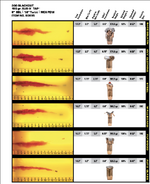
Testing is done by firing into the gel at a distance of 10ft with a variety of bullets: (BTHP, Tipped Cup/Core & Copper depending on cartridge) Tests both bare gel plus a variety of other overlays including heavy clothing, two pieces of 20g steel (car door simulant), wallboard (two pieces of gypsum dry wall), 3/4" plywood, auto glass.
Measurements include the entry/neck to expansion, maximum temp wound cavity, depth to max cavity and total penetration.
Using the temp wound cavity dimensions I used an ellipsoid volume calculation to get some idea of the total volume of tissue affected by the temporary wound cavity. I would assume there would be some correlation between temporary and permanent wound cavity as the dramatic displacement of tissue causes tearing as it reaches its limits of elasticity. Unfortunately this data does not provide a measurement of the permanent wound/crush cavity.
You can definitely observe a trend that the lead cup and core bullets produce larger temporary and permanent wound cavities. Bullet fragments from softer lead bullets radiate out from the center and disrupt more tissue/gel creating a larger permanent wound cavity. Without directly examining the gel it difficult precisely measure or estimate this volume. Hornady does not provide permanent wound cavity measurements.
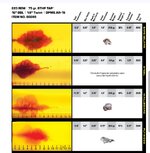
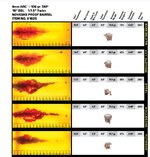
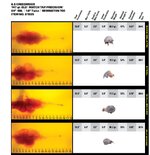
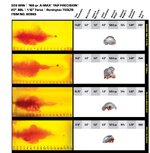
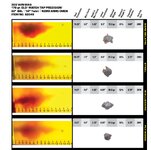
Some takeaway observations from this review.
Temporary wound cavity size generally increases as the size & weight of the projectile increases. I was impressed with the 6 ARC temp wound cavity. A 2 liter sized area of disrupted tissue. With a fragmenting cup/core bullet & looking closely at the images appears that the permanent crush cavity would be at least 50-75% of that volume. That would be the equivalent of nalgene sized permanent wound all the way thru the chest cavity of a deer to elk sized animal. IMO that is a devastating wound that would result in a quick death.
The 300 Win Mag produced a temp wound cavity that was about twice as large as the 6 arc but penetration was similar. When looking at recoil in a 8lb gun a 6 ARC has 6.7ft lbs and a 300 Win Mag would be at 26.8 ft lbs. 400% more recoil to produce a double sized temp wound. Again this is the temporary would cavity and not the permanent wound but I would assume that the permanent crush cavity would be about double as well.
Hitting resistance like plywood did not lead to more extreme fragmentation of lead bullets and only a slight loss of penetration. Would extrapolate that ungulate ribs & shoulder blades would not hinder bullet performance. Hitting resistance with monos may actually increase the temp wound channel volume, I would assume this is because hitting something solid helps that harder bullet fully expand earlier.
The full source material can be found here:
Hornady Ammunition & Test Report
(the Full PDF is attached below as well)
PLEASE NOTE THIS TESTING IS DONE AT CLOSE RANGE AND ONLY PROVIDES MEASUREMENTS OF THE TEMPORARY WOUND CAVITY. INTERPRET ACCORDINGLY.
Testing is done by firing into the gel at a distance of 10ft with a variety of bullets: (BTHP, Tipped Cup/Core & Copper depending on cartridge) Tests both bare gel plus a variety of other overlays including heavy clothing, two pieces of 20g steel (car door simulant), wallboard (two pieces of gypsum dry wall), 3/4" plywood, auto glass.
Measurements include the entry/neck to expansion, maximum temp wound cavity, depth to max cavity and total penetration.
Using the temp wound cavity dimensions I used an ellipsoid volume calculation to get some idea of the total volume of tissue affected by the temporary wound cavity. I would assume there would be some correlation between temporary and permanent wound cavity as the dramatic displacement of tissue causes tearing as it reaches its limits of elasticity. Unfortunately this data does not provide a measurement of the permanent wound/crush cavity.
You can definitely observe a trend that the lead cup and core bullets produce larger temporary and permanent wound cavities. Bullet fragments from softer lead bullets radiate out from the center and disrupt more tissue/gel creating a larger permanent wound cavity. Without directly examining the gel it difficult precisely measure or estimate this volume. Hornady does not provide permanent wound cavity measurements.
| Cartridge/Bullet | Velocity - FPS | Estimated Temp Wound Volume (Cubic Inches & Liters) | Total Penetration & Retained Weight % |
| 223 75gr Lead BTHP - Bare Gel | 2542 | 115 ci or 1.9 L | 12.5" & 36% |
| 223 75gr Lead BTHP - Plywood | 2544 | 90 ci or 1.5 L | 13" & 51% |
| 556 70gr CX - Bare Gel | 2652 | 65 ci or 1.0 L | 18" & 97% |
| 556 70gr CX - Plywood | 2659 | 55 ci or 0.9 L | 16" & 92% |
| 6mm ARC 106 lead TAP - Bare Gel | 2647 | 170 ci or 2.8 L | 18" & 73% |
| 6mm ARC 106 lead TAP - Plywood | 2645 | 95 ci or 1.6 L | 15" & 39% |
| 6.5 CM 147 ELDM - Bare Gel | 2646 | 142 ci or 2.3 L | 16" & 47% |
| 6.5 CM 147 ELDM - Plywood | 2676 | 127 ci or 2.0 L | 15.5" & 55% |
| 308 Win 168 AMAX - Bare Gel | 2537 | 199 ci or 3.2 L | 14.2" & 72% |
| 308 Win 168 AMX- Plywood | 2562 | 177 cu ir 2.9 L | 17" & 76% |
| 308 Win 165 CX - Bare Gel | 2735 | 157 ci or 2.5 L | 29" & 99% |
| 308 Win 165 CX - Plywood | 2583 | 175 ci or 2.8 L | 27" & 100% |
| 300 Win Mag - 178 ELDM - Bare Gel | 2894 | 300 ci or 4.9 L | 14.25" & 41% |
| 300 Win Mag - 178 ELDM - Plywood | 2891 | 268 ci or 4.3 L | 13.5" & 55% |
Some takeaway observations from this review.
Temporary wound cavity size generally increases as the size & weight of the projectile increases. I was impressed with the 6 ARC temp wound cavity. A 2 liter sized area of disrupted tissue. With a fragmenting cup/core bullet & looking closely at the images appears that the permanent crush cavity would be at least 50-75% of that volume. That would be the equivalent of nalgene sized permanent wound all the way thru the chest cavity of a deer to elk sized animal. IMO that is a devastating wound that would result in a quick death.
The 300 Win Mag produced a temp wound cavity that was about twice as large as the 6 arc but penetration was similar. When looking at recoil in a 8lb gun a 6 ARC has 6.7ft lbs and a 300 Win Mag would be at 26.8 ft lbs. 400% more recoil to produce a double sized temp wound. Again this is the temporary would cavity and not the permanent wound but I would assume that the permanent crush cavity would be about double as well.
Hitting resistance like plywood did not lead to more extreme fragmentation of lead bullets and only a slight loss of penetration. Would extrapolate that ungulate ribs & shoulder blades would not hinder bullet performance. Hitting resistance with monos may actually increase the temp wound channel volume, I would assume this is because hitting something solid helps that harder bullet fully expand earlier.