After this, I'm curious, what were your buddies thoughts about his training vs your training?Another data point for the books: Yesterday's backcountry skiing mission turned into an absolute slog with a partner who relies on intervals/hiit. I estimated 2 hours up, but conditions and straggling partner turned this into 5+ hours. My partner went down hard about 1.5-2 hours in. We had no effective bailout option but to keep going as trying to bailout early would have been a far worse option. I tried to talk him though it, I tried to get him to slow down and take a "slow and steady" approach, but every time I put my head down and focused on maintaining my consistent zone 2 pace for a few minutes , I could hear him breathing super heavy and I was 100+ yards ahead of him. He had no sort of management or self regulation for a consistent conversational pace.
Make sure your partners are on board with this type of conditioning or you are going to run into problems.

Navigation
Install the app
How to install the app on iOS
Follow along with the video below to see how to install our site as a web app on your home screen.
Note: This feature may not be available in some browsers.
More options
Style variation
You are using an out of date browser. It may not display this or other websites correctly.
You should upgrade or use an alternative browser.
You should upgrade or use an alternative browser.
Training for The Uphill Athlete Scott Johnston New Hunting Podcast
- Thread starter Cliff Gray
- Start date
Poser
WKR
After this, I'm curious, what were your buddies thoughts about his training vs your training?
Considering how bad he got his teeth got kicked in and even descended into the dreaded state of "shadow self" for a stretch of time where he was blaming anything and everything (exposure, conditions, equipment, lack of sleep, dehydration, the fact that nobody else was dumb enough to be where we were etc) and nothing was coming out of his mouth but negative self talk, I was just trying my best to be positive and encouraging. I resisted the temptation of the "FU break" by getting going as soon as he caught up and instead hung with him and just tried to objectify the situation, laugh at the misery and take it in stride. It wasn't the time and place for a lecture on zone 2 training, but on the drive back I tried to subtly mention how I hike up a certain hill in town multiple times a week and haven't done burpees in years.
That being said, I'm sure he thinks he just needs to up the intensity and frequency more and he'll be good. Most of us have drank the interval training Koolaid at some point -its a seductive mistress.

ThunderJack49
Lil-Rokslider
I have been both guys in this story. Including the version of your friend who now doubles down and trains harder.Considering how bad he got his teeth got kicked in and even descended into the dreaded state of "shadow self" for a stretch of time where he was blaming anything and everything (exposure, conditions, equipment, lack of sleep, dehydration, the fact that nobody else was dumb enough to be where we were etc) and nothing was coming out of his mouth but negative self talk, I was just trying my best to be positive and encouraging. I resisted the temptation of the "FU break" by getting going as soon as he caught up and instead hung with him and just tried to objectify the situation, laugh at the misery and take it in stride. It wasn't the time and place for a lecture on zone 2 training, but on the drive back I tried to subtly mention how I hike up a certain hill in town multiple times a week and haven't done burpees in years.
That being said, I'm sure he thinks he just needs to up the intensity and frequency more and he'll be good. Most of us have drank the interval training Koolaid at some point -its a seductive mistress.
Zone 2 is the light and the truth.

Willie IV
Lil-Rokslider
- Joined
- Mar 6, 2019
- Messages
- 214
When training Z2 on an inclined treadmill, if you notice your HR creeping up towards the upper end of Z2 but still have more time to go, do you reduce speed or incline?
When training Z2 on an inclined treadmill, if you notice your HR creeping up towards the upper end of Z2 but still have more time to go, do you reduce speed or incline?
Not if you're doing a drift test. If your goal is just zone 2 work, you probably should slow down or lower the incline.
I try to stay 3 or 4 BPM below my Z2 limit.
I would say yes, but it would depend on workout design. I program intervals in Z2( mostly to break up the monotony), so if my HR is approaching the ceiling but I only have a few seconds left in my interval, then no. If I have longer time left in my intervals, then yes, I will drop my speed.When training Z2 on an inclined treadmill, if you notice your HR creeping up towards the upper end of Z2 but still have more time to go, do you reduce speed or incline?
If I am doing straight time or distance work, then yes, I would drop the speed first, then, if needed, the incline, then, if needed, drop any weight I might be carrying to stay in my zone. A little bit of HR drift won't kill the overall benefits.
Willie IV
Lil-Rokslider
- Joined
- Mar 6, 2019
- Messages
- 214
I would say yes, but it would depend on workout design. I program intervals in Z2( mostly to break up the monotony), so if my HR is approaching the ceiling but I only have a few seconds left in my interval, then no. If I have longer time left in my intervals, then yes, I will drop my speed.
If I am doing straight time or distance work, then yes, I would drop the speed first, then, if needed, the incline, then, if needed, drop any weight I might be carrying to stay in my zone. A little bit of HR drift won't kill the overall benefit
Thanks. Exactly my thoughts but wasn't sure. I'm only 5 weeks into Z2 training and still learning the ropes. Really need to "trust the process" because it sure doesn't feel like a normal workout

In my experience training for backpacking, the combo of developing max strength and aerobic endurance has reduced my injury rate significantly. The issue for me always seems to be an inability to run without developing shin splints, so I’m stuck doing inclines on a treadmill, which gets pretty old.
ThunderJack49
Lil-Rokslider
Inclines on the treadmill are great though.In my experience training for backpacking, the combo of developing max strength and aerobic endurance has reduced my injury rate significantly. The issue for me always seems to be an inability to run without developing shin splints, so I’m stuck doing inclines on a treadmill, which gets pretty old.
TiB raises and calf mobility can help a lot with shin splints. The knees over toes guy on YouTube has some good resources for this.
I used to struggle with the same thing and it was a multitude of problems but tib raises, zero drop shoes, and overall calf mobility has done a lot for me.
mad_angler
WKR
- Joined
- May 10, 2013
- Messages
- 448
This is the clearest answer I've heard...That video is really helpful when he says if you are hitting zone 3, you probably need to add more weight to the pack. It matches my experience and makes more sense.
"don't worry about heart rate" gives me zero direction. ..
mad_angler
WKR
- Joined
- May 10, 2013
- Messages
- 448
My threshold is 145 bpm. For a zone 2 workout, I pick a speed and incline (15% right now). If I hit 142, I reduce the speed. I keep doing that to stay below 145 for the whole workout.When training Z2 on an inclined treadmill, if you notice your HR creeping up towards the upper end of Z2 but still have more time to go, do you reduce speed or incline?
trickyrabbit
FNG
- Joined
- Jun 14, 2022
- Messages
- 17
This episode popped up in my YouTube feed just a few minutes after it was released. I watched it and searched for his books and realized I put "Training For thr Uphill Athlete" in my Amazon cart 4-5 years ago, but never purchased it. Since listening, I have ordered the book (read about 1/3 of it), purchased the "Backcountry Hunting Training Plan" through Evoke Endurance, and bought the Training Peaks Premium. I have been doing MTNTOUGH for about 10 months and am ALWAYS held back by my heart and lungs. So, I'm taking a break from MTNTOUGH for a few months to do this program to work on my aerobic base, then go back to see how things feel. My heart rate drift test shows my AeT to be around 125 and 130 (I did it a few times). I can do 8 miles a day with a heavy backpack, I'm just slow. I'm the tortoise.
This episode popped up in my YouTube feed just a few minutes after it was released. I watched it and searched for his books and realized I put "Training For thr Uphill Athlete" in my Amazon cart 4-5 years ago, but never purchased it. Since listening, I have ordered the book (read about 1/3 of it), purchased the "Backcountry Hunting Training Plan" through Evoke Endurance, and bought the Training Peaks Premium. I have been doing MTNTOUGH for about 10 months and am ALWAYS held back by my heart and lungs. So, I'm taking a break from MTNTOUGH for a few months to do this program to work on my aerobic base, then go back to see how things feel. My heart rate drift test shows my AeT to be around 125 and 130 (I did it a few times). I can do 8 miles a day with a heavy backpack, I'm just slow. I'm the tortoise.
Hunting is not a race, yes at times one needs to move with speed but the most important thing is being able to move under load and not being crushed by day 4. Good luck with the plan.
When training Z2 on an inclined treadmill, if you notice your HR creeping up towards the upper end of Z2 but still have more time to go, do you reduce speed or incline?
Incline
crazygrizz
FNG
- Joined
- May 5, 2025
- Messages
- 39
Pretty interesting podcast. Seems like it's very similar to the power zone training I do on the peloton. On the peloton you do a 20min ftp test for aerobic capacity and your score gets broken up into 7 zones. 1 is minimal effort, 2 conversational, 3 is harder to talk breathing through your mouth, 4 is the 1 hour of power that will leave you empty at the end, 5 is about 20 mins before your empty, 6 maybe 5 minutes, and 7 is all out maybe 1 minute.
Most of their endurance classes your bounce between zones 2-3 at various lengths of time, a few are just zone 2 the entire time. Which builds a good solid base that becomes noticeable after a few weeks. Then there is other classes that utilize zones 3-5 with maybe a little 6 sprinkled in and usually have longer zone 1 recovery periods. Lastly the max rides are zones 6-7 for short amounts of time with zone 1 recovery periods.
I found that doing 3-4 60+ minute endurance rides with 1-2 of the more anaerobic rides mixed in is my sweet spot for progress. Some weight training also helps. But the main goal is to increase how much power you can generate and stay in zone 2.
Most of their endurance classes your bounce between zones 2-3 at various lengths of time, a few are just zone 2 the entire time. Which builds a good solid base that becomes noticeable after a few weeks. Then there is other classes that utilize zones 3-5 with maybe a little 6 sprinkled in and usually have longer zone 1 recovery periods. Lastly the max rides are zones 6-7 for short amounts of time with zone 1 recovery periods.
I found that doing 3-4 60+ minute endurance rides with 1-2 of the more anaerobic rides mixed in is my sweet spot for progress. Some weight training also helps. But the main goal is to increase how much power you can generate and stay in zone 2.
I'll just leave this here:
https://startingstrength.com/articl...ing-the-two-factor-model-to-marathon-training
TLDR: get stronger, AND practice your sport (in this case, rucking)
https://startingstrength.com/articl...ing-the-two-factor-model-to-marathon-training
TLDR: get stronger, AND practice your sport (in this case, rucking)
Poser
WKR
I'll just leave this here:
https://startingstrength.com/articl...ing-the-two-factor-model-to-marathon-training
TLDR: get stronger, AND practice your sport (in this case, rucking)
I’m a big fan of SS and have used their programming philosophy for something in the realm of 15 years or more. However, do not follow any of their official advice for mountain conditioning. It’s not their lane. There is some dissent among their coaching ranks on this subject and there is even a SS coach who is also a hunting outfitter in Idaho who disagrees with the official narrative on this as well as a SS cosch who is a Marine reserve Sargent who dissents. You will still need to build an aerobic base to build your muscular endurance on top of. Rucking alone is an inefficient way to achieve the ends.
On the flip side, the Evoke “strength training” that comes with their endurance programs doesn’t even constitute “strength training” by most strength training definitions. Granted, competitive endurance athletes can absolutely be willing to sacrifice strength for the sake performance, but your hobbyist elk hunter, I’ll maintain, will still absolutely benefit from maintaining modest strength standards on the big lifts. Any efficiency they give up is well worth it to avoid throwing your back out putting a cooler in a truck or moving a couch, much less going into old age with some strong muscle and bones.
IMO, you still need to manually marry the 2 concepts of strength and endurance as the specialists in each field care much more about their discipline and the programs that attempt to cut the difference tend to do so at the expense of zone 2. And, combining lots of zone 2 with heavy, progressive strength training requires too much individualization for any one total program to apply to the entire population. Age, sex, genetics, lifestyle, nutrition, training history etc are too many variables.
ThunderJack49
Lil-Rokslider
When you’re a hammer, everything looks like a nail.I'll just leave this here:
https://startingstrength.com/articl...ing-the-two-factor-model-to-marathon-training
TLDR: get stronger, AND practice your sport (in this case, rucking)
I spent 6 years in wildland fire and 5 years on a hotshot crew. The best hikers always had massive aerobic capacity and many of them were pretty shit lifters.
Not to say they were weak at all but not strong by any lifting standards.
For reference, guys would routinely run 8:30 1.5 miles and go sub 40 minutes on a 3 mile hike with 1000’ of gain and a 55lbs pack. This would be on the same day and in addition to several other tests.
Following something similar to the protocol above those testing days and the job itself absolutely brutalized me. After reading training for the new alpinism my training and results began to change. The differences were profound.
The SS method will keep you healthy and fit enough to go hunting and for most people that is all they want.
If you are looking for something more specific to hunting in the mountains, the uphill athlete is the way.
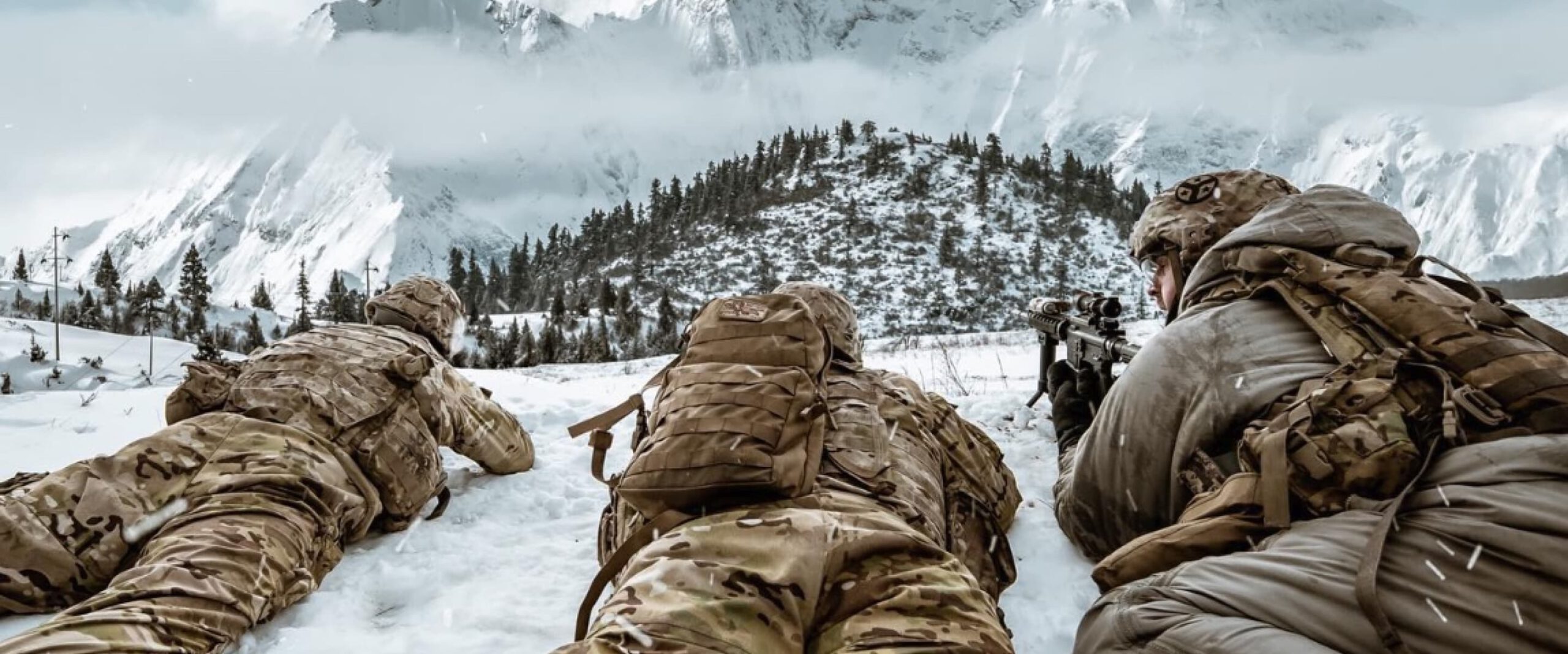
Training for Weighted movements
Athletes are often required to move with weight. Whether they’re mountaineering, in a military selection pipeline, or carrying the minimum required kit in an ultra marathon trail race that could last 80+ hours. Military athletes are often forced to maneuver and perform with a heavy loadout...
 evokeendurance.com
Article for article.


Genuine question here: what are some realistic/good-enough type strength thresholds for endurance-focused athletes?
Rightly or wrongly, I've zeroed in on 1.5x bodyweight for squat and deadlift.
I think that's probably a bit low on deadlift--maybe target 2x bodyweight for deadlift?
These are roughly derived from the Uphill Athlete material + a few years' experience. And they're calculated 1 rep max, based on 4 sets of 5.
For upper body, I've found through experience that 3 sets of 10 pullups, and 1 unbroken set of 50 pushups, is a minimum for me: if I can't do that, my arms get tired and sore from hauling a bow around all day.
I've sinced upped the pullups to 3 x 15, but will move on to weighted pullups once I do 3 x 15. Upping the reps from 15 seems silly, but that's based on nothing.
Thoughts welcome, appreciate the discussion.
Rightly or wrongly, I've zeroed in on 1.5x bodyweight for squat and deadlift.
I think that's probably a bit low on deadlift--maybe target 2x bodyweight for deadlift?
These are roughly derived from the Uphill Athlete material + a few years' experience. And they're calculated 1 rep max, based on 4 sets of 5.
For upper body, I've found through experience that 3 sets of 10 pullups, and 1 unbroken set of 50 pushups, is a minimum for me: if I can't do that, my arms get tired and sore from hauling a bow around all day.
I've sinced upped the pullups to 3 x 15, but will move on to weighted pullups once I do 3 x 15. Upping the reps from 15 seems silly, but that's based on nothing.
Thoughts welcome, appreciate the discussion.
Similar threads
- Replies
- 2
- Views
- 618

- Replies
- 13
- Views
- 721


- Replies
- 357
- Views
- 39K

- Replies
- 18
- Views
- 2K


Featured Video
Latest Articles
- Tony Trietch on Big Mule Deer, Desert Bulls & Western Hunting Evolution
- The Right to Hunt & Fish Colorado (and North America)
- Mastering New Zealand’s Mountain Hunts: Challenges and Rewards
- Iron Will Turkey Broadhead Review
- Nevada Mule Deer & The Trade-Offs in Wildlife Management
- Spartan SpringBok Bipod Review
- All About Pronghorn & Hunting Big Ones with Chance Marshall
- Bill Vanderheyden Debunks Myths About Long-Distance Accuracy
- What Do Elk Eat? Elk Nutrition, Habitat, and Finding More Elk with Luke Schultz
- Patagonia Nano Air Ultralight Hoody Review