MTGunner
Lil-Rokslider
I practice longe range in Sitting and prone positions. Sitting I employ a bipod. But, practice, practice, practice and more. Get use to being comfortable in uncomfortable position. MTG

Follow along with the video below to see how to install our site as a web app on your home screen.
Note: This feature may not be available in some browsers.
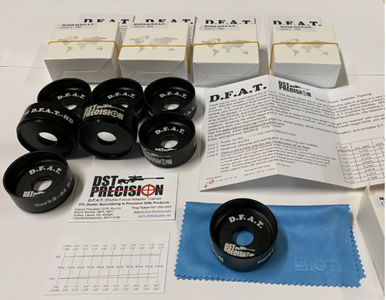
 riflesonly.com

But you did have to fire 20 shots to know that is true rather than guessing or hoping it.Look at any of those Target pictures I posted. What would you gain from 5-shots to 20? Same for the avg MV graph, what do you gain from 5 shots to 20-shots
You understand the average MV is different than MV SD, right? Your average shot location is different than your radial SD.
Look at any of those Target pictures I posted. What would you gain from 5-shots to 20? Same for the avg MV graph, what do you gain from 5 shots to 20-shots
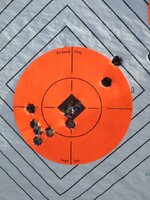
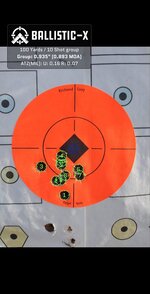
My problem with learning to shoot lots and lots of rounds to "confirm" zero is that you don't learn that every shot counts, and it's very expensive. Btw, this is similar in archery hunting for me. Most game won't let you warm up while you get into a grove. My reloads are built with great care. I'm not going to waste them to shoot 10-30 round groups to confirm zero. You'd be better off shooting 1 round on 10 different days that 10 at once.
You can find experts on every topic on the internet that disagree with each other. I've been watching Eric Cortana's channel on Youtube. You can't apply all of his target shooting methodology to hunting all of the time, but there is a lot of information that can be applied to hunting. I think the same applies to everyone else including Hornady.
Sure, Hornady has knowledge that can be gained as well, but if you believe only Hornady, you probably shouldn't buy any caliber other than their designs, and only use their bullets. Btw, I watch the Hornady series, but I don't missed the one that said you need to shoot 10-30 round groups to confirm zero.
Good for you, realizing your limitations and being honest. I'm not just saying that either.Being self-aware and critical of where I stand as I hunter, I can honestly say I'm not that great of a shot outside of 220+ yds. This is where I will be focusing a lot of my time over the next few months and would like to be confident out to roughly 500yds by fall.
I realize to get where I want to be; it's going to take practice, practice, and more practice. I hunt with a Tikka T3 Lite 270 WSM. Should I be spending most all of my range time behind the rifle I'll hunt with, or can I use a smaller caliber (.22-250 or .243) to save on ammo cost and recoil abuse? I have a hard time not flinching and thought using a smaller caliber with negligible recoil may help in that area?
I'd also like to hear how many shots people usually take during a range session and any other recommendations or tips to improve my accuracy?
Thanks!
Is it the factory, or a limbsaver? I was pretty shocked by how much better one of my Tikkas without a brake feels to shoot just by throwing one of those on, I bought one for every factory rifle I own now.3. My Tikka is stock and has a rubberized buttstock.
Something that helped me was going through the motions slowly and focusing on all of the mechanics and fundamentals, every single shot. Taking it to the point it becomes mental-muscle memory. Watch some of the videos of those referenced and learn how to build the proper position, hand placement, breathing, trigger SQUEEZE, follow through, etc. and practice that when you're dry firing. Then when you get to the range, don't change a thing. Go through every single one of those same motions focusing on them all the way through breaking the shot, and you won't flinch.5. I've done the dry fire at home and either I'm not doing it effectively or doing it incorrectly. I'm easily able to hold the crosshairs before, during, and after a trigger pull knowing there's nothing in the chamber. My problem lies within the first couple shots and that's what counts when hunting. I truly believe that I just need a LOT more trigger time to become more accurate. I've heard that having someone hand you a rifle without knowing if it's loaded or not, can really help minimizing flinching. Unfortunately, I will be shooting alone for the most part and that is not an option.
Will definitely try this.Is it the factory, or a limbsaver? I was pretty shocked by how much better one of my Tikkas without a brake feels to shoot just by throwing one of those on, I bought one for every factory rifle I own now.
Something that helped me was going through the motions slowly and focusing on all of the mechanics and fundamentals, every single shot. Taking it to the point it becomes mental-muscle memory. Watch some of the videos of those referenced and learn how to build the proper position, hand placement, breathing, trigger SQUEEZE, follow through, etc. and practice that when you're dry firing. Then when you get to the range, don't change a thing. Go through every single one of those same motions focusing on them all the way through breaking the shot, and you won't flinch.

5. I've done the dry fire at home and either I'm not doing it effectively or doing it incorrectly. I'm easily able to hold the crosshairs before, during, and after a trigger pull knowing there's nothing in the chamber.
My problem lies within the first couple shots and that's what counts when hunting. I truly believe that I just need a LOT more trigger time to become more accurate. I've heard that having someone hand you a rifle without knowing if it's loaded or not, can really help minimizing flinching. Unfortunately, I will be shooting alone for the most part and that is not an option.
So you can’t or won’t answer any of those questions?
Do you have any data of your own to show why a particular round count is used?
To anyone here that cares, I’ll give some more of my data. Multiple rifles, multiple factory ammo, from a nobody hobbyist shooting prone with a bipod & rear bag:
30-rounds from 6CM (I've posted results from this rifle already in this thread).
View attachment 549000
Green dot is center of 30-shot aggregate. Red dot is center of running group.
View attachment 549001
View attachment 549005
Below is 34 rounds from my Ti/Ca 7RM primary hunting rifle (using factory ammo). This is the third rifle and third cartridge I've posted so far in this thread. Pictures of Groups HERE
View attachment 549010
View attachment 549011
Here's the fourth rifle I’ve posted in this thread (the second 6.5CM) with factory ammo (I think this is the 19th different type of factory ammo I've posted in this thread)
View attachment 549014
View attachment 549016
View attachment 549017
As much as I don't like saying it, and as much as many on here won't like reading it, 3-shot groups will get a good zero the vast majority of times. That obviously assumes the shooter has half a clue and they are using good gear. It's a rare occurrence for a 5-shot group to not work. And by the way, to anyone paying attention, I am not and have not advocated for people to shoot less in the general sense. Everyone should shoot more. However, the idea that a couple 10-round groups gets you rock solid, pin pointed zero offsets is simply not true - particularly when those advocating for 10-round groups are also strangely advocating for lower levels of performance. In terms of achieving zero, a slightly higher round count does not solve for inconsistencies.
Because this thread has derailed, I’ll also throw in that IME sub MOA 20-shot groups is normal (as seen by the 19 different 20-shot groups I’ve posted so far) and quality factory “match” ammo will consistently shoot ~5/8 MOA 5-shot groups with MV SDs in the sub 15 fps range over 20 rounds. Competent handloaders can achieve better, better shooters can shoot better, and specialized equipment will also perform at a higher standard.
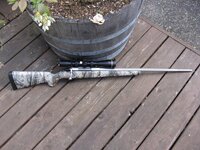
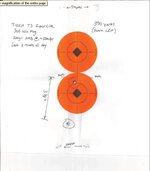

I am in a very similar place as you are, don’t really enjoy shooting just to shoot and don’t like burning through ammo either, but need to do it enough to be effective in hunting situations. What helps me most is going out for a short hike in real-situation areas on public land and setting up to shoot off my backpack or as I would when hunting. Before that though biggest thing for me that helps confidence is shooting on a bench just enough to know 100% that my rifle is accurate and dialed so when I am shooting elsewhere I know that bad shots are all on me and not my equipment. Then just set up different unique scenarios to shoot from that you’ll encounter while hunting and shoot 2 or 3 rounds per setup til you get more comfortable.Grab a .223 and get shit figured out with that first. a tikka setup the same as your 270 would be a good choice
I wouldnt spend much time shooting off a bench.
I used to shoot 200-300 rounds of rifle when I would go out. Hind sight, I was just burning powder with alot of those rounds. Now days I generally bring 100 rounds of .223, and 50 of 243 and 300rum. I generally dont burn them all up either.
Now when I get to the point I feel I am just burning powder I wrap it up. Some days thats only 20 rounds.
I don't shoot many shots anymore unless I am out at my friends farm. We shoot anywhere from 200 to about 1400 out there. Practice helps but getting a coach to help also helps a lot too. I was lucky that my hunting buddy was a sniper in the Army and my father was a Marine. One afternoon at the range with them I was shooting to 800 in high wind.Being self-aware and critical of where I stand as I hunter, I can honestly say I'm not that great of a shot outside of 220+ yds. This is where I will be focusing a lot of my time over the next few months and would like to be confident out to roughly 500yds by fall.
I realize to get where I want to be; it's going to take practice, practice, and more practice. I hunt with a Tikka T3 Lite 270 WSM. Should I be spending most all of my range time behind the rifle I'll hunt with, or can I use a smaller caliber (.22-250 or .243) to save on ammo cost and recoil abuse? I have a hard time not flinching and thought using a smaller caliber with negligible recoil may help in that area?
I'd also like to hear how many shots people usually take during a range session and any other recommendations or tips to improve my accuracy?
Thanks!
In terms of working through a flinch, dry fire is the answer. Even the guy that said dry fire is not the answer suggested that you dry fire, LOL.
Your #2 paragraph is spot on. I've got good equipment, just need to put the time in behind the scope.Backup hunting rifle (carbon stock, CF wrapped barrel). Factory ammo. Shot today.
This rifle is getting fed all kinds of factory ammo, and it's not truly zero'd for anything at the moment.
View attachment 550278
View attachment 550279
View attachment 550280
Difference in elevation zero offset is 0.02 mils
Difference in windage zero offset is 0.04 mils
.......both of those differences are less than 0.05 mils. If you are seeing significant variance in zero offsets between a 5-shot group and a 10-shot group, you've got a shooter and/or gear issue. Pretty simple.
A couple generic points from my perspective:
1) The +/- 500 rounds that I've posted in this thread, is not high level performance. I've said this in multiple threads, and shown my own experience with many different types of factory ammo that 1/2 to 5/8 moa 5-shot groups, 3/4 to 7/8-MOA 10-shot groups, and about 1-MOA 20-shot groups is at least the low bar of where expectations should be set.
2) For people looking to really get into this (like the OP), assume that you are the problem unless proven otherwise. Your zero will wander because you are inconsistent. Your group sizes will be inconsistent because you are inconsistent. Follow trends over time and evaluate performance relative to what & how you are practicing. Adjust if needed. The notion that you can fire a few extra rounds and now your zero offsets are rock solid will lead you to chase your tail in the beginning.
In terms of working through a flinch, dry fire is the answer. Even the guy that said dry fire is not the answer suggested that you dry fire, LOL.


