
Sounds like you guys are doing it right. Pew Science is the gold standard for suppressor measurement quality and objectivity. Love to hear that you stand behind your products’ transparent evaluation in that way. Looking forward to reading the reports.

Navigation
Install the app
How to install the app on iOS
Follow along with the video below to see how to install our site as a web app on your home screen.
Note: This feature may not be available in some browsers.
More options
Style variation
You are using an out of date browser. It may not display this or other websites correctly.
You should upgrade or use an alternative browser.
You should upgrade or use an alternative browser.
T & K Suppressors Altus™ and Vorix™
- Thread starter TandKHunting
- Start date

Yeah independent testing is pretty much mandatory to make any kind of statement about dB.
I can affect the reading on a 2255 by 10-15 dB either direction at will just through mic orientation. Not to even mention mic placement or introducing or moving physical objects around the area within or adjacent to the field of measurement.
I bet the cans are great regardless.
I can affect the reading on a 2255 by 10-15 dB either direction at will just through mic orientation. Not to even mention mic placement or introducing or moving physical objects around the area within or adjacent to the field of measurement.
I bet the cans are great regardless.

- Joined
- Jun 1, 2024
- Messages
- 4,764
This seems like a good thread to mention the Principle of Charity.
If there is a problem with the setup that results in the reported values being measured too low, that is probably something best resolved by independent testing or examination of the setup, not accusations of dishonesty. Given that T&K is paying for independent testing from Pew, I expect we will get accurate values that make sense before too long. And if there is something that can be done, in the meantime, to independently check their testing setup, I'm all in favor of it. But it's not like anyone "needs" to buy one of these suppressors right away, and I get a good feeling from T&K's posts that they are open to outside eyeballs looking at their setup, so I expect that any issues can be sorted out fairly easily.
If there is a problem with the setup that results in the reported values being measured too low, that is probably something best resolved by independent testing or examination of the setup, not accusations of dishonesty. Given that T&K is paying for independent testing from Pew, I expect we will get accurate values that make sense before too long. And if there is something that can be done, in the meantime, to independently check their testing setup, I'm all in favor of it. But it's not like anyone "needs" to buy one of these suppressors right away, and I get a good feeling from T&K's posts that they are open to outside eyeballs looking at their setup, so I expect that any issues can be sorted out fairly easily.
OP
OP

- Joined
- May 31, 2023
- Messages
- 532
Independent testing absolutely adds value, and we welcome it. Mic orientation, placement, and environmental factors can influence impulse readings, which is why we follow defined mic positioning and conduct testing in open fields away from reflective surfaces.Yeah independent testing is pretty much mandatory to make any kind of statement about dB.
I can affect the reading on a 2255 by 10-15 dB either direction at will just through mic orientation. Not to even mention mic placement or introducing or moving physical objects around the area within or adjacent to the field of measurement.
I bet the cans are great regardless.
Our approach is simple: use consistent placement, measure averaged LZpeak values, and report what the instrumentation records under those defined conditions. Variability can occur day to day due to atmospheric and environmental changes, but what ultimately matters is consistent high performance across properly controlled testing.
I completely understand the skepticism. There’s a lot of marketing in this industry, and not always a lot of methodology disclosed alongside the numbers. That’s exactly why we publish weighting, mic placement, host platform, ammunition, and averaged LZpeak values.
Healthy skepticism is fair — we just believe the answer to that is transparency and repeatable data, not hype.
OP
OP
- Joined
- May 31, 2023
- Messages
- 532
Had a great talk with @Ryan Avery, whom will be testing our VORIX suppressor personally, while using his own meter. It sounds like he is wanting to do a comparison with @Unknown Suppressors and @AirlockIndustries and publish a full report on his findings on Rokslide.
I will say, I met with the owners of @Unknown Suppressors and @AirlockIndustries.
Both guys and companies are stand up in my book. My hope is that we can give three solid suppressors choices for guys on Rokslide. Support those who support the forum.
Hope everyone is having a good time at Western Hunt if you are here.
I will say, I met with the owners of @Unknown Suppressors and @AirlockIndustries.
Both guys and companies are stand up in my book. My hope is that we can give three solid suppressors choices for guys on Rokslide. Support those who support the forum.
Hope everyone is having a good time at Western Hunt if you are here.
OP
OP
- Joined
- May 31, 2023
- Messages
- 532
This video clip is from our internal LZpeak impulse testing using an HBK 2255. This particular day was a bit gusty, with wind moving primarily from the shooter toward the muzzle (rear → muzzle). We also tested on a separate day that was calm and colder.
For both the VORIX (black suppressor in first clip) and ALTUS (coyote suppressor in second clip), we ran 5-shot averages over multiple days. As expected with real-world outdoor testing in South Dakota, there were small variances due to wind, temperature, and general atmospheric changes — but nothing that created a significant contrast in average dB numbers between calm and gusty conditions.
Platform details:
We understand skepticism in this industry. That’s why we document conditions and run multiple-day testing. These aren’t single “hero shots.” They’re repeatable 5-shot averages captured under real-world conditions.
As always, independent third-party testing will ultimately speak for itself — but in the meantime, we’re committed to showing how and where the data was collected.
My intent as of right now is to submit the VORIX to PEWScience for the .308, 5.56, and .300 Blackout. Where it places? Who knows....as only the universe may know that as of right now. But, we are seeing some great performance on both Super Sonic / Sub Sonic on AR and bolt platforms.
And as I previously stated, Ryan will get his hands on it and test it on his own platform against others.
For both the VORIX (black suppressor in first clip) and ALTUS (coyote suppressor in second clip), we ran 5-shot averages over multiple days. As expected with real-world outdoor testing in South Dakota, there were small variances due to wind, temperature, and general atmospheric changes — but nothing that created a significant contrast in average dB numbers between calm and gusty conditions.
Platform details:
- Tikka .308
- 22” barrel
- Hornady 168gr supersonic
- Ear mic positioned ~6” right of shooter
- Open terrain, minimal reflective surfaces
- Foam windscreen on mic
We understand skepticism in this industry. That’s why we document conditions and run multiple-day testing. These aren’t single “hero shots.” They’re repeatable 5-shot averages captured under real-world conditions.
As always, independent third-party testing will ultimately speak for itself — but in the meantime, we’re committed to showing how and where the data was collected.
My intent as of right now is to submit the VORIX to PEWScience for the .308, 5.56, and .300 Blackout. Where it places? Who knows....as only the universe may know that as of right now. But, we are seeing some great performance on both Super Sonic / Sub Sonic on AR and bolt platforms.
And as I previously stated, Ryan will get his hands on it and test it on his own platform against others.
This video clip is from our internal LZpeak impulse testing using an HBK 2255. This particular day was a bit gusty, with wind moving primarily from the shooter toward the muzzle (rear → muzzle). We also tested on a separate day that was calm and colder.
For both the VORIX (black suppressor in first clip) and ALTUS (coyote suppressor in second clip), we ran 5-shot averages over multiple days. As expected with real-world outdoor testing in South Dakota, there were small variances due to wind, temperature, and general atmospheric changes — but nothing that created a significant contrast in average dB numbers between calm and gusty conditions.
Platform details:
On gustier strings we saw slightly more shot-to-shot spread (which is normal), but the overall averages remained consistent across test days. If wind were artificially “helping” numbers, we would expect to see a noticeable drop compared to the calm day — we didn’t.
- Tikka .308
- 22” barrel
- Hornady 168gr supersonic
- Ear mic positioned ~6” right of shooter
- Open terrain, minimal reflective surfaces
- Foam windscreen on mic
We understand skepticism in this industry. That’s why we document conditions and run multiple-day testing. These aren’t single “hero shots.” They’re repeatable 5-shot averages captured under real-world conditions.
As always, independent third-party testing will ultimately speak for itself — but in the meantime, we’re committed to showing how and where the data was collected.
My intent as of right now is to submit the VORIX to PEWScience for the .308, 5.56, and .300 Blackout. Where it places? Who knows....as only the universe may know that as of right now. But, we are seeing some great performance on both Super Sonic / Sub Sonic on AR and bolt platforms.
And as I previously stated, Ryan will get his hands on it and test it on his own platform against others.
Your readings from the meter are artificially low because the microphone orientation is incorrect for the application.
For free field impulse metering (ie, a gunshot outdoors) the microphone should be pointed at the sound source, not directly up or down.
The microphone is technically omnidirectional for most applications, but at zero weighting, high frequencies are rejected similarly to a cardioid (the actual pickup pattern is in the manual) which will result in a lower overall pressure reading.
It could be off by anywhere from 2-12 dB, so just be aware of that because when other people meter it in the future and it comes back higher, that’s why.
OP
OP
- Joined
- May 31, 2023
- Messages
- 532
That’s an interesting point regarding mic orientation. When I’m back from Western Hunt Expo, we can adjust the microphone incidence per manufacturer free-field guidance and capture another string on video so there’s no question left on the table.Your readings from the meter are artificially low because the microphone orientation is incorrect for the application.
For free field impulse metering (ie, a gunshot outdoors) the microphone should be pointed at the sound source, not directly up or down.
The microphone is technically omnidirectional for most applications, but at zero weighting, high frequencies are rejected similarly to a cardioid (the actual pickup pattern is in the manual) which will result in a lower overall pressure reading.
It could be off by anywhere from 2-12 dB, so just be aware of that because when other people meter it in the future and it comes back higher, that’s why.
Orientation can influence high-frequency response by a few dB depending on angle, but we would not expect dramatic 10+ dB swings from that variable alone. That said, we’re always open to refining methodology and sharing additional data if it improves clarity.
At the end of the day, we’re committed to being fully transparent. We’re willing to post follow-up testing, share methodology, and provide independent third-party results. Ultimately, consistent data across defined conditions is what matters.

Sign me up to see that test!Had a great talk with @Ryan Avery, whom will be testing our VORIX suppressor personally, while using his own meter. It sounds like he is wanting to do a comparison with @Unknown Suppressors and @AirlockIndustries and publish a full report on his findings on Rokslide.
I will say, I met with the owners of @Unknown Suppressors and @AirlockIndustries.
Both guys and companies are stand up in my book. My hope is that we can give three solid suppressors choices for guys on Rokslide. Support those who support the forum.
Hope everyone is having a good time at Western Hunt if you are here.
OP
OP
- Joined
- May 31, 2023
- Messages
- 532
Update for everyone following along —
After speaking with Jay at Pew Science, we’re moving forward with testing the VORIX.
The VORIX is our 7.5" / 11.3 oz titanium suppressor, and we’ll be testing it on the following platforms:
Our goal is to see how the suppressor performs across multiple host types rather than optimizing for a single setup.
We’ll also be putting out more content on our socials with different rifles, barrel lengths, and ammo types so guys can see and hear how it behaves in real-world use. We know tone and platform matter just as much as raw numbers. Our goal is to provide as much knowledge and purchasing power to the consumer as possible.
We’re looking forward to seeing where it lands across these platforms. Jay mentioned we should have data back within the next month.
Appreciate everyone who’s followed along so far. We sold a good amount of cans at Western Hunt and have some larger dealers on board. We will keep posting data as it becomes available.
After speaking with Jay at Pew Science, we’re moving forward with testing the VORIX.
The VORIX is our 7.5" / 11.3 oz titanium suppressor, and we’ll be testing it on the following platforms:
- 5.56 Supersonic (14.5")
- .308 Supersonic (bolt gun)
- .300 Blackout Subsonic
Our goal is to see how the suppressor performs across multiple host types rather than optimizing for a single setup.
We’ll also be putting out more content on our socials with different rifles, barrel lengths, and ammo types so guys can see and hear how it behaves in real-world use. We know tone and platform matter just as much as raw numbers. Our goal is to provide as much knowledge and purchasing power to the consumer as possible.
We’re looking forward to seeing where it lands across these platforms. Jay mentioned we should have data back within the next month.
Appreciate everyone who’s followed along so far. We sold a good amount of cans at Western Hunt and have some larger dealers on board. We will keep posting data as it becomes available.
OP
OP
- Joined
- May 31, 2023
- Messages
- 532
What's up guys,
Below is a video of the VORIX 30 on a .308 (Hornady 168 GR Match). Just an update, we are sending units off to DLC this week and they will be ready to form 3 in a few weeks. Ryan is going to do a side X side with other suppressors here. Additionally, finalizing the details to send this particular can to PEW for the .308, .300 subs, and 5.56.
Below is a video of the VORIX 30 on a .308 (Hornady 168 GR Match). Just an update, we are sending units off to DLC this week and they will be ready to form 3 in a few weeks. Ryan is going to do a side X side with other suppressors here. Additionally, finalizing the details to send this particular can to PEW for the .308, .300 subs, and 5.56.
OP
OP
- Joined
- May 31, 2023
- Messages
- 532
VORIX 30 (7.5" and 11.3 Oz) - 6.5 Creedmoor
ALTUS 30 (5.75" and 7.3 Oz) - 5.56
ALTUS 30 (5.75" and 7.3 Oz) - 5.56
OP
OP
- Joined
- May 31, 2023
- Messages
- 532
Another couple updates. I have lots of em!
I reached out to TBAC about the Silencer Summit. We will be attending this year for testing.
Additionally, we began onboarding with Guidefitter, so you can find both our suppressors and suppressor covers on their website here in the next week or two.
I reached out to TBAC about the Silencer Summit. We will be attending this year for testing.
Additionally, we began onboarding with Guidefitter, so you can find both our suppressors and suppressor covers on their website here in the next week or two.
OP
OP
- Joined
- May 31, 2023
- Messages
- 532
Form 3's start March 16 - 27. We are producing a boat load of cans and will be busy getting them out to both established dealers and existing orders.
@Ryan Avery will be getting a few in his hands next week. I'm sure he will report on the forum when he does some testing.
We will be sending a few out to Jay from PEW here in the next week or two.
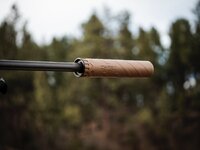
@Ryan Avery will be getting a few in his hands next week. I'm sure he will report on the forum when he does some testing.
We will be sending a few out to Jay from PEW here in the next week or two.
OP
OP
- Joined
- May 31, 2023
- Messages
- 532
Me too.Stoked for the Pew review
I'm sending the VORIX and the HAVIC 6MM.
VORIX will be tested on the .308 Super Sonic and .300 Blackout Subsonic
HAVIC will be tested on the 14.5" 5.56 and MK18
We know our cans are good, but how good will be determined very shortly....

OP
OP
- Joined
- May 31, 2023
- Messages
- 532
VORIX and ALTUS suppressors will be arriving back to the shop from DLC coating next week! We have some available for purchase that can form 3 to your dealers next week.
Guidefitter will be going live with both suppressor covers and suppressors tomorrow.
Guidefitter will be going live with both suppressor covers and suppressors tomorrow.

Levy_ken
Lil-Rokslider
- Joined
- May 21, 2025
- Messages
- 107
What’s the main benefit you see to DLC coating your suppressors? Seems like the typical benefits you usually get from a DLC coating aren’t super applicable to Titanium suppressors. I could be wrong, but in my mind the cost wouldn’t be justified for this application.
OP
OP
- Joined
- May 31, 2023
- Messages
- 532
The benefit is to prevent wear, but we are seeing the process of DLC coating extending the production time by 3-4 weeks, so we have actually decided to stick with Cerakote on everything from now on.What’s the main benefit you see to DLC coating your suppressors? Seems like the typical benefits you usually get from a DLC coating aren’t super applicable to Titanium suppressors. I could be wrong, but in my mind the cost wouldn’t be justified for this application.
OP
OP
- Joined
- May 31, 2023
- Messages
- 532
300 Blackout - 10.5" - VORIX 30
Similar threads

- Replies
- 15
- Views
- 824


- Locked
- Replies
- 0
- Views
- 1K


- Replies
- 13
- Views
- 1K



Featured Video
Latest Articles
- From Big Bucks to Bear Hunts: Catching Up with Jordan Budd
- Mule Deer Days Wildlife Conservation Mashup
- A Hidden Gem: Hunting Washington with Kari Thomas
- Prime Divide Bow Review
- Knowledge From Storms: Surviving and Thriving in the Backcountry with John Barklow
- DIY Wyoming Pronghorn Hunt
- Unlock Precision Shooting: Master Your Hunting Game with Competitive Insights
- Topo Topper Rincon Review
- Tony Trietch on Big Mule Deer, Desert Bulls & Western Hunting Evolution
- The Right to Hunt & Fish Colorado (and North America)