Spotting your shot, most import factors.

If I were to have seen this exact same convo about 2 months ago, I'd 100% agree with you and what you're saying.

Yet, I've just experienced the single biggest performance leap I've had in 25 years. Slashing my times by over 20% and accelerating, while at about 95%ish the same accuracy, and also getting better. Rapidly.

All that said, I absolutely would have to concede that I'm not a beginner, and this may not be the right approach for a beginner. For exactly the reasons you said. I also mix in up to 50% snap-caps for some of my evolutions specifically to monitor flinch, and spent 30 years attempting to master trigger control on single, precision, well-aimed shots. So the fundamentals are absolutely sound. Then I just went fast.

And the results are speaking for themselves. I'd definitely encourage you to let loose and give it a go. In a way, it similar to the first time someone tells you not to focus on the front sight, but to focus on the target.

My experience, thus far, is that the snatching, flinching, jerking, etc, are coming from too much time. Again, it's counter-intuitive, and counter-cultural. But nobody jerks the mouse button when they get the cursor on the icon - they don't even think about it. Point, click. It's anticipation and mental loading, through too much time, that were holding me back.

This morning's shooting:

All the aces were 10 rounds under 10 seconds (they're easier), the 5s were slower at about 12-15 seconds. The 3s were all right at just about 3 seconds. All from low-ready:View attachment 983031View attachment 983032View attachment 983033View attachment 983036View attachment 983037

What you are saying makes sense to me, that is to say the added time = added mental loading jives with experiments I have had but in rifle and archery.
 
I imagine different people have weaker or stronger reflex blink pathways. Maybe folks with less reflex blinking can’t relate and not blinking is easy (unless they develop a flinch) you note about “with hearing pro” supports this - would you blink if you fired a breaker gun without hearing pro do you think? (Genuinely asking)

To me it clear that this is a subconscious REACTION (reflex blink) to the noise and or recoil. (an unsurpassed 22LR might help define if the noise or recoil is of greater stimuli to me since it will still be noisy but without recoil)

If I imagine a thought experiment where a 100 people who have never seen or fired a gun are asked to do so without any knowledge of what will happen, I think nearly all would blink after the shot. It’s the normal human response and has to be conditioned out through desensitization. Maybe folks like you that have fired so dang many rounds have Long since done that.

I have never fired full auto anything and don’t anticipate such an opportunity. But it stands to reason that one might stop blinking during a long sustained rapid firing sequence as you become desensitized to it.

@Bobrobheimer , I'm going to make a point here that anything @Formidilosus is trying to coach you on with shooting - just do it. He's not wrong, and you will be 100% good to go in just listening to what he says and applying it.

One of my earlier comments was intended just to help give another method of desensitization and a way to teach how to stay in-the-moment and zen focused, avoiding the mental loading of anticipation - definitely did not mean to hijack the thread. Just consider it an obscure data-point to maybe revisit later on, and do your best to take in what Form's saying to you.
 
Yet, I've just experienced the single biggest performance leap I've had in 25 years. Slashing my times by over 20% and accelerating, while at about 95%ish the same accuracy, and also getting better. Rapidly.

Because of “dot on, go bang”? Or because you are allowing yourself, or forcing yourself to act right now?

Two different things.


All that said, I absolutely would have to concede that I'm not a beginner, and this may not be the right approach for a beginner.

It is definitely not the right approach unless someone’s working skill is at a high level.


For exactly the reasons you said. I also mix in up to 50% snap-caps for some of my evolutions specifically to monitor flinch, and spent 30 years attempting to master trigger control on single, precision, well-aimed shots. So the fundamentals are absolutely sound. Then I just went fast.

That all makes sense.


I'd definitely encourage you to let loose and give it a go.


Haha.…. I am familiar with what TPC teaches and why. I have no issue letting go. grin


My experience, thus far, is that the snatching, flinching, jerking, etc, are coming from too much time.

So you have control of the gun, but you aren’t able to control snatching, flinching, jerking- because you have to much time? Think through this logically and critically, and what this means psychologically.


But nobody jerks the mouse button when they get the cursor on the icon - they don't even think about it. Point, click.

A mouse button is not tied to a desire to hit a target, nor an explosion in front of your face, nor putting pressure at an exact instant to break your grip/stance, nor making you focus on two things at once. People with archery target panic don’t have target panic with a mouse button either.


It's anticipation and mental loading, through too much time, that were holding me back.

If it is working for you, no issue. However, it is not what is actually happening, and is generally disastrous when most people try it. Even saying “mental loading” is kind of ridiculous. Like if “oo I just get too much time to think, I just can’t press a trigger”. Or “I just have so much to think about that my brain turns to mush and I can’t perform”. It’s a gun, gain control of yourself at all times, in all situations. The gun fires when I want it to, and it fires how I want it to. Mental loading has no part in it.
 
The gun fires when I want it to, and it fires how I want it to.

The gun is firing exactly when I want it to - where I want it to. Nothing uncontrolled about it, at all.

You and I are saying nearly the same thing about anticipation. What I'm adding is that, at least with pistol and dynamic carbine, the less time spent mentally loading up anticipation (what Rossen is calling static), that discharge is what's causing the jerk/snatch, etc - in direct proportion to how much mental loading is going on. It's the same thing for any high-performance endeavor, especially sports.

The more zen-focused and clear mentally someone trains themselves to be is another way to minimize that static buildup and subsequent discharge before, during, and/or after the shot. Going fast and learning point-and-click is a different path up that same mountain. At least with pistol and dynamic carbine. I can't speak to how this, or much of anything, applies to precision rifle.

BTW, I can't take credit for this - it wasn't an idea I just had one day to go blaze away. I was talking with a former colleague about visual training and target focus drills, and within that conversation I mentioned my personal 15 second barrier on the modified Dalton Drill that has been so frustrating. Afterward he sent me a clip of Matt Pranka discussing shooting fast, along these lines. I went out and applied it. And it took me to an entirely different level. My understandings about it removing time for mental loading are my own, after about 8000 rounds of application and trying to figure out why it was working.
 
I imagine different people have weaker or stronger reflex blink pathways. Maybe folks with less reflex blinking can’t relate and not blinking is easy (unless they develop a flinch)


Everyone blinks in the beginning. Most blink or other anticipation actions their whole shooting life because they never correct it.


you note about “with hearing pro” supports this - would you blink if you fired a breaker gun without hearing pro do you think? (Genuinely asking)

I have shoot without blinking without ear pro. However, that is different- pain and damage to your ears, versus dry fire and live with ear pro where no pain is happening.


To me it clear that this is a subconscious REACTION (reflex blink) to the noise and or recoil.


Of course it is. However just because something is subconscious or natural, does not make it right. Nothing in shooting is natural, quite the opposite. To be skilled at shooting is to ingrain unnatural behavior.


an unsurpassed 22LR might help define if the noise or recoil is of greater stimuli to me since it will still be noisy but without recoil)

Don’t do that- .22’s still cause damage without ear pro.


If I imagine a thought experiment where a 100 people who have never seen or fired a gun are asked to do so without any knowledge of what will happen, I think nearly all would blink after the shot.

Yes it is, and I am unsure what that matters to “correct shooting”.


It’s the normal human response and has to be conditioned out through desensitization.

That is correct. Until someone desensitizes themself to it, and conditions themselves to keep eyes open with no involuntary actions before, during, or after the shot- they will not be shooting optimally.


Maybe folks like you that have fired so dang many rounds have Long since done that.

It that many rounds. Dry fire until your eye doesn’t blink. Then ball and dummy. Until your eye doesn’t blink.


I have never fired full auto anything and don’t anticipate such an opportunity. But it stands to reason that one might stop blinking during a long sustained rapid firing sequence as you become desensitized to it.

Full auto can help with one part of it, but will hurt in another part of it.
 
Everyone blinks in the beginning. Most blink or other anticipation actions their whole shooting life because they never correct it.


I have shoot without blinking without ear pro. However, that is different- pain and damage to your ears, versus dry fire and live with ear pro where no pain is happening.


Of course it is. However just because something is subconscious or natural, does not make it right. Nothing in shooting is natural, quite the opposite. To be skilled at shooting is to ingrain unnatural behavior.


Don’t do that- .22’s still cause damage without ear pro.


Yes it is, and I am unsure what that matters to “correct shooting”.


That is correct. Until someone desensitizes themself to it, and conditions themselves to keep eyes open with no involuntary actions before, during, or after the shot- they will not be shooting optimally.


It that many rounds. Dry fire until your eye doesn’t blink. Then ball and dummy. Until your eye doesn’t blink.


Full auto can help with one part of it, but will hurt in another part of it.
All of this - thumbs up. I will start working on both of those methods - dry fire and dummy rounds. I’ll report back and let folks know how it goes.

(Wasn’t thinking to shoot 22LR without ear protection- just that 22 unsurpassed would be similar in volume to the 6cm suppressed - both with ear protection).
 
The gun is firing exactly when I want it to - where I want it to. Nothing uncontrolled about it, at all.

Then you wouldn’t be having problems by “too much time” to think about it.


What I'm adding is that, at least with pistol and dynamic carbine, the less time spent mentally loading up anticipation (what Rossen is calling static), that discharge is what's causing the jerk/snatch, etc -

That is factually incorrect. Someone with a flinch will flinch if they take 20 seconds to make a shot, or if they take 0.15 seconds to make a shot. In almost all cases the flinch will be worse the “faster” they try to go.


in direct proportion to how much mental loading is going on. It's the same thing for any high-performance endeavor, especially sports.

Sort of, sort of not. Shooting a gun (or bow) has an aspect that almost no other sport or activity does- “the moment I do this, there will be an explosion and it will try to leave my hands”. That alone separates it from most other things.


Going fast and learning point-and-click is a different path up that same mountain.

Almost every USPSA GM that I have seen seen in ball and dummy has a flinch unless they have a heavy bullseye background. It may be controlled, but it is an uncommanded movement during or after the shot.


BTW, I can't take credit for this - it wasn't an idea I just had one day to go blaze away. I was talking with a former colleague about visual training and target focus drills, and within that conversation I mentioned my personal 15 second barrier on the modified Dalton Drill that has been so frustrating.

This may be a thing that you had a barrier to and thinking of it this way is helping you. However, that does not mean it was the actual issue, or that doing so is what most (almost anyone) should be doing- that’s all I’m trying to get at. There are all kinds of mind games to play on people to help them gain control or get over someone, or gain awareness- what is said may have nothing to do with what is actually happening, but some people internalize different things differently.


Afterward he sent me a clip of Matt Pranka discussing shooting fast, along these lines. I went out and applied it. And it took me to an entirely different level.


Matt can shoot of course. But also remember he is a GM that grew up in a heavily bullseye focused place that demanded controlled shooting. He was also part of the reason that it started being acceptable to shoot charlie’s sometimes as well. Some consider that missing.


My understandings about it removing time for mental loading are my own, after about 8000 rounds of application and trying to figure out why it was working.


I am glad the thought is working for you. And while I acknowledge that in the end for you it doesn’t matter, we need to be correct in what is stated. What you are describing I would (I would argue factually) say is a “coping mechanism”.
 
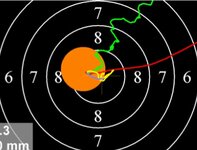
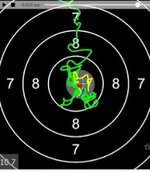
I think what you’re talking about some call active trigger control, and learning it over weaving all over the target until the trigger breaks randomly has resulted in a quick jump in my personal scores. Anything that is quicker and cuts group size is hard to argue against.

What was a surprise to me is it takes a couple tenths of a second for the brain to move the trigger finger, so we’re actually trying to fire slightly before we’re on target. Some try to fire as the crosshairs pause on the target, and this is just trying to find a way to pause for that fraction of a second of reaction time, but that or firing as the crosshairs are almost on target both have been shown to be correct. Both are anticipating and trying to move the finger before the shot to allow the shot to connect. There’s a video mapping Olympic shooters sight picture on target with trigger pull showing different personal variations and no one way was dominant, other than good shooters have consistency.


There's definitely some similarity. I looked at the video's channel, and found this video too, which goes into it a bit, but doesn't explain much of the why behind it, though the "retrain your brain" part is something that's going on.

What they're getting at, and some of what I'm experiencing too, is that it's putting the shooting just a bit deeper into semi-conscious/subconscious control, similar to walking and taking steps. You don't need to tell yourself how to walk through the 18-part stepping process, you just do it. It's the toddler still trying to make conscious decisions at each part of the stepping process, who is experiencing anticipation/mental loading and being future/fear oriented, rather than staying in the moment, that's having the problems. In a violent encounter, whether shooting birds or dealing with someone shooting at you, your shooting needs to be so ingrained that it's the easiest part of navigating the encounter.

What I'm also experiencing, is that like with foreign language or fighting or batting or throwing a pitch or whatever, it's much more of a repetition over time thing, rather than the amount of time per repetition. Getting good, quality reps in, in volume - not how long each one takes. Because it's training the brain to stay in the moment, just in a different, far faster way than walking yourself through the steps of a shot process, or anticipating the meaning of a given shot. It just pushes all that bull$h*t out of the way, and you just go.

To use the crawl-walk-run training analogy though, it feels like I just went from toddling to sprinting. It's a cool experience to get a breakthrough like this.
 
There's definitely some similarity. I looked at the video's channel, and found this video too, which goes into it a bit, but doesn't explain much of the why behind it, though the "retrain your brain" part is something that's going on.

What they're getting at, and some of what I'm experiencing too, is that it's putting the shooting just a bit deeper into semi-conscious/subconscious control, similar to walking and taking steps. You don't need to tell yourself how to walk through the 18-part stepping process, you just do it. It's the toddler still trying to make conscious decisions at each part of the stepping process, who is experiencing anticipation/mental loading and being future/fear oriented, rather than staying in the moment, that's having the problems. In a violent encounter, whether shooting birds or dealing with someone shooting at you, your shooting needs to be so ingrained that it's the easiest part of navigating the encounter.

What I'm also experiencing, is that like with foreign language or fighting or batting or throwing a pitch or whatever, it's much more of a repetition over time thing, rather than the amount of time per repetition. Getting good, quality reps in, in volume - not how long each one takes. Because it's training the brain to stay in the moment, just in a different, far faster way than walking yourself through the steps of a shot process, or anticipating the meaning of a given shot. It just pushes all that bull$h*t out of the way, and you just go.

To use the crawl-walk-run training analogy though, it feels like I just went from toddling to sprinting. It's a cool experience to get a breakthrough like this.
There is certainly power in getting the conscious brain out of the way. To this day I'm not good at shooting without aiming. But as a teenager I hunted squirrels with a 22, one day I went with a friend and used a 12 ga with a tight choke. I was not familiar with shotguns and stupidity thought I didn't have to aim. I killed a good number of squirrels that day never doing more than looking at the squirrel and bringing the gun up, I wasn't even trying to aim.

Sadly, I can't repeat that performance as my consciousness mind tries too hard.
 
There's definitely some similarity. I looked at the video's channel, and found this video too, which goes into it a bit, but doesn't explain much of the why behind it, though the "retrain your brain" part is something that's going on.

What they're getting at, and some of what I'm experiencing too, is that it's putting the shooting just a bit deeper into semi-conscious/subconscious control, similar to walking and taking steps. You don't need to tell yourself how to walk through the 18-part stepping process, you just do it. It's the toddler still trying to make conscious decisions at each part of the stepping process, who is experiencing anticipation/mental loading and being future/fear oriented, rather than staying in the moment, that's having the problems. In a violent encounter, whether shooting birds or dealing with someone shooting at you, your shooting needs to be so ingrained that it's the easiest part of navigating the encounter.

What I'm also experiencing, is that like with foreign language or fighting or batting or throwing a pitch or whatever, it's much more of a repetition over time thing, rather than the amount of time per repetition. Getting good, quality reps in, in volume - not how long each one takes. Because it's training the brain to stay in the moment, just in a different, far faster way than walking yourself through the steps of a shot process, or anticipating the meaning of a given shot. It just pushes all that bull$h*t out of the way, and you just go.

To use the crawl-walk-run training analogy though, it feels like I just went from toddling to sprinting. It's a cool experience to get a breakthrough like this.
Thats a good feeling to have a break through like that. There’s a lot to be said for the sub conscious part of shooting, that helps things effortlessly click into place. During practice I’m convinced our brains are working behind the scenes making new connections under the surface between muscles, eye sight and intuitive reactions that just take repetition and consistency to mature to a point and finally come out. Maybe it’s why improvement often comes in big growth spurts rather than a gradual progression.

I also firmly believe in the power of suggestion, visualization, placebo effect, or whatever you want to call it. A certain loaner 243 killed everything that it was ever aimed at. In my social circle it was sort of a joke at first, and we always told the young shooter borrowing it it’s like a guided missile and if they concentrate on the shot the gun will do the rest. Year after year all the inexperienced shooters that used it really seemed to not be able to miss with it. It was almost creepy. No, it was creepy. A school teacher friend said he’s been around guns and new hunters his entire life and never seen anything like it. He would search out kids to borrow it just trying to get it to fail, but it never did. I know there was nothing special about the gun other than our belief in it and belief in the shooters, and that is contagious. He wasn’t religious and didn’t believe in super natural stuff, but he believed in that rifle so much he offered new price for the old gun with pitted bore. We had history with it that made it more valuable than a new gun. I’m sure he still has it and it’s still a guided missile. lol
 
RockAndSage said:
Something I've been working pretty hard on lately with pistol, is giving myself zero time to fine-tune the shot, and just press the trigger the absolute instant I perceive the dot crossing onto the target.
That is a 100% guaranteed way to introduce snatching and flinching.

.

I learned this the hard way… you have to learn to embrace the wobble and only fire when the wobble settles within the target. Then, you can focus on the perfectly clean smooth trigger press.

That requires building the solid position. My snatching was to “time” shots when my wobble was close but not good enough. Timing shots is nearly impossible, even with a 8 ounce trigger.

When your wobble is inside the target, you can build pressure until you get a clean break. Form described it in a thread on 1911 with a slow smooth break of the trigger to also eliminate even small movements.

Now, I try to build pressure on the trigger with no intention of exactly when it will go off. I trust the wobble. In that sense, it surprises me. But, reality is I can feel and know almost exactly when it will go off.

@RockAndSage gave later description that isn’t “timing” in that sense but is just speeding up the process and pressing the trigger inside what I would say is getting a clean break inside the well practiced wobble—not snatching over the target with hope and a prayer.
 
Marbles has got it mostly. I put it more towards the shoulder.

View attachment 982852

View attachment 982851

@Marbles. @Formidilosus thank you guys for taking the time to do this.

I’ve been shooting medial and off the collar bone for the last decade cause that’s what the snipers told me to do. Will try this time next range session.

when you take positional shots, (like seated, standing) is your chest still square to the target? Seems by the nature of the shoulder pocket, the rifle can be square to the pocket without the entire chest being square to the target. Does it matter as long as the recoil is directed straight back?

@mxgsfmdpx @hereinaz feel free to chime in
 
There is certainly power in getting the conscious brain out of the way. To this day I'm not good at shooting without aiming. But as a teenager I hunted squirrels with a 22, one day I went with a friend and used a 12 ga with a tight choke. I was not familiar with shotguns and stupidity thought I didn't have to aim. I killed a good number of squirrels that day never doing more than looking at the squirrel and bringing the gun up, I wasn't even trying to aim.

Sadly, I can't repeat that performance as my consciousness mind tries too hard.
Shotgun shooting REQUIRES “not aiming”. Focusing on a bead or barrel, even briefly, IS aiming. Hard target focus is a requirement, not an option, for shotguns or else you lose your natural eye/hand coordination that allows you to build in a lead. It can be done “aimed” in repetitive games like skeet where the presentation is always exactly the same and can be “learned”, but in novel shots aiming literally causes you to miss. There are a host of topics within shotgun shooting that are all focused (see what I did there?) on as easily as possible acquiring and maintaining your hard target focus for first and follow-up shots—including stock design, head (eye) position, etc covered in this post. A few of the posts in this thread run very counter to that concept though, even though I personally see a lot of parallels. I suspect rifles and pistols, even when shot dynamically, benefit from some different concepts though. Im not sure how much crossover there is or isnt.
 
when you take positional shots, (like seated, standing) is your chest still square to the target? Seems by the nature of the shoulder pocket, the rifle can be square to the pocket without the entire chest being square to the target. Does it matter as long as the recoil is directed straight back?

The rifle needs a 90° surface to recoil against, and your body position needs to be (as best as possible) in a position that allows the rifle to recoil straight to the rear with no deviation. So while you won’t be able to get your chest perfectly square- or maybe even close to square; your body position needs to be correct.
The start of that is rolling your shoulder forward to create a 90° surface or pocket for the buttpad to interface with.
 
If a shooter’s only skill is wobbling as little as possible while the trigger breaks randomly within that wobble that leaves a lot of questions about why squeezing the trigger has any training effect at all. Why not just practice not wobbling if trigger break is to be random? It is valuable to beginning shooters who struggle with all aspects of shooting, and many shooters spend a lifetime doing nothing else, but sticking with it is like saying how we teach in kindergarten is appropriate for teenagers or adults. Active trigger control is less doable with horrible triggers, so it’s not surprising many pistol and rifle shooters are unable to overcome the limitations of crap manufacturing and rough low cost lawyer proof designs.

We all know wobble coming onto the target is not all uniform and some portions are smoother than others. Active trigger control takes accuracy above the random wobble by making the best use of the movement onto the target. It’s not being reckless waving the gun around until the crosshairs rush by the target, but it’s coming into the target with purpose, steady, uniformly, much the same as a passive trigger break, but ready to set the hook at the first instant the direction of and speed of movement has set the shot up for success. Not random whatsoever. If anything those who focus on the wobble can rush onto the target THEN minimize movement, while active trigger control requires the person to be 100% ready for the trigger to break the moment before reaching the target.

SCATT trainers show the difference in philosophy between those that dwell on the target waiting for the trigger to randomly break and those that take the first suitable shot coming onto the target. For hunters, eliminating much of the time spent wobbling is also faster and better able to adjust to animal movement. Even without a computer to graph movement, all shooters can benefit from consciously understanding every part of how they come onto the target and get the shot off to maximize consistency.


IMG_1228.jpegIMG_1230.jpeg
 
Form described it in a thread on 1911 with a slow smooth break of the trigger to also eliminate even small movements.

It depends on the target at the situation- more below.


Now, I try to build pressure on the trigger with no intention of exactly when it will go off. I trust the wobble. In that sense, it surprises me. But, reality is I can feel and know almost exactly when it will go off.

Yes. And this can happen in 15 seconds or it can happen in .5 seconds. When you are at .25 sec splits and under… at that speed you are commanding the gun to go off. And at large targets (close) or targets where missing doesn’t carry a heavy consequence, no issue. But as the target gets smaller or the consequence for not hitting gets higher, it demands more attention be paid to the trigger press.


@RockAndSage gave later description that isn’t “timing” in that sense but is just speeding up the process and pressing the trigger inside what I would say is getting a clean break inside the well practiced wobble—not snatching over the target with hope and a prayer.


THAT- absolutely. All of this cause back and forth is due to text. In person, this is a 2 minute conversation and a demo. Our brains do really bad things when we start trying to think about “speed”. If someone says “pull the trigger really fast”- very often they trigger freeze and/or have slower splits than if they just relax and shoot. Similarly, if someone is shooting a very low percentage shot (small target) so they “slow down and be precise”, almost always their draw and presentation slows down as well.
The only thing that should vary is the “compression” of the trigger press and the continuous refinement of the sights while that is happening. A 1 second draw is a 1 second draw whether the target is at 3 feet and a full IPSC, or if it is a head at 45 meters- the only thing that changes is the attention given to the trigger press and the continuous refinement of the sight(s).
 
If a shooter’s only skill is wobbling as little as possible while the trigger breaks randomly within that wobble that leaves a lot of questions about why squeezing the trigger has any training effect at all. Why not just practice not wobbling if trigger break is to be random? It is valuable to beginning shooters who struggle with all aspects of shooting, and many shooters spend a lifetime doing nothing else, but sticking with it is like saying how we teach in kindergarten is appropriate for teenagers or adults. Active trigger control is less doable with horrible triggers, so it’s not surprising many pistol and rifle shooters are unable to overcome the limitations of crap manufacturing and rough low cost lawyer proof designs.

We all know wobble coming onto the target is not all uniform and some portions are smoother than others. Active trigger control takes accuracy above the random wobble by making the best use of the movement onto the target. It’s not being reckless waving the gun around until the crosshairs rush by the target, but it’s coming into the target with purpose, steady, uniformly, much the same as a passive trigger break, but ready to set the hook at the first instant the direction of and speed of movement has set the shot up for success. Not random whatsoever. If anything those who focus on the wobble can rush onto the target THEN minimize movement, while active trigger control requires the person to be 100% ready for the trigger to break the moment before reaching the target.

SCATT trainers show the difference in philosophy between those that dwell on the target waiting for the trigger to randomly break and those that take the first suitable shot coming onto the target. For hunters, eliminating much of the time spent wobbling is also faster and better able to adjust to animal movement. Even without a computer to graph movement, all shooters can benefit from consciously understanding every part of how they come onto the target and get the shot off to maximize consistency.


View attachment 983264View attachment 983267


Are you an Olympic level biathlete or freestyle competitor? Are you a world class bullseye or service rifle competitor? If not- stop giving advice that you don’t understand.
 
Back
Top