IMO we have three types of resident sheep hunters (insert "any" species).
You have the guys that are seasoned killers, they know how to hunt animals, know the terrain to find them, and know their areas and sheep habits well. They also have multiple places they can hunt each fall, spend countless hours researching, etc etc. Their success rate is 50% or a bit better. Some hunt more than one time for sheep each year, and usually, either they and/or their partner kill a ram each year. Sheep hunting is a priority for them, above all other game. They hunt at least every other year for sheep. They can compete with the guided hunters day in and day out, and are likely as successful. These guys make up maybe 1.5-2% of the resident sheep hunters... There are very, very few resident hunters who kill a sheep every year. ADFG only has data tracking an individual hunter for the last 10 years or so... according to that data, there was ONE sheep hunter out of 10,000 who has killed a sheep ever year in the last 10. If we look at a hunters who have hunted 4 or more times in the last 10 years and have a 50% success rate... we are looking at about 300 hunters out of 10,000 or about 3%.
The second group, which is the largest, made up of enthusiastic hunters, who have the desire to hunt, but lack either the knowledge, time, drive or funds to make sheep hunting a priority each year. They love the idea of killing a sheep more so than actually hunting them. These guys go one or two times and are done. Their success rate, ranges in the 15-18% range. The find out that the reward may not be worth the effort or money spent. They make up about 80% of all hunters. From the numbers about 60% of resident hunters are going on their first hunt each year, and about 20% are on their second hunt.
The final group is made up of hunters who really just want to hunt sheep, but rarely kill one, because the harvest is not that important to them. They hunt them each year or at least ever other year. I believe there are many types in this category, but the one thing they all have in common is the drive to go each fall, or at least every other fall. They may only have the time to go for a weekend, or a few days longer, they may just enjoy the thought of having a sheep tag in their pocket and being in the mountains, or they may have taken enough sheep for themselves and are holding out for something special. For what ever reason, they tend to go often, but rarely punch a tag. This makes up the remaining 18% of hunters.
To be honest I think you could swap out sheep with elk/deer/bear/etc for any of the categories above and see the same trend anywhere. Think of your friends, we all know someone who is either really lucky, or is more dedicated than we are, and are thus more successful. However they tend to make up such a small portion of the overall population that their success really is just a blip on the radar.
For NR hunters we have the same 3 categories above, however I think the percentages may change a bit on the "dedicated" end, but still heavily weighted around category 2. I'd guess maybe about a 10/80/10% split... What they lack in skill/knowledge/dedication/etc is generally made up with the guide's ability. Very few have been sheep hunting before (at least in AK), however hunting skill is hunting skill. Good or bad, we can't all be the star quarterback... IMO, this is the reason why the NR success rate is so high. They're usually being guided by a guy who is in the "elite" category above. If we didn't have a guide requirement, we'd see the NR success rate much lower than we see today, however I think it would probably still be higher than the resident success rate because I doubt many category 3 NR would come hunt. It takes dedication and $$$ to go on a sheep hunt regardless of where you live, but takes a heck of a lot more as a NR. Lets face it, $ is generally always a factor.
The BOG has mentioned in the past that resident hunters just can't compete with guided NR, and IMO they are right. The pool of "elite" NR hunters is skewed well beyond the average because of the guide requirement. In recent years we've seen a reduction in success by NR, which IMO is by and large a result of the increase of NOK coming to hunt. Guided NR have a success rate of about 80%, compared to unguided next of kin hunters, at about 40%. I think NOK success is higher than average resident due in part to their "kin" being either in catagory 1 or approaching it, but at a minimum they have the DRIVE to make it happen and aren't limited by the cost of a hunt.
The way I look at this, is that we have a discrepancy in success because we have an unfair advantage of means/methods of harvest. A guided NR competes on the same level as the elite resident hunter. Compare it to say, a rifle hunt for elk in September, or muledeer hunt in December. We don't hunt at that time of the year because it would be a slaughter. We can't hunt animals with a spotlight, we can't use airplanes to spot/land/pursue animals, etc etc. We have rules in place to keep the playing field somewhat level for he majority of ALL users. I see the guide requirement much the same. I would much rather see the requirement eliminated, and let any NR with the drive/desire to hunt be able to go, rather than only those who can afford it. I would honestly be happy with a cap on the current NR opportunity, if it meant that the guide requirement was eliminated. Since this is a pipe dream, the only logical solution is to reduce NR harvest to acceptable level for the public.
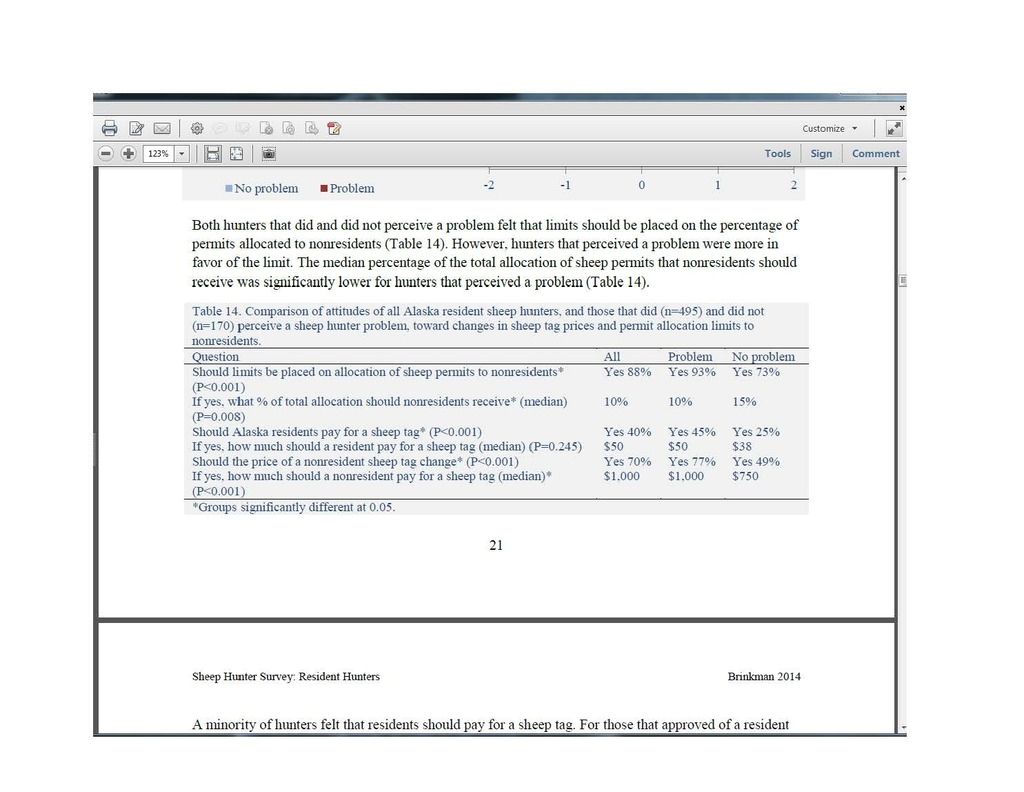
ADFG paid a lot of money for a sheep hunter survey a couple years ago. The survey result was that 88% of all resident hunters would like to see NR opportunity reduced to somewhere between 10-15%. If the poll was closer to the middle, even in the 60% range, I don't think we'd be having the same conversations, over and over. And I really think, if the harvest split between resident/NR was more reasonable at 70/30 or less vs 44/56 we wouldn't be here either. At the continued rate of increase, with no changes, we'll see NR harvest breach the 50% mark in the next 10 years. 30 years ago it was a 70/30 split... There is no other species, in any state (besides brown bears in AK) which has a similar skew. None. The reason? NR are limited in allocation, and/or means/methods are the same for everyone. While success rates can be higher for NRs in some instances, the overall harvest % is rarely much above the participation level %s. We should be managing for ALL types of hunters, not just those who are the most dedicated or affluent, and the majority (2/3rds min) of the resource should go to residents.