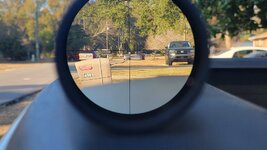
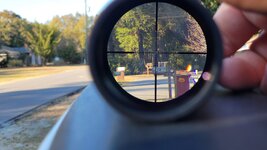
The SHR-Mil reticle is not as good as either the ZP5 THLR or the S2H simplified THLR ... could be worth waiting to see if S2H and Zero Tech would consider putting a THLR version in a larger scope - especially if it's true that the ZP5 THLR has been discontinued.

Navigation
Install the app
How to install the app on iOS
Follow along with the video below to see how to install our site as a web app on your home screen.
Note: This feature may not be available in some browsers.
More options
Style variation
You are using an out of date browser. It may not display this or other websites correctly.
You should upgrade or use an alternative browser.
You should upgrade or use an alternative browser.
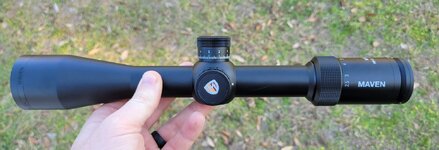
Maven RS1.2 2.5-15x44mm SHR-Mil Q&A
- Thread starter Formidilosus
- Start date
Brandon_SPC
WKR
- Joined
- Feb 19, 2019
- Messages
- 478
Lonewolf72
WKR
I bought one last year, then promptly returned it due to all the bleed-over in the reticle when illuminated. Probably the least-needed feature...and a nice scope...but just couldn't get over that for what I paid for the scope. Been very happy with my SWFA for much less.Got the scope in the mail today. My only complaint is the Illumination is garbage.

sndmn11
“Daddy Zoltar”
I talked to Cade today at the SCI show and he said the 4.2 has the same turrets AND erector as the RS6. There's at least two tests on here of the RS6 passing with the caveat that one bent some little retaining clip within the zero stop, and mine started to. I was told that piece was changed shortly after those results and that change carries on with these.Y'all get the upgrade email? I wonder if it has turrets that hold like the RS1.2.

RS4.2 - 5-30x56 FFP
Buy Maven Outdoor Equipment Company Riflescopes. Our RS Series Riflescopes stack up with the most celebrated and expensive scopes in the world…bar none.mavenbuilt.com
Pretty similar to the ZP5 except the length.
I have one ordered to test over the summer.
Will there be dropping involved?I have one ordered to test over the summer.

swavescatter
Pain in the butt!
- Joined
- Apr 3, 2021
- Messages
- 1,932
Time for some of us to start flooding their socials to ask for the drop test.
 www.instagram.com
Login • Instagram
Welcome back to Instagram. Sign in to check out what your friends, family & interests have been capturing & sharing around the world.
www.instagram.com
sndmn11
“Daddy Zoltar”
DuhWill there be dropping involved?

Kbhillhunter
WKR
I have a pack of the o-rings if anyone wants to buy it, it's a whole pack

Callmesb
FNG
Forgive if this has been answered elsewhere...I searched and couldn't find anything.
I just got my RS1.2 with the SHR-Mil reticle. I've also been studying up on wind bracketing. Does anyone have some guidance on how best to apply wind bracketing ( .1 mil increments) to the SHR-Mil reticle ( .5 mil subtensions)? Guesstimation? Practice? Something else?
I just got my RS1.2 with the SHR-Mil reticle. I've also been studying up on wind bracketing. Does anyone have some guidance on how best to apply wind bracketing ( .1 mil increments) to the SHR-Mil reticle ( .5 mil subtensions)? Guesstimation? Practice? Something else?

bojangles808
WKR
Yes. Cut and pasted from a thread I had saved from FormForgive if this has been answered elsewhere...I searched and couldn't find anything.
I just got my RS1.2 with the SHR-Mil reticle. I've also been studying up on wind bracketing. Does anyone have some guidance on how best to apply wind bracketing ( .1 mil increments) to the SHR-Mil reticle ( .5 mil subtensions)? Guesstimation? Practice? Something else?
Wind brackets
A wind bracket is a certain full value speed of wind in MPH that drifts the bullet .1 mil per 100 yards.
For example-
Wind holds for a 338 Lapua with 300gr Berger-
100- .1
200- .2
300- .3
400- .4
500- .5
600- .6
Etc.
Wind holds for a 223 with 77gr TMK-
100- .1
200- .2
300- .3
400- .4
500- .5
600- .6
Etc.
Those are the base number, and they do not change for any chambering. The difference is that the 223 drifts that much with a 4mph full value wind, the 338 drifts that much in an 8 mph full value wind. This allows one to have the exact same wind call/wind process with every chambering and rifle, the only difference is what wind speed causes the drift.
For normal chamberings with MV’s between 2,400’ish and 2,900’ish FPS, and BC’s between .3-.7 G1, the first number of your bullets G1 BC is the MPH that for that gun. You can round up or down.
For instance, a G1 BC of .612 with a MV of 2,750fps, has a wind bracket of 6 miles per hour. So a full value (straight right to left, or left to right wind) will drift this gun/bullet .1 mils per hundred yards.
Muzzle velocity and environment affects this a bit. For grappling_hook’s example he was faster than 2,900fps, and I guessed at the BC at .4 (it’s actually .409). I am also at 5,000ft density altitude- those two things combined, that is higher MV and higher DA, gives his example a 1mph advantage.
Brackets are not used for absolute precision because you’re not getting that with wind anyways, all the weather meter does is give you what it’s doing at the shooter, which you can learn to feel and judge without the meter… not that you shouldn’t use one. And brackets usually start wandering from the .1 mil per 100 yard path somewhere between 600-700. But, to ensure you have the correct MPH for your gun, take your app set it to 600 yards with your gun, set the wind direction to 90° then change the wind speed in MPH until at 600 yards it says you need .6 mil correction. That MPH is the bracket. That’s the basics.
Correction factors:
Rule of thumbs to get close first, and then how to get your actual correction factor for your gun specifically.
Standard base (average gun)=
100- 0
200- .5
300- 1
400- 2
500- 3
600- 4
So what happens when you have a combo that shoots faster than 2800’ish fps or slower than 2,500’ish with a low BC? General rule is “Bad Gun”, “Average Gun”, “Good Gun”.
Average is the standard above.
Bad= Add .5 mils past 300 to the base.
Good= Take .5 mils off the base past 300 from the base.
How I did @grappling_hook 270 combo is to use the corrections. The BC is .4, but the MV is above 2,900’ish. That means is a “good gun”. He gave 480 yards, base is “2.8 mils”, but it’s a “good gun”, so take .5 mils off. The correction is “elevation 2.3 mils”. How well does it work? The actual correction is 2.2 mils at 5K DA. That’s a .1 mil error= 1.7 inches. Having never shot the rifle, didn’t put it into a calculator, and with 5’ish seconds of getting the range/gun info, I would have killed any big game animal on earth.
If it’s a “Bad Gun”. That is low MV, and/or low BC, add .5 mils to the base. Do not let the numbers overwhelm you. This takes less than 30 minutes to have a solid handle on it with paper practice.
Think critically: Who has a higher chance of killing an animal given all else being equal- a person that needs to look at a drop chart for both wind and elevation adding that time to make the shot? Or a person that can do it in their head in less time than it takes to chamber a round?
Correct. But that is for full value winds. And you can divide.
What I generally suggest in the beginning which works just fine to 600’ish is the wind bracket, MPH divided by no more than half, and full value winds, half value, and no value.
You have a 5mph gun:
1). Range is 400 yards (base .4 right off the bat)
2). 10 mph wind ( 5 goes into 10 twice. So .4x2= .8 mil.
3). Left to right, full value
Correction is left .8 mils
Same gun and range but different wind value:
1). Range is 400 yards (base .4 right off the bat)
2). 10 mph wind ( 5 goes into 10 twice. So .4x2= .8 mil.
3). Left to right, half value (divide .8 by 2= .4 mils)
Correction is left .4 mils
Same scenario with different wind speed:
1). Range is 400 yards (base .4 right off the bat)
2). 7 mph wind ( 5 goes into 7 1.5 times (ish). So .4x1.5= .6 mil.
3). Left to right, full value
= left .6 mils
… And so on and so forth.
It takes some practice on paper to get it down, but it isn’t hard if you follow the flow above, and it works.
Elevation.
The idea that you’re going to be able to pull a kestrel or ballistic app out for every shot on animals is ludicrous… Unless you give up ton of opportunities. That’s not my goal. My goal is to be able kill every animal I see regardless of distance or time. And once you decide to shoot, every single thing that pulls you out of the scope, decreases the likelihood of killing that animal, or increases the likelihood of a rodeo or losing the animal with a wound.
Reducing as many variables as possible increases the hit rate. However, you have the time that the animal gives, and the time that it takes you personally to make the shot. What this is about is decreasing the amount of time you need to make a shot. The below (and the corrected versions) will you get you within .1 mil out to 600’ish yards with the vast majority of gun combos.
Memorize a base.
This is mils
100- 0
200- .5
300- 1
400- 2
500- 3
600- 4
That’s your base. Notice, every 100 yards is a mil. That means every 10 yards is .1mil. That’s critical.
Now, take the above and apply it. Target at 530 yards. Take the first number and take 2 off= “3”. Then the last two becomes the second number, “3”. The drop is 3.3 mils.
Round up or down as appropriate for the last two numbers.
416= 2.2 mils
373= 1.7 mils
564= 3.6 mils
310= 1.1 mils
598= 4.0 mils
The base works for standard rounds- 2,600-2,800fps MV with BC’s between .4-.6. That’s most gun/bullet combos. However, it doesn’t cover them all.
Callmesb
FNG
That info seems to be elevation and wind bracketing intermingled and refers to using .1 mil increments based on the MV and BC of your rifle/cartridge/bullet, which I understand. What I'm asking is, does anyone have any tips for overcoming a specific reticle (SHR-Mil) with .5 mil wind hashmarks when the system for bracketing is based on .1 mil increments.Yes. Cut and pasted from a thread I had saved from Form
Wind brackets
A wind bracket is a certain full value speed of wind in MPH that drifts the bullet .1 mil per 100 yards.
For example-
Wind holds for a 338 Lapua with 300gr Berger-
100- .1
200- .2
300- .3
400- .4
500- .5
600- .6
Etc.
Wind holds for a 223 with 77gr TMK-
100- .1
200- .2
300- .3
400- .4
500- .5
600- .6
Etc.
Those are the base number, and they do not change for any chambering. The difference is that the 223 drifts that much with a 4mph full value wind, the 338 drifts that much in an 8 mph full value wind. This allows one to have the exact same wind call/wind process with every chambering and rifle, the only difference is what wind speed causes the drift.
For normal chamberings with MV’s between 2,400’ish and 2,900’ish FPS, and BC’s between .3-.7 G1, the first number of your bullets G1 BC is the MPH that for that gun. You can round up or down.
For instance, a G1 BC of .612 with a MV of 2,750fps, has a wind bracket of 6 miles per hour. So a full value (straight right to left, or left to right wind) will drift this gun/bullet .1 mils per hundred yards.
Muzzle velocity and environment affects this a bit. For grappling_hook’s example he was faster than 2,900fps, and I guessed at the BC at .4 (it’s actually .409). I am also at 5,000ft density altitude- those two things combined, that is higher MV and higher DA, gives his example a 1mph advantage.
Brackets are not used for absolute precision because you’re not getting that with wind anyways, all the weather meter does is give you what it’s doing at the shooter, which you can learn to feel and judge without the meter… not that you shouldn’t use one. And brackets usually start wandering from the .1 mil per 100 yard path somewhere between 600-700. But, to ensure you have the correct MPH for your gun, take your app set it to 600 yards with your gun, set the wind direction to 90° then change the wind speed in MPH until at 600 yards it says you need .6 mil correction. That MPH is the bracket. That’s the basics.
Correction factors:
Rule of thumbs to get close first, and then how to get your actual correction factor for your gun specifically.
Standard base (average gun)=
100- 0
200- .5
300- 1
400- 2
500- 3
600- 4
So what happens when you have a combo that shoots faster than 2800’ish fps or slower than 2,500’ish with a low BC? General rule is “Bad Gun”, “Average Gun”, “Good Gun”.
Average is the standard above.
Bad= Add .5 mils past 300 to the base.
Good= Take .5 mils off the base past 300 from the base.
How I did @grappling_hook 270 combo is to use the corrections. The BC is .4, but the MV is above 2,900’ish. That means is a “good gun”. He gave 480 yards, base is “2.8 mils”, but it’s a “good gun”, so take .5 mils off. The correction is “elevation 2.3 mils”. How well does it work? The actual correction is 2.2 mils at 5K DA. That’s a .1 mil error= 1.7 inches. Having never shot the rifle, didn’t put it into a calculator, and with 5’ish seconds of getting the range/gun info, I would have killed any big game animal on earth.
If it’s a “Bad Gun”. That is low MV, and/or low BC, add .5 mils to the base. Do not let the numbers overwhelm you. This takes less than 30 minutes to have a solid handle on it with paper practice.
Think critically: Who has a higher chance of killing an animal given all else being equal- a person that needs to look at a drop chart for both wind and elevation adding that time to make the shot? Or a person that can do it in their head in less time than it takes to chamber a round?
Correct. But that is for full value winds. And you can divide.
What I generally suggest in the beginning which works just fine to 600’ish is the wind bracket, MPH divided by no more than half, and full value winds, half value, and no value.
You have a 5mph gun:
1). Range is 400 yards (base .4 right off the bat)
2). 10 mph wind ( 5 goes into 10 twice. So .4x2= .8 mil.
3). Left to right, full value
Correction is left .8 mils
Same gun and range but different wind value:
1). Range is 400 yards (base .4 right off the bat)
2). 10 mph wind ( 5 goes into 10 twice. So .4x2= .8 mil.
3). Left to right, half value (divide .8 by 2= .4 mils)
Correction is left .4 mils
Same scenario with different wind speed:
1). Range is 400 yards (base .4 right off the bat)
2). 7 mph wind ( 5 goes into 7 1.5 times (ish). So .4x1.5= .6 mil.
3). Left to right, full value
= left .6 mils
… And so on and so forth.
It takes some practice on paper to get it down, but it isn’t hard if you follow the flow above, and it works.
Elevation.
The idea that you’re going to be able to pull a kestrel or ballistic app out for every shot on animals is ludicrous… Unless you give up ton of opportunities. That’s not my goal. My goal is to be able kill every animal I see regardless of distance or time. And once you decide to shoot, every single thing that pulls you out of the scope, decreases the likelihood of killing that animal, or increases the likelihood of a rodeo or losing the animal with a wound.
Reducing as many variables as possible increases the hit rate. However, you have the time that the animal gives, and the time that it takes you personally to make the shot. What this is about is decreasing the amount of time you need to make a shot. The below (and the corrected versions) will you get you within .1 mil out to 600’ish yards with the vast majority of gun combos.
Memorize a base.
This is mils
100- 0
200- .5
300- 1
400- 2
500- 3
600- 4
That’s your base. Notice, every 100 yards is a mil. That means every 10 yards is .1mil. That’s critical.
Now, take the above and apply it. Target at 530 yards. Take the first number and take 2 off= “3”. Then the last two becomes the second number, “3”. The drop is 3.3 mils.
Round up or down as appropriate for the last two numbers.
416= 2.2 mils
373= 1.7 mils
564= 3.6 mils
310= 1.1 mils
598= 4.0 mils
The base works for standard rounds- 2,600-2,800fps MV with BC’s between .4-.6. That’s most gun/bullet combos. However, it doesn’t cover them all.

Between cone of fire dispersion and wind calling tolerance your POI is not going to be determined by holding 1.7 vs 1.8.That info seems to be elevation and wind bracketing intermingled and refers to using .1 mil increments based on the MV and BC of your rifle/cartridge/bullet, which I understand. What I'm asking is, does anyone have any tips for overcoming a specific reticle (SHR-Mil) with .5 mil wind hashmarks when the system for bracketing is based on .1 mil increments.
If the call is 1.6 I hold just off center on the 1.5 hash. If it’s 1.7 or 1.8, bracket the target with the hashes. If it’s 1.9 hold just off center on the 2.0 hash.
Edit: should clarify, that’s what I do at the range. On game within 600 yards and reasonable wind it would simply be on hash or bracketed.
Callmesb
FNG
Right on. I just bolted together this 280ai so I have some practicing to do, including getting a sense of how it responds to wind. Thanks for the input.Between cone of fire dispersion and wind calling tolerance your POI is not going to be determined by holding 1.7 vs 1.8.
If the call is 1.6 I hold just off center on the 1.5 hash. If it’s 1.7 or 1.8, bracket the target with the hashes. If it’s 1.9 hold just off center on the 2.0 hash.
Edit: should clarify, that’s what I do at the range. On game within 600 yards and reasonable wind it would simply be on hash or bracketed.

You guestimate. Our eyes are pretty good at splitting up the distance between two points, especially no finer that 1/4s.That info seems to be elevation and wind bracketing intermingled and refers to using .1 mil increments based on the MV and BC of your rifle/cartridge/bullet, which I understand. What I'm asking is, does anyone have any tips for overcoming a specific reticle (SHR-Mil) with .5 mil wind hashmarks when the system for bracketing is based on .1 mil increments.
Callmesb
FNG
My brain’s desire for consistency wants the .1 hashmarks, but I know they’re unnecessary. Especially modestly inside of 500 yards where I’ll be living. I have peeps on my model 94 and that thing is deadly inside of 200.You guestimate. Our eye is pretty good at splitting up the distance between two point, especially no finer that 1/4s.
I would bet, that the higher precision actually results in worse shooting. I have no proof of that, just the observation that a lot of conscious precision gets in the way of the much larger subconscious portions of our brain.My brain’s desire for consistency wants the .1 hashmarks, but I know they’re unnecessary. Especially modestly inside of 500 yards where I’ll be living. I have peeps on my model 94 and that thing is deadly inside of 200.
Callmesb
FNG
Athleticism > AnalysisI would bet, that the higher precision actually results in worse shooting. I have no proof of that, just the observation that a lot of conscious precision gets in the way of the much larger subconscious portions of our brain.
OP
OP

- Joined
- Oct 22, 2014
- Messages
- 15,232
Forgive if this has been answered elsewhere...I searched and couldn't find anything.
I just got my RS1.2 with the SHR-Mil reticle. I've also been studying up on wind bracketing. Does anyone have some guidance on how best to apply wind bracketing ( .1 mil increments) to the SHR-Mil reticle ( .5 mil subtensions)? Guesstimation? Practice? Something else?
Interpolation. If I draw two lines side by side and tell you that the left is “0” and the right is “.5”- you will have no problem at all pointing to where .3 is- or .1, .2, .4, etc. You “interpolate” where the spot is, and hold the reticle there.
OP
OP
- Joined
- Oct 22, 2014
- Messages
- 15,232
My brain’s desire for consistency wants the .1 hashmarks, but I know they’re unnecessary. Especially modestly inside of 500 yards where I’ll be living. I have peeps on my model 94 and that thing is deadly inside of 200.
.1 mil hashes are awful- way too much time spent counting and double checking due to much clutter. .2 mils is the most that is usable.
Callmesb
FNG
Perfect. Thank you. Looking forward to practicing.Interpolation. If u draw two line side by side and tell you the left is “0” and the right is “.5”- you will have no problem at all pointing to where .3 is- or .1, .2, .4, etc. You “interpolate” where the spot is, and hold the reticle there.
Similar threads

- Replies
- 15
- Views
- 2K

- Replies
- 7
- Views
- 642


- Replies
- 15
- Views
- 2K

Latest posts
-

-

-
What brand and model of boots have stayed waterproof in wet grass and conditions?
- Latest: mustelid_master
-


Featured Video
Latest Articles
- Mule Deer Days Wildlife Conservation Mashup
- A Hidden Gem: Hunting Washington with Kari Thomas
- Prime Divide Bow Review
- Knowledge From Storms: Surviving and Thriving in the Backcountry with John Barklow
- DIY Wyoming Pronghorn Hunt
- Unlock Precision Shooting: Master Your Hunting Game with Competitive Insights
- Topo Topper Rincon Review
- Tony Trietch on Big Mule Deer, Desert Bulls & Western Hunting Evolution
- The Right to Hunt & Fish Colorado (and North America)
- Mastering New Zealand’s Mountain Hunts: Challenges and Rewards