Low Light hunting scope

Floridave

Lil-Rokslider
Joined
Sep 20, 2022
Messages
107
Looking for some help with new scope, primary reason is looking for excellent low light performance, those very first and very last moments of legal shooting light in deep dark woods in the southeast.

I have narrowed down to 3, all in the $1200-$1400 range at Eurooptic, all illuminated reticle.
Any thoughts as to which would serve me best? This is not for long range hunting, though I do want to be able to dial for the range.

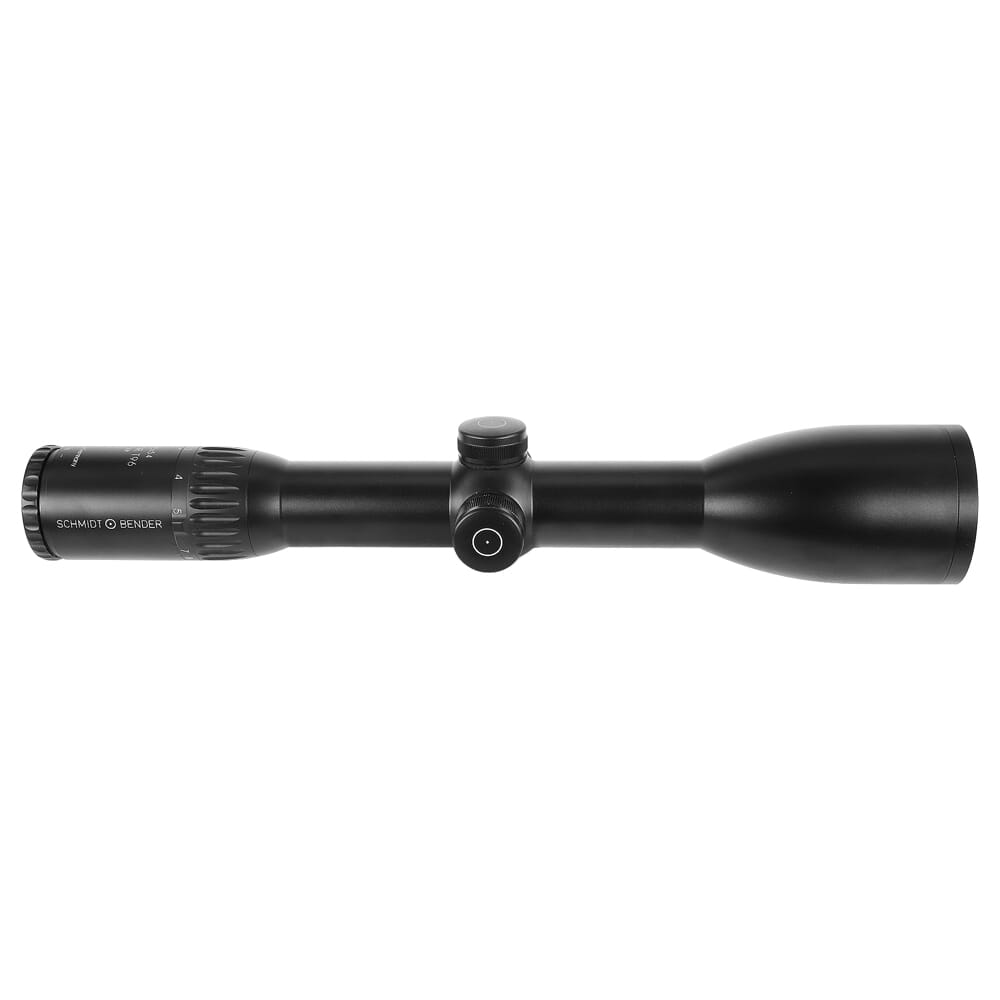
Schmidt Bender 3-12x50 Klassik LM L3

Swarovski Z5i 2.4-12x50 - BT-4W-I

Trijicon AccuPoint 3-18x50 MOA Ranging Reticle with Green Dot

Zeiss Conquest V6 2.5-15x56mm Illuminated Plex Reticle
 
I’d go Schmidt or trijicon from that list.

Some Europeans can hunt at night as long as they don’t use electronics; so my understanding is that Schmidt and Benders are pretty much the top dog in that respect out of those two.
 
S&B from that list. Slightly Stretching the budget will get you the S&B 3-12x50 Zenith which is a step up in low light performance over the Klassik. Both are excellent scopes.
 
I would also add Trijicon Accupoint 2.5-10x56 to your list to consider. Full disclaimer, I do not own that scope. I own lots of other Accupoints though and have been considering the 2.5-10x56 for a low light, shorter range whitetail hunting rifle for my son.
 
I have a Trijicon 2.5x10x56 on a 30-06 and LOVE IT....and my next rifle will have the 3-18x50 on it for the great glass and low light resolution...May actually put on my 280 AI and take scope off of it to give my grandson for his new rifle I bought him. Trijicon is top notch on ruggedness and quality....plus their reticle with non electronic illumination is very good too...if ind the green dot to be precise and easily picked up when hunting.
 
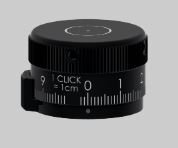
I have had 3 out of the 4 (no swaro), the Klassik is better. Now that I have sold my Klassik, I upgraded to the Polar. Best low legal light optic on the market. What seperates SB from the rest is the illumination. I run a 4-16x56 Polar with elevation turret. It's lockable at any setting as well as has zero stop.

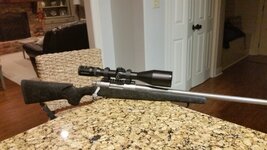
Klassik 2.5x10x56
20181101_182829.jpg

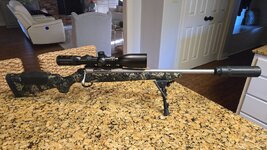
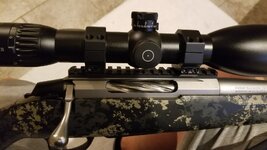
Polar 4-16x56
20251104_161131.jpgturret.JPG

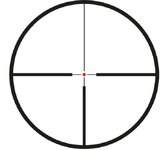
Where the SB shines is when the sun goes goes down. Don't do a comparison in daylight. You won't hardly see the difference. It shine when the sun is starting to go down. Reticle makes a huge difference in low light hunting. I run this
reticle.JPG
Also where SB got this correct is that the illuminated dot is like a pin prick. Thus on the lowest setting its just visible enough so that it doesn't overpower your pupil and blind you. The Zeiss victory HT 3-13x56 (discontinued) was as close to the Polar as they come as far as low light glass and illumination.

I went down this rabbit hole a long time ago. I have legal shooting times with 30 min before sunrise and 30 min after sunset. 90% of my hunting is hardwoods where shots are 150 and in, but I do have open areas that I can go to 400+. Being in the south the foliage on the trees doesn't die until damn near end of December, so the leaves stay on the trees. Thus, blocking out the sun and getting dark waaayyyy before legal times. So when someone tells you that an optic will get you pass legal times, the 1st question you need to ask is where and what terrain do you hunt? Hunting out in west Texas, I can still see 1000 yards in any direction 10 min after the legal 30 min of daylight with my Polar. Here in South Louisiana hard woods, when the sun sets, I turn on my illumination so that its ready for the last 30 min. Of the others on your list, the Trijicon Accupoint is very nice, but I would go 2.5-10x56. Gave that one to my son on his R700.
 
I have had 3 out of the 4 (no swaro), the Klassik is better. Now that I have sold my Klassik, I upgraded to the Polar. Best low legal light optic on the market. What seperates SB from the rest is the illumination. I run a 4-16x56 Polar with elevation turret. It's lockable at any setting as well as has zero stop.

Klassik 2.5x10x56
View attachment 1027028

Polar 4-16x56
View attachment 1027025View attachment 1027026

Where the SB shines is when the sun goes goes down. Don't do a comparison in daylight. You won't hardly see the difference. It shine when the sun is starting to go down. Reticle makes a huge difference in low light hunting. I run this
View attachment 1027027
Also where SB got this correct is that the illuminated dot is like a pin prick. Thus on the lowest setting its just visible enough so that it doesn't overpower your pupil and blind you. The Zeiss victory HT 3-13x56 (discontinued) was as close to the Polar as they come as far as low light glass and illumination.

I went down this rabbit hole a long time ago. I have legal shooting times with 30 min before sunrise and 30 min after sunset. 90% of my hunting is hardwoods where shots are 150 and in, but I do have open areas that I can go to 400+. Being in the south the foliage on the trees doesn't die until damn near end of December, so the leaves stay on the trees. Thus, blocking out the sun and getting dark waaayyyy before legal times. So when someone tells you that an optic will get you pass legal times, the 1st question you need to ask is where and what terrain do you hunt? Hunting out in west Texas, I can still see 1000 yards in any direction 10 min after the legal 30 min of daylight with my Polar. Here in South Louisiana hard woods, when the sun sets, I turn on my illumination so that its ready for the last 30 min. Of the others on your list, the Trijicon Accupoint is very nice, but I would go 2.5-10x56. Gave that one to my son on his R700.


My situation is same as yours, I’m usually in North Louisiana or Florida.
Well. I just went with almost same scope. S&B 3-12x54 Polar
 
i have a swarovski z8i 2x16x50 that is my go to scope for low light hunting. Illuminated reticle is a pin point red dot in the center that can be adjusted to a barely visible glow that does not flood the field of view.
 
I have a Zeiss V6 and I can say the glass is wonderful and while Zeiss scopes haven't fared well in the drop tests here, I bumped the heck out of mine - with my forehead, as I was holding it at port arms and faceplanted into the dirt with the riflescope turrets between my face and the ground - and it didn't budge. Cut my face/nose pretty good though.

But would I buy it again? No. I'd get the S&B based on the drop tests here, then the Trijicon, then the Zeiss, then the Swaro. YMMV.
 
thoughts or opinions on this one? I'm pretty ignorant on this subject but to be honest where I live a light sucking scope for a 138 yard shot is probably more practical than me dialing for 389 yards. I see a big price jump in the polar and curious about the difference between them.

 
I am sort of in the midst of this with my optics as well and thought I'd share a couple of things to consider, and to check my own understanding.

First, exit pupil is calculated by dividing the objective size by the magnification. If there is more to it than that, I am missing it and hope someone clarifies.

Second, it seems accepted that the average maximum pupil size for a "young" person is around 7mm and generally gets smaller as you age, so an exit pupil of of an optic being greater than 7mm is not beneficial.

Third, you need to decide how much magnification you want available and how that will relate to the exit pupil. In other words, do you want to be able to adjust to say 10x or 12x to zero at 100yds, but you hunt and shoot at lower power, even in low light, or do you want to be able to use higher power for shots in all lighting conditions? I often like to use higher power to try to identify any small obstructions (branches, etc.) close to the target, or to pick out details, and this becomes more difficult in low light. Obviously, a higher magnification setting can also cause you to look past obstructions that are very close to you and not the target as well, so there is situational dependence here.


So, a common LPVO of say 1-4X28 would give you a 7mm exit pupil at its max power of 4X, a 3-9X40 would give you a 7mm exit pupil at just under 6X, and a 2.5-10X56 would give you a 7mm exit pupil at 8X.

I consistently see recommendations for large objectives with seemingly not much acknowledgement given to the magnification. In other words, wouldn't a 2.5-10X50 be providing a more than usable exit pupil up until about 7X?

If there are any misunderstandings or generalizations that are too broad here on my part, please correct them. I am trying to firm up my understandings and hope it helps others who are thinking about this.

One other thought...I recently started wearing glasses (again) while hunting. I am struggling to find anything to affirm that the coatings on modern lenses (presumably for blue light) are hindering my low light vision, but it there seems to be an obvious "tint" to my non-transition, "non-tinted" lenses that has led me to think I am wasting my time trying to maximize exit pupil and low light performance if I am wearing glasses that are not allowing the perception of maximum pupil dilation.
 
I am sort of in the midst of this with my optics as well and thought I'd share a couple of things to consider, and to check my own understanding.

First, exit pupil is calculated by dividing the objective size by the magnification. If there is more to it than that, I am missing it and hope someone clarifies.

Second, it seems accepted that the average maximum pupil size for a "young" person is around 7mm and generally gets smaller as you age, so an exit pupil of of an optic being greater than 7mm is not beneficial.

Third, you need to decide how much magnification you want available and how that will relate to the exit pupil. In other words, do you want to be able to adjust to say 10x or 12x to zero at 100yds, but you hunt and shoot at lower power, even in low light, or do you want to be able to use higher power for shots in all lighting conditions? I often like to use higher power to try to identify any small obstructions (branches, etc.) close to the target, or to pick out details, and this becomes more difficult in low light. Obviously, a higher magnification setting can also cause you to look past obstructions that are very close to you and not the target as well, so there is situational dependence here.


So, a common LPVO of say 1-4X28 would give you a 7mm exit pupil at its max power of 4X, a 3-9X40 would give you a 7mm exit pupil at just under 6X, and a 2.5-10X56 would give you a 7mm exit pupil at 8X.

I consistently see recommendations for large objectives with seemingly not much acknowledgement given to the magnification. In other words, wouldn't a 2.5-10X50 be providing a more than usable exit pupil up until about 7X?

If there are any misunderstandings or generalizations that are too broad here on my part, please correct them. I am trying to firm up my understandings and hope it helps others who are thinking about this.

One other thought...I recently started wearing glasses (again) while hunting. I am struggling to find anything to affirm that the coatings on modern lenses (presumably for blue light) are hindering my low light vision, but it there seems to be an obvious "tint" to my non-transition, "non-tinted" lenses that has led me to think I am wasting my time trying to maximize exit pupil and low light performance if I am wearing glasses that are not allowing the perception of maximum pupil dilation.
Yeah, you have the exit pupil about nailed. I’ve heard 8mm as a general maximum. The bigger objectives have a negative effect on parallax error (if non-adjustable); that’s directly related to objective size and target distance.

The other misconception I hear thrown around is that a larger tube size lets more light through, which is not the case.

I’ve been very pleased with my 3-9 swfa; certainly gets me way past legal light even in the deep woods. But low light vision is a very individual experience.
 
Back
Top