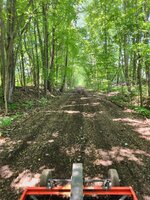
Land clearing

Yes it’s mainly all mature woods.
I’d say if it’s 350, 300 acres of it is wooded, uniformly.

And old growth. I know I could make money in the timber aspect, but wanting some fields for Christmas trees and hidden fields for plots
I got a lot info on my property's timber by scheduling the property to be walked by a rep from the state timber agency. Timber management programs, tax cuts, timber value, roads need to access, ect. I called him last week, 2years after the walk, for clarification on some things. Its been a great reasource. They also can give info on timber harvesting companies in the area.
Word of advice be in shape if you want to walk it with them. The cruze timber every day.. ;)
 
Im in the PNW, here we hire a small time logger to fall the timber and pull the stumps. The stump pulling can add up to more than the timber value sometimes and in those cases you pay a bit. They clear land at an hourly rate. They log for a percentage.

They have a big stumping claw (ripping tooth) they use. Then they pile and burn the stumps and slash. No drying time,

Its not exactly tillable when done. You’ll spend a bit of time cleaning up smaller limbs, roots, ect and burning them. We clean up with a tractor w/bucket and drag rake.

The loggers tend to not like pulling stumps and cleaning up. You have to shop around.
 
What's your plan for the fields you're creating...planting food plots for wildlife, growing pasture to graze livestock, planting a cash crop, opening up space for recreation, something else? The end goal should be considered when you're deciding how many of the trees you leave vs. cut, what you do with the slash, and whether you leave or remove stumps.

The size and species of the timber will determine its potential value to a logger...a bunch of mature walnuts could be a serious money maker, a bunch of stunted trash trees will cost you money to get rid of.
 
I worked in wood procurement for a major paper mill for almost 40 years. I worked daily with loggers and landowners. At one time my duties included writing management plans for private landowners. I supervised the implementation of these plans. Since retirement I work part time as a timber consultant. Someone above mentioned getting the advice of a state forestry professional. That is the best advice you could get. I worked in the southeast US. I have never worked with or heard of a logging contractor that cleared logged ground to tillable condition. One thing you might think about is to decide (maybe with professional help) where you want to clear for crop land. Designate that area for a clearcut harvest and the selectively harvest the remainder of the property to offset the cost of stump removal and site prep. I would advise to have a state professional or a private timber consultant to mark the trees in the select harvest area. You could perform a timber stand improvement harvest where the logger takes out fully mature desirable timber and some or all the less desirable timber. I would also suggest selling the timber on a sealed bid basis. Many states have Best Management Practices for Logging guidelines that require skid trail ruts to be smoothed, water control structures (water bars) on slopes, trash removed and loading areas retired and seeded down.
What state is the land in?
 
Yes that sounds best. I known your right.

The goal is to put in some 5 acre foot plots and also have a dedicated 10-15 acres for Christmas trees / small crop fields for friends and family stuff.

There is a lot of mature hardwoods. I’m not down for clear cutting anymore than i would need to for other uses, but I am for select cut / thinning to help natural undergrowth if it offset some cost and the land could benefit from it
 
Timber sales happen everyday. Work with your local forest service forester to get guidance on setting up the sale and get in touch with loggers. They probably won’t be your land clearing contractor and will absolutely leave stumps. The profit, or lack thereof, has been mentioned. There’s a lot of variables at play and by all means get the most you can but profit from the timber sale seems secondary. The less biomass ( logs, limbs, tops, etc) your clearing contractor has to deal with the easier his job will be. A logging operation that has a market for chips, in addition to other forest products, might be able to give the clearest finished product.
 
Back
Top