Is Utah teeth aging accurate ?

Joined
Aug 27, 2016
Messages
493
Location
Idaho
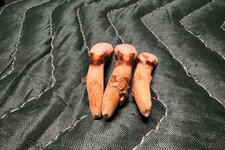
Utah requires elk hunters to send in teeth for aging so that they can determine age of the animals harvested to see if they are hitting management objectives for age. I sent my bull teeth off a few weeks ago.

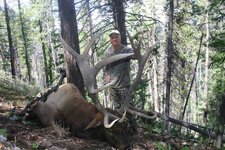
4 years ago, I assisted some friends on a Utah elk hunters and they both killed nice bulls - one 320 and the other almost 340. They were clearly not the same age, based on teeth wear, but when the teeth aging results came back UDFW said they were both 6.5 yr old bulls, which maybe coincidentally is their management objective for that unit.

So the question is, do you think they really are reporting accurate aging on these tooth samples ? What have been your experiences with this ?
 
I know your question is specific to Utah and I have no experience with that but my hunting group of family and friends has sent teeth from all of our harvests here in Oregon for the last 6 years or so and one thing I’ve come to terms with is that tooth wear is not as good of an age indicator as I always believed. We’ve had a number of animals that had significantly different tooth wear patterns that were the same age.

For example, last year my wife and I both killed 5.5 year old blacktail bucks. The teeth on hers were as worn as I’ve seen on a deer but everything else about him indicated a buck in his prime. My buck was smaller but obviously mature and his teeth weren’t nearly as worn. I’ve seen this same variation several times. I also killed a 320+ bull that was 6.5 but had more tooth wear than my friend’s 355 bull. I believe feeding habits and genetics play a significant role in tooth wear, so I wouldn’t rule their aging results out based on that.
 
I know your question is specific to Utah and I have no experience with that but my hunting group of family and friends has sent teeth from all of our harvests here in Oregon for the last 6 years or so and one thing I’ve come to terms with is that tooth wear is not as good of an age indicator as I always believed. We’ve had a number of animals that had significantly different tooth wear patterns that were the same age.

For example, last year my wife and I both killed 5.5 year old blacktail bucks. The teeth on hers were as worn as I’ve seen on a deer but everything else about him indicated a buck in his prime. My buck was smaller but obviously mature and his teeth weren’t nearly as worn. I’ve seen this same variation several times. I also killed a 320+ bull that was 6.5 but had more tooth wear than my friend’s 355 bull. I believe feeding habits and genetics play a significant role in tooth wear, so I wouldn’t rule their aging results out based on that.
They can cut the tooth and get a very accurate age

Sent from my SM-S926U using Tapatalk
 
Utah requires elk hunters to send in teeth for aging so that they can determine age of the animals harvested to see if they are hitting management objectives for age. I sent my bull teeth off a few weeks ago.

4 years ago, I assisted some friends on a Utah elk hunters and they both killed nice bulls - one 320 and the other almost 340. They were clearly not the same age, based on teeth wear, but when the teeth aging results came back UDFW said they were both 6.5 yr old bulls, which maybe coincidentally is their management objective for that unit.

So the question is, do you think they really are reporting accurate aging on these tooth samples ? What have been your experiences with this ?
I believe in the past there was some concern over the actual aging of the elk teeth. If the percentage of bulls come in under age the number of permits can be adjusted.

Sent from my SM-S926U using Tapatalk
 
You honestly think every animals teeth would age the same way, eating the same diet, carry the same genetics….or have you not thought this through all the way? Of course bulls could easily be the same age and not have identical teeth wear lol!
 
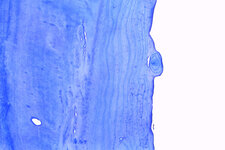
Read THIS Utah DWR article, which explains the process well. I would expect a high degree of accuracy.

1760878267130.jpeg1760878231629.jpeg
Elk teeth are sent to the laboratory where a very thin cross section of the root is scanned to determine the age of the animal. The photo on the right shows the dark "winter rings" present in the tooth of an 11 year-old elk. Slide photo credit: Matson's Lab


.
 
You honestly think every animals teeth would age the same way, eating the same diet, carry the same genetics….or have you not thought this through all the way? Of course bulls could easily be the same age and not have identical teeth wear lol!
There were other factors than just teeth that led us to believe the bulls were different ages. Did you post this after a couple of drinks on a Saturday night or is this how you are all the time ? lol
 
Read THIS Utah DWR article, which explains the process well. I would expect a high degree of accuracy.


View attachment 952277View attachment 952276
Elk teeth are sent to the laboratory where a very thin cross section of the root is scanned to determine the age of the animal. The photo on the right shows the dark "winter rings" present in the tooth of an 11 year-old elk. Slide photo credit: Matson's Lab
I know how they do it. My question was more related to if they are fudging the numbers to fit their management objectives …
 
If they are intentionally fudging the numbers, then in reality they have no management objective or program.
Scientists fudge data all the time, often depending on where their funding is coming from. There’s plenty of examples of this.
Like Realunlucky said, if the teeth aging results fall below management objectives for age class for that unit, they would need to sell less tags, taking $ out of their revenue stream. The motive is there - just wondering if anyone else got suspicious aging results from their teeth…
 
One person once told me you could judge maturity by the ivories in the elk. Not sure how true that is.
 
Scientists fudge data all the time, often depending on where their funding is coming from. There’s plenty of examples of this.
And like I said, if they're doing that then in reality they don't have a program. When it becomes all about money or another motivator besides solid management, then it ceases to exist. Just look at the motivation of "green programs".
 
There were other factors than just teeth that led us to believe the bulls were different ages. Did you post this after a couple of drinks on a Saturday night or is this how you are all the time ? lol

Touché!

I get easily annoyed over the years listening to hunters pretend they have a degree in biology or know more than the science. Look I’m a certified conspiracy theorist especially when it comes to fudging with science in other sectors to fit narratives. But this ain’t it. Like said above if they intentionally lie about ages then there would be no management objective, it wouldn’t work.

Tooth aging is also less than 100% accurate.
 
Touché!

I get easily annoyed over the years listening to hunters pretend they have a degree in biology or know more than the science. Look I’m a certified conspiracy theorist especially when it comes to fudging with science in other sectors to fit narratives. But this ain’t it. Like said above if they intentionally lie about ages then there would be no management objective, it wouldn’t work.

Tooth aging is also less than 100% accurate.
All good man. Anyone who has spent some time on the forums gets easily annoyed after awhile 😂. And I am definitely prone to believing in conspiracies after what we’ve lived through for the last 10 years or so.
 
Do you believe the DWR is capable of executing a scheme to adjust ages?
I would guess if there are errors it comes from data entry and management, not an overall scheme.
 
Utah requires elk hunters to send in teeth for aging so that they can determine age of the animals harvested to see if they are hitting management objectives for age. I sent my bull teeth off a few weeks ago.

4 years ago, I assisted some friends on a Utah elk hunters and they both killed nice bulls - one 320 and the other almost 340. They were clearly not the same age, based on teeth wear, but when the teeth aging results came back UDFW said they were both 6.5 yr old bulls, which maybe coincidentally is their management objective for that unit.

So the question is, do you think they really are reporting accurate aging on these tooth samples ? What have been your experiences with this ?
This is AJ with Matsons. Utah is 100% reporting accurate ages or as accurate as can be obtained through cementum aging.

Hunters have a propensity to dismiss ages based on wear or antler size. Cementum does not discriminate or use such bias. Not throwing shade at you but just stating what I have seen. I am guilty of it too as a hunter and I literally have seen dozens examples of it over the years.

It’s certainly subjective at times, but unless Utah is changing the ages we give them the ages are what they are - accurate age estimates of wild animals almost always within 1 year of the true age.

Lastly the teeth come to us numbered 1-xxx so we have no way of knowing what units these come from so no bias is coming from us. There might be unit info on the envelope but when we are looking at the microscope slides and actually aging the teeth we only see the ID in the spreadsheet and given the quick turnaround we have to meet for Utah I can assure you there is no one grabbing envelopes to try and help Utah meet their age management objectives which I honestly have no clue even what they are.

Human error is certainly possible, as it is with anything humans are involved in, but aside from the teeth getting swapped in envelopes or mislabeled the chance is pretty low.

If you have the ivories from those bulls send them in and I’ll process them for you to confirm, no charge. We can return the crowns back after we cut the root tips off if you pay return shipping. I’ll post pics of the slides on here for discussion fodder.
 
This is AJ with Matsons. Utah is 100% reporting accurate ages or as accurate as can be obtained through cementum aging.

Hunters have a propensity to dismiss ages based on wear or antler size. Cementum does not discriminate or use such bias. Not throwing shade at you but just stating what I have seen. I am guilty of it too as a hunter and I literally have seen dozens examples of it over the years.

It’s certainly subjective at times, but unless Utah is changing the ages we give them the ages are what they are - accurate age estimates of wild animals almost always within 1 year of the true age.

Lastly the teeth come to us numbered 1-xxx so we have no way of knowing what units these come from so no bias is coming from us. There might be unit info on the envelope but when we are looking at the microscope slides and actually aging the teeth we only see the ID in the spreadsheet and given the quick turnaround we have to meet for Utah I can assure you there is no one grabbing envelopes to try and help Utah meet their age management objectives which I honestly have no clue even what they are.

Human error is certainly possible, as it is with anything humans are involved in, but aside from the teeth getting swapped in envelopes or mislabeled the chance is pretty low.

If you have the ivories from those bulls send them in and I’ll process them for you to confirm, no charge. We can return the crowns back after we cut the root tips off if you pay return shipping. I’ll post pics of the slides on here for discussion fodder.
Thanks for the info AJ. When I first posted this thread I was actually unaware that Matson’s did the aging for Utah teeth. I’ve got more confidence in the veracity of the aging results knowing that you guys are the ones doing the aging.

I actually did send in a second tooth sample from the same bull this year so that I could get two tests on the same bull, just for the hell of it.

I think I’ve come to understand that visual indicators like burr size, antler mass/circumference and other factors that I had once associated with an animal’s age are actually very poor indicators of it’s actual age, as evidenced by some of the posts here on RS where cementum aged samples seem to have little correlation with antler size and mass.

Thanks again for the insight. Much appreciated!
 
Back
Top