High level sub-panel circuit shuffle brainstorm

pods8 (Rugged Stitching)

WKR
Rokslide Sponsor
Joined
Mar 12, 2014
Messages
6,541
Location
Thornton, CO
All due dilligence on code complaince will be done, just wondering about high level changes here.

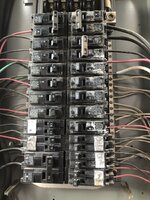
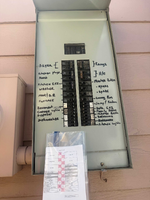
My main panel (150a breaker) is overly full, eventually it needs a replacement or subpanel. At the moment I was leaning towards putting in a subpanel.

Needs:
-There are two tandem breakers in my panel where they shouldn't be so (+2) 120v circuits needed for those.
-I have a wire pulled already to my basement for a 20a 120v circuit for outlets down there, no space currently so (+1) 120v circuit
-I'd like to add a 240V EV circuit, initially 20a with a nema 6-20 outlet (kid has a PHEV limited to 16a @ 240V, already have a dual voltage charger) but I'll pull wiring to handle 60a if doing the work. (+1) 240v circuit
-I should future proof and add space for solar feed, (+1) 240v circuit

We actually have a gas range but I don't want to remove that circuit on a future proofing basis.

According to classic load calculations all this (with my current multiple 50a breakers) would be too much for my panel, however historical data is allowed by NEC and while I haven't searched it fully over 12mo I don't think I've ever pulled over 40amp at any one point (frankly can't find anything over 30a yet) so there is plenty of capacity in my 150a service to add even a 60a circuit (that EV one that will just be 20a for now). If someone was really butt hurt over things an interlock could be placed on the garage and RV breakers so neither could be on at the same time. I think my feed may handle 200a, there is 2" conduit coming into the meter (obviously would need to be confirmed), if I were to consider a full panel replacement but that is quite the hassle and since I don't pull that much power seems unjustified, I just need more space for circuits because I wanted alot of outlets for options on where to plug things in (RV plug, welder plug, dual 20amp ciruits in the garage) and I also hate when circuits wander all over the place (ie I don't want to feed my basement off the garage 20a circuits even though I probably could).

Initially I was thinking put in 100-120a subpanel, put the EV circuit in there and maybe the two 50a circuits (garage and RV) which would free up 2 spaces in the main panel (it would be full again but compliant). The new 20a basement circuit and future solar input could go into this also. This would be the most straight forward.

My brain wandered though wondering if I should instead make the sub panel a critical loads panel with a generator input and just keep the 240V stuff in the main panel. I would need to be strategic about which leg the various loads were on to account for my current 120V generator output (I don't plan to buy a larger generator, we hardly ever loose power) but that wouldn't stop someone in the future from changing the generator input to 240v to power up both legs in the critical panel. I'd likely need to extend some wires but extending 14ga and 12ga wires isn't that clunky.

Ideas / thoughts / suggestions on how you might reshuffle things in ways I haven't considered that might offer some benefit?
1781195732241.png
 
Meh. I think this all could go a few different directions.
First question, how are you figuring your existing load? Depending on the type of meter you have, the utility may be able to pull up your demand. I work at a utility and I do this for customers all the time.
You can pull 200A wiring through 2" conduit (we use 2/0 cu), so you have an upgrade opportunity there, even if you don't need it right now.
As far as the subpanel idea, I think I would do that. It'd be pretty handy to have a panel in the garage anyway.
As far as the backup generator, sure. Seems unnecessary to me if your power is reliable, but if you want it, then by all means. I like manual, double throw switches for that. They're simple and you cannot be feeding back into the utility.
Alternatively, and I don't know if this is legal, you may be able to install your 60A circuit for the charger and use that same circuit as a future 240V generator input. Just unplug the charger, and plug in the generator. You know what I mean? You would need to manually operate some breakers if you wanted to do this, but as far as connectivity it can be done.
 
Meh. I think this all could go a few different directions.
First question, how are you figuring your existing load? Depending on the type of meter you have, the utility may be able to pull up your demand. I work at a utility and I do this for customers all the time.
You can pull 200A wiring through 2" conduit (we use 2/0 cu), so you have an upgrade opportunity there, even if you don't need it right now.
As far as the subpanel idea, I think I would do that. It'd be pretty handy to have a panel in the garage anyway.
As far as the backup generator, sure. Seems unnecessary to me if your power is reliable, but if you want it, then by all means. I like manual, double throw switches for that. They're simple and you cannot be feeding back into the utility.
Alternatively, and I don't know if this is legal, you may be able to install your 60A circuit for the charger and use that same circuit as a future 240V generator input. Just unplug the charger, and plug in the generator. You know what I mean? You would need to manually operate some breakers if you wanted to do this, but as far as connectivity it can be done.
It’s a smart meter and there is data, I need a full 12mo report but I haven’t pulled more than 30amp spot checking it including when I have welded.

I was gonna put the sub panel right next to the main to keep things simple.

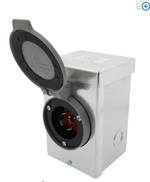
Power is fairly reliable but it has gone out. With multiple freezers or winter power loss seems an easy add with this work. I was gonna use its own stand alone breaker with interlock to the panel feed with the correct shielded input plug which is a legal way (not a suicide cord into an outlet, that isn’t legal).

How many circuits is the panel rated for now?
Who’s asking… it’s FULL ;) . It unfortunately does not allow tandem breakers in the whole thing otherwise I wouldn’t have an issue.
 
Are you wanting to install the sun panel right beside your existing main panel ?
Meaning to the right of the panel in the picture?
 
What's the cost difference between the sub panel and just replacing the main(panel) with a 200 amp?

It crossed my mind if hiring it out, esp. since I first asked for a quote for the subpanel (thinking save myself the hassle) but didn't like the pricing (which seemed to be more in the main panel teritorry). I had not followed up with the electrician to inquire that because I know I can just DIY a sub panel for quite a bit less. And if turning the subpanel into a critical loads panel for a generator it also wouldn't seem as odd to someone looking at it later. :)

I can fairly easily DIY the subpanel. Main panel is more of a problem because for a homeowner I believe they cut the power and then want to inspect it before powering it back up, which could be quite an imposition for a family living in the house, IE this isn't a project house or something I could leave the power off for a days.
 
I've had 2 replaced, it took 1 day ea. power was down for a short period. The contractor usually makes all necessary arrangements for power down and up. They don't leave you down for days at least not here. Usually just a matter of pulling the meter and pulling in new lines from the transformer . I did have all the excavation done before they started.
 
I’ve have never had a panel swap take me more than a day even on shitty installs. All your equipment is exterior surface mounted. It will be much easier then if flush mount inside a wall.

I’d upgrade to a 200amp panel assuming meter and wires are rated for it and be done.

you could always pull wires and put them in a box for all your hypothetical future ideas during the swap.

Generators are generally good ideas for critical loads and frequent power outages, but can be pricey for a convenience item. IMO.

The swap often times gives you a chance to clean things up as well.
 
I've had 2 replaced, it took 1 day ea. power was down for a short period. The contractor usually makes all necessary arrangements for power down and up. They don't leave you down for days at least not here. Usually just a matter of pulling the meter and pulling in new lines from the transformer . I did have all the excavation done before they started.
I understand if a contractor does the panel its quick, I said if I DIY a main panel it could be down for a while till they inspect it. They handle it differently for a homeowner versus licensed electrician, for good reason but that makes it a problem for my case.

Having someone replace the main panel will be two or three S2H scopes (that is a currency metric right?!?) more than what I can DIY a sub panel for.

So me putting in a critical loads panel saves a decent chunk of change and also would have me set up to power up some things off generator if needed. A year back we lost power in the winter and I was noodling over if I was going to have to wire in a pigtail to my hard wired furnace to get the heat back on but it eventually came back up. But it highlighted a weakness, I could put in a input at the furnace and drape extension cords, etc. but powering up a critical loads panel would be straight forward.
 
I’ve have never had a panel swap take me more than a day even on shitty installs.
As a homeowner or talking about an electrican? There is a difference.


Also to be clear on the generator, I'm not putting in a generator, I am putting in an input for a portable generator (which I already have) to just be able to make sure I can power freezers / furnace as needed. I am not trying to do a whole house type thing.

This type of thing:
1781278802603.png
 
If you go with a sub panel consider the physical aspect of the wire for it actually fitting in an already (looks to be) crowded panel.

120 amp sub would probably be 1/0 AL or #1 copper.

Just a thought.
 
As a homeowner or talking about an electrican? There is a difference.


Also to be clear on the generator, I'm not putting in a generator, I am putting in an input for a portable generator (which I already have) to just be able to make sure I can power freezers / furnace as needed. I am not trying to do a whole house type thing.

This type of thing:
View attachment 1079530
I know you mentioned them before but please do not forget interlocks.

And yes I know you can configure ways to not use them.

But, coming from a person who’s dad was a lineman for 43 years you must have the ability to separate utility and generated power.
 
If you go with a sub panel consider the physical aspect of the wire for it actually fitting in an already (looks to be) crowded panel.

120 amp sub would probably be 1/0 AL or #1 copper.

Just a thought.
Old photo so zoomed more than ideal but it’s not as crowded as of appears with the cover on.
1781279472437.jpeg
 
  • Like
Reactions: BLJ
I know you mentioned them before but please do not forget interlocks.
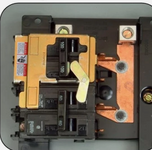
Correct I was thinking the toggle bar style interlock that when you flip in the generator input breaker it flips off the panel input breaker, and vice versa.

That said grid connecting a typical portable generator during a power outage would realistically just stall out the generator due to the intense demand versus what it can do but that is no reason to ignore a simple mechanical device that makes it nearly idiot proof.

This kind if using a MLO panel or the other version if doing an input breaker panel. Or an external switch.

1781279698484.png
 
As a homeowner or talking about an electrican? There is a difference.


Also to be clear on the generator, I'm not putting in a generator, I am putting in an input for a portable generator (which I already have) to just be able to make sure I can power freezers / furnace as needed. I am not trying to do a whole house type thing.

This type of thing:
View attachment 1079530
Fair, I was giving an electricians perspective. I have seen the difference with my own eyes many a time lol.

You need some electrcian friends

But back to the task.

If you can prove your load is sufficient for the 150amp main, then a sub panel won’t hurt anything just make sure you label everything very clearly. Move some loads over to the sub panel add a feed.

A critical loads panel is not a bad idea I have done this for people who wanted everything separated for ease of recognition to them as to what can be run on the genset.
 
Back
Top