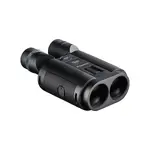
These are those Fuji binos I mentioned... no RF built in, but I'd wager that they are better glass than the Sig offerings.
View attachment 900308
Link to Fuji Binos
Most of these companies aren't actually making their own binos. The Sig, Kite, and Opticron are all the same binocular made in China with slightly different OEM shell. I could not fund anything about country of origin for the Fujis, and the extremely similar look/design tells me they probably also come from the same place. But don't take that as gospel.
As for my limited single-perspective experience, I really think it comes down to how you are hunting.
I bought a pair of the Sig 16x42 HDX for this past season and very much enjoyed using them in more open whitetail settings, and they were phenomenal on my Aoudad hunt.
The IS really is amazing when you don't have a tripod, and easily confirmed button bucks from does in deer herds. Chasing Aoudad, I brought these and my Zeiss 10x42 SFs. The glass cannot be compared between the two outright, and I get headaches rather quickly through standard binos, but for a walking around solution where I was glassing hand-held or off my knees over distances that did not necessitate a tripod, the HDX gave me no issues due to the more perceived clear image.
Because my eyes were not looking through them for long unbroken stretches, they constantly had the opportunity to rest, and and were not straining to look through vibration like handholding my Zeiss.
I also found that because of the thin profile, I could carry both the HDX and separate rangefinder in my Sentinel Bino Harness bino pocket, which freed up the one wing pocket location to use the Kestrel/Extra Mag pouch instead, which was really nice. I carried the SFs in my pack as strictly tripod-based glass.
When put on a tripod, my experience was a complete 180. I see people complain about the lack of tripod-stud options on the Sig models (I went with the Tricer mount, which worked fine), but unless you are only buying one optic, I wouldn't bother with putting the Sigs on a tripod.
The difference in glass is immediately apparent in both brightness at dusk and image quality. Where I felt I had more useable FOV in the Sigs over the Zeiss while handholding, the tripod really shows just how small their sweet spot is, and you won't be looking through the outer 40% of the glass on a tripod.
The Pros were recently released, but it seems the consistent report is that while slightly brighter at dan/dusk, they also have a softer image than the standard HDX, which is a no-go.
Also, while the panning stabilization mode is phenomenal, the increased stabilization mode is useless, as it significantly degrades the image. Regardless of how things looked on Youtube vids, in real scenarios I could discern more detail with IS mode 1 than when target mode was activated.
The IS binos also seem rather fragile. I've had the SF's since they came out. They've been dropped and beat to hell by my kids, and not babied during all these hunting seasons. The collimation is still near-perfect. I couldn't figure out why the image was looking so bad through my Sigs this spring until I threw them on a tripod, and the collimation was completely trashed and had to go back (this was checked when I received them, so I know the unit wasn't bad before I used them.)
To Sig's credit, they immediately shipped me a new pair (they don't make them, so cannot repair them), but I did not have any immediate need for a set of high-mag binos this season and ultimately sold them.
So all in all, a tough choice between IS and RF for chest binos. The IS truly is game changing for handheld spotting, but you have to deal with separate units and poor FOV in the lower mags that IMO would be preferrable for this role. RF binos come with the decreased glass quality from alphas (though most are better than HDX glass) with no stability control, but with a far better RF experience than a separate monocular unit.