Anyone have intel on the Remington r1 80 series? Good bad or ugly. Anything worth doing to it?

Follow along with the video below to see how to install our site as a web app on your home screen.
Note: This feature may not be available in some browsers.
haha. Im not in the market to buy a new one, its an older gun, a hand me down...Remington is still tryin to figure out bolt actions....

Send it here.Im about ready to throw this MF

Would be interested to hear your pros and cons vs flat surfaces ...
Anybody ever watch this guy and start getting bad ideas?

1911 Build 8 Commander
This is a special build where I show how I modified a government frame into a commander frame, tried 10 line per inch checkering, soldered on a magwell, and ...www.youtube.com
Did you have to do any “fitting”?
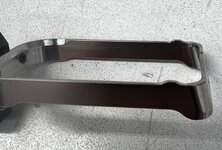
All my triggers are medium length, sell me on short.

Remington is still tryin to figure out bolt actions....
I wonder how much difference 90 degrees at beginning of press matters also?Long and medium "feel" better to me personally, in the feelsies category of handling a gun, but the longer a trigger is, the more you generally start seeing people send their shots left and low-left, especially when shooting at speed (for a right-handed shooter, they go right for a lefty).
My take on it, is that it's mostly an issue of geometry, between how the trigger-finger is oriented with the trigger - ideal orientation is 90-degrees at break. Slightly longer triggers have the pad of the finger pressing a bit more on the shooter's strong-side of the trigger, and a bit less on the weak-side - leading to a press that's not actually straight back to the nose. It's something that can be controlled for a bit in concentrated slow-fire, but when you speed things up and go fast, it tends to show up more.
I also suspect a short trigger makes things a bit more forgiving with your strong-hand grip when your trigger-finger isn't perfectly isolated from the rest of the muscles in your hand.
Overall though, shorter triggers tend to tighten groups up better, especially at speed. Best thing is to experiment and give it a hard go for a couple of cases of ammo.

Excited for you! In the meantime, I found out that Bul are coming out with a railed Commander-length version, so now I'm in two minds ...If anyone is on the fence, the best price I could find was at Able Ammo. Ordered last night and it’s been shipped. I spoke to a real human today to confirm receipt of my LGS FFL. Delivery expected Friday.

You need to get it!Excited for you! In the meantime, I found out that Bul are coming out with a railed Commander-length version, so now I'm in two minds ...
What I was saying was that the 5" stainless version that matches my black one is on special, but there's a Commander length coming ...You need to get it!


“It” = both (more)What I was saying was that the 5" stainless version that matches my black one is on special, but there's a Commander length coming ...
Hang on ... by 'it', do you mean both? Hmm ... hold my
Initial reaction: “I knew I should have waited a bit longer!”If Kimber can keep up the quality, the Warrior DS seems like it will be the non-Staccatto 2011.
If Kimber can keep up the quality, the Warrior DS seems like it will be the non-Staccatto 2011.


Not to derail this any further but where do the pros in here stand on red dots on 1911's? Gotta have one if you can or messes with the aesthetic of the gun? I've always preferred the clean look of the classic 1911 but there's something fun about shooting with a dot as well.