115 DTAC vs Black Bear - DTAC Failure?

Joined
Apr 3, 2018
Messages
83
Location
BC
For context - I have no personal experience with 115 DTACS and am building a 6mm around 116 TMKS.

I’ve spent the better part of today debating friends on what the result of this bear kill(by a friend who will add to this thread) is.

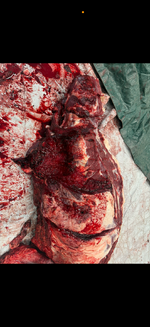
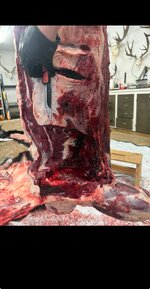
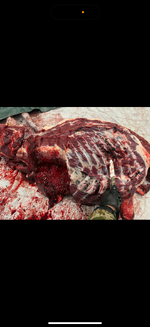
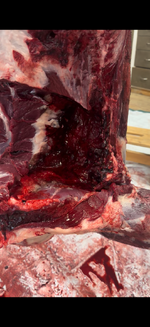
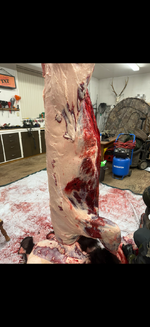
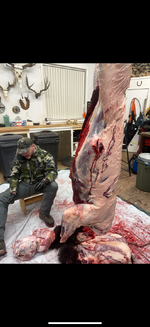
For context, a 115 DTAC was shot from a 6prc with a MV of 3300FPS. The bear was at approximately 70 yards. We have are assuming roughly 3150-3200FPS impact velocity. The bear was quartering too and the impact is slightly behind the shoulder(roughly 6-8” behind shoulder). As shown in photos is the entry and exit wholes prior to beginning to break down and necropsy the muscle. Furthers will show there is consistent blood shot(tissue question damage?) that works its way back towards the shoulder(roughly 110° back from impact location if considering quartered too). It would appear that the bulk of tissue damage/blood shot happened outside of the rib cage/cavity on the entry side prior to penetrating the cavity.

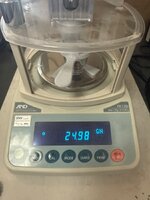
The photo of the jacket shows what was remaining on the exit side hide(this is to be weighed and input into this thread shortly). This pieces appears to have travelled through the bears lungs before exiting the cavity and staying in the exit side hide. The channel through the lungs appear to be similar to what one would expect to see from a typical mono style bullet - slightly larger than caliber sized hole.

Is this what one would expect to see from a high velocity impact from a DTAC? Or would they traditionally enter the cavity before appearing to “yaw/come apart”?

The bear travelled less than 30 yards before expiring and was dead within the time it took to get to it. In my opinion, the bullet worked and a quick clean kill took place, the arguement I am facing is the bullet failed to do as advertised and penetrate the cavity prior to coming apart/expanding.
 

Attachments

  • IMG_1445.png
    IMG_1445.png
    1.3 MB · Views: 78
  • IMG_1444.png
    IMG_1444.png
    1.3 MB · Views: 77
  • IMG_1450.png
    IMG_1450.png
    1.5 MB · Views: 74
  • IMG_1448.jpeg
    IMG_1448.jpeg
    330 KB · Views: 77
  • IMG_1449.png
    IMG_1449.png
    901.3 KB · Views: 77
  • IMG_1447.png
    IMG_1447.png
    1.5 MB · Views: 77
For context - I have no personal experience with 115 DTACS and am building a 6mm around 116 TMKS.

I’ve spent the better part of today debating friends on what the result of this bear kill(by a friend who will add to this thread) is.

For context, a 115 DTAC was shot from a 6prc with a MV of 3300FPS. The bear was at approximately 70 yards. We have are assuming roughly 3150-3200FPS impact velocity. The bear was quartering too and the impact is slightly behind the shoulder(roughly 6-8” behind shoulder). As shown in photos is the entry and exit wholes prior to beginning to break down and necropsy the muscle. Furthers will show there is consistent blood shot(tissue question damage?) that works its way back towards the shoulder(roughly 110° back from impact location if considering quartered too).

The photo of the jacket shows what was remaining on the exit side hide(this is to be weighed and input into this thread shortly). This pieces appears to have travelled through the bears lungs before exiting the cavity and staying in the exit side hide.

Is this what one would expect to see from a high velocity impact from a DTAC? Or would they traditionally enter the cavity before appearing to “yaw/come apart”?

The bear travelled less than 30 yards before expiring and was dead within the time it took to get to it. In my opinion, the bullet worked and a quick clean kill took place, the arguement I am facing is the bullet failed to do as advertised and penetrate the cavity prior to coming apart/expanding.
Adding to with weight of jacket found in offside hide.
 

Attachments

  • 80179147044__EF69896B-4DAF-4F0E-B937-856B5B7FFFC3.jpeg
    80179147044__EF69896B-4DAF-4F0E-B937-856B5B7FFFC3.jpeg
    506.8 KB · Views: 47
Some more context here, this is a video of inside the cavity.


FWIW - I agree that dead inside 30yds with a clear wound channel through the cavity isn’t what I’d deem a failure. What others are claiming failure is the appeared substantial expansion occurred on the impact side outside the cavity. Looking for more opinions, experiences, etc on that.
 
Do you have any photos of the trachea and lungs as a whole? The coagulated blood in the fascia between the two layers of meat appears to be overflow from inside the cavity. The bullet appears to have fragmented decently, but doesn’t seem like a whole lot from what I’m seeing. Still clearly enough, and a bear dying under 50 yards is a win-no matter what bullet or broadhead is used.
 
You have a cavity full of blood. If you cut the pulmonary arteries the lugs are not going to get very bloodshot.

If you really want to see how the lungs look, pull them out with the trachea and inflate them.

My read is the bullet worked impeccably as evidenced by rapid incapacitation. Results speak louder than what we expect/want things to look like.
 
Shooter here, the bullet killed the bear this time. What I was concerned about is if this is too much velocity upon impact. I haven't had a bullet come apart on a rib and bloodshot / damage an area so far away from impact location without entering the cavity. Especially on something like a black bear that has such thin rib bones. Unless I'm interpreting these results wrong?
I'm fine with fragmentation, but I like it to be in the chest cavity.

Shot another one at 270ish with results more inline with what is expected.
 
Shooter here, the bullet killed the bear this time. What I was concerned about is if this is too much velocity upon impact. I haven't had a bullet come apart on a rib and bloodshot / damage an area so far away from impact location without entering the cavity. Especially on something like a black bear that has such thin rib bones. Unless I'm interpreting these results wrong?
I'm fine with fragmentation, but I like it to be in the chest cavity.

Shot another one at 270ish with results more inline with what is expected.
With the impact velocity and bullet mass/potential for expansion, that appears to be less damage than what I would want/expect. The bullet made it through the offside, just stuck in the hide. Looks good to me.
If you do switch to the TMK, I would expect more immediate damage than what I can see in the photos.
 
Blood shot/blood pooling between the ribs and hide on the entry side is a common thing from what I've seen. As has been mentioned, often this is blood from the chest cavity coming out of the entry hole, but then diverts before exiting the hide. More common to see on entry as it's easier for the layers of small entry holes to misalign.

I don't think this is indictive of a bullet failure..

I've had ELDMs "explode" on high velocity impacts before and the entry looks like an exit. 3-4" hole. I didn't call it a failure though, I called it effective. DRT.
 
With the impact velocity and bullet mass/potential for expansion, that appears to be less damage than what I would want/expect. The bullet made it through the offside, just stuck in the hide. Looks good to me.
If you do switch to the TMK, I would expect more immediate damage than what I can see in the photos.
Lungs appeared to have 2 seperate wound channels through them. One from the bullet fragment, another from either part of the bullet or rib? They were fairly clean holes and it wasn't the level of trauma I'm used to seeing internally from shooting 175 berger elites or ELDM's.
 
I shot a bear this spring with a 140gr ELDM out of a 6.5 prc. Impact velocity should have been about 2750. I had very similar results to your pictures. I have seen the blood shot between the ribs and hide on numerous animals including my bear. This looks just fine to me
 
Interesting, I haven't had this level of bloodshot on the entrance side. Thanks for the info
I shot a bear this spring with a 140gr ELDM out of a 6.5 prc. Impact velocity should have been about 2750. I had very similar results to your pictures. I have seen the blood shot between the ribs and hide on numerous animals including my bear. This looks just fine to me
 
Lungs appeared to have 2 seperate wound channels through them. One from the bullet fragment, another from either part of the bullet or rib? They were fairly clean holes and it wasn't the level of trauma I'm used to seeing internally from shooting 175 berger elites or ELDM's.
Makes sense. @Formidilosus has said that those dtac bullets have a long neck before good expansion. Iirc, he said they are ideal for elk sized animals. I have no experience with them though. Was this bullet nose-ringed? I believe that also makes a difference with expansion.
 
Makes sense. @Formidilosus has said that those dtac bullets have a long neck before good expansion. Iirc, he said they are ideal for elk sized animals. I have no experience with them though. Was this bullet nose-ringed? I believe that also makes a difference with expansion.
I ordered 500 of the 'deep cut' variant of this bullet. I spend a lot of time chasing moose, sheep, and mule deer. Figured I'd try them at moose later on.

If the 'bloodshot' isn't from direct bullet damage, and the lungs don't look like they got hit by a match bullet, I don't know where the rest of it went? Only recovered the 25gr jacket. Maybe it split in two and that was the other hole. Not sure.

It's a nice round to shoot and flies flat.
 
There is a reason all the standard calibers we grew up with weren’t rocket ship fast. It was partly because it was totally unnecessary.

Hyper velocity is going to blow apart quick. I would agree this round with that bullet is to fast.
 
Back
Top