Moisture definitely helps but browse conditions across Wyo is in pretty horrible shape. Take a drive from Douglas north to Gillette and that entire region in Wyoming is inundated with dense cheatgrass that competes directly with native forb and shrub browse. The below study by University of Wyoming demonstrates the negative impact of cheatgrass to muledeer. My guess is that cheatgrass's negatively impacts antelope just as much or more than muledeer since antelope's diet is so highly dependent upon many of the same forb and shrub browse species!
New study shows deer avoid cheatgrass-covered areas, but authors also provide hope.

wyofile.com
When thin shoots of cheatgrass are the first plants to green up in the spring, mule deer might nibble the tops like any of us might idly crunch last week’s pretzels still sitting on our office desks.
Come early summer, though, that same cheatgrass turns into brown, leggy strands. At that point, mule deer want to eat it as much as we want to consume the cardboard box containing those stale pretzels. They just won’t do it.
In fact, they dislike cheatgrass so much that mule deer will avoid an area completely once it contains about 20% of the annual invasive grass, according to a study published in early September in the journal
Rangeland Ecology and Management.
The study’s authors, all from the University of Wyoming, compared movement patterns from 115 GPS-collared mule deer with range maps showing variation in plant cover. They found that when cheatgrass covers less than 10% of an area, deer will still browse. When it covers 10-16%, they will begin to avoid an area. Anything above 20% is utterly unappealing.
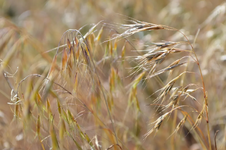
Even more alarmingly, the study shows that as cheatgrass continues to spread in northeast Wyoming over the next couple decades, up to 50% of current good habitat could be rendered useless to mule deer.
The spread of cheatgrass likely won’t be the final nail in mule deer’s coffin, but it will be one of many contributing to their continued decline. Unlike many studies that focus exclusively on declines, however, this one carries a rather large kernel of hope. When treating cheatgrass with herbicides in a
targeted and strategic way, land managers can start to win the fight and mule deer will also return.