When to neck size?

The whole problem IMO with FL sizing is that the specs reduce the size of your cartridge to the smallest dimension that will fit every chamber of that caliber. If your chamber is on the large side, bang, automatic sloppy head spacing.

This is only if you're setting a FL die up to cam over against the shellholder and size the case back to min SAAMI specs, but you can measure with a headspace gauge and set a FL die up to minimally push shoulders back and size the body portion just enough to run smooth in the chamber it was fired in. Essentially the same process as using a neck die, then shoulder or body die, but in 1 stroke.
 
Correct, the above post is taking advantage of the fact you don't have to screw the sizing die down until it touches the shell holder, which at that point sizes full length. That's what I was saying in post #41, and has been mentioned in other posts as well. Screw the die down a bit at a time until cases chamber freely and smoothly, usually well above die contact with the shell holder.
 
My current procedure is to cycle every piece of fire formed brass that I’m planning on reloading through the rifle it came out of. If the bolt closes easily, I just neck size, check length and trim as needed. I’m currently not doing a lot of trimming because it’s not required. and only run that brass in the rifle it came out of. I anneal after every 3 firings.
Verify the cases chamber by rotating them 90° or so at a time in different orientations. If the case goes back in the way it came out of the chamber or close to it, it's going to check out as ok. However I've had them chamber fine the first time, rotate them 90°, 180° and it gets stiff.
 
The whole problem IMO with FL sizing is that the specs reduce the size of your cartridge to the smallest dimension that will fit every chamber of that caliber. If your chamber is on the large side, bang, automatic sloppy head spacing. My experience has been that full length sizing caused my brass to grow in length pretty fast, meaning I had to trim necks more often. This was for 30-06, .243, and 7-08.
...all of which have tapered cases, shallow shoulder angles, and loose SAAMI specs.

Modern cartridges are different.
 
Perhaps my reloading lexicon is antiquated or just off from the terminology in common use these days. To me, Full Length Sizing is taking brass back to where it started for length dimensions, as in "full length", versus what I would call a Shoulder Bump, which would be allowing a case to first fully form to the chamber and then minimally sizing off of that measurement, which generally leaves at least a portion of the case not fully engaged in the sizing die.

You're absolutely right, to me it's just a matter of context. If the discussion is about dies and somebody says they using a full length die I assume they they're referring to the type rather than how the die is set up. If the discussion is specifically about die set up and somebody says they're full length sizing then I'd conclude they're talking about fully sizing the case as opposed to "partial FL sizing" (shoulder bumping).
 
This has gotten way out of hand. Not many people use a neck sizing die anymore. It used to be common but at some point youre going to have to FL size.

Most people setup their FL sizing die to bump the shoulder back a few thousandths. This is recommended to ensure that cartridge chambers. Especially important in hunting situations.

Skip the neck sizing and buy a FL die. Whether or not thats with bushings is up to you. I have both and im experimenting with expander mandrels currently to see if the juice is worth the squeeze. Some of my most accurate ammo is made on a regular and cheap Forster FL die with no bushings. Just size, prime, and load.
 
...all of which have tapered cases, shallow shoulder angles, and loose SAAMI specs.

Modern cartridges are different.
I can vouch a sharper shoulder, straighter case walls with respect to my 35 Whelen AI tames case stretch upon firing. Agree with what is being said, however want to understand with respect to the SAAMI specs how older design cartridges are "loose" in official specs and newer cartridges are less "loose". Is there an example of tolerances/dimensions/specs between an older cartridge and a newer cartridge where this really stands out?
 
I can vouch a sharper shoulder, straighter case walls with respect to my 35 Whelen AI tames case stretch upon firing. Agree with what is being said, however want to understand with respect to the SAAMI specs how older design cartridges are "loose" in official specs and newer cartridges are less "loose". Is there an example of tolerances/dimensions/specs between an older cartridge and a newer cartridge where this really stands out?
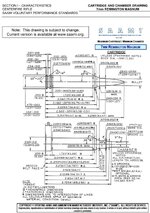
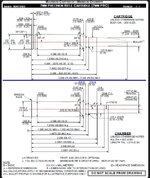
If you run the numbers on the differences in the two in a max chamber/min ammo case spec, the 7mm Rem Mag allows .026" of max difference, and the 7 PRC allows only half at .013". The allowable tolerances are still the same, but they tightened up the differences. But, that allows for confliction and you could get an in spec max case and not be able to chamber it in an in spec min PRC chamber. I was also surprised how close the throat clearance is as well, and the fact the PRC is actually a thou bigger in diameter than the Rem Mag.

But that demonstrates you can get some huge stretch in those older chambers, and if you're setting your die up to size back to SAAMI you'll get about 2 or 3 firings smashing the shoulders back .020" before case head separation!

Screenshot_20260221_174849_Drive.jpg
Screenshot_20260221_175155_Samsung Internet.jpg
 
To answer the OP's question: there is one great reason to neck size, but only with a Lee Collet die, because you don't have to lube the case.

If I am putting case lube on, I am FL sizing the case. Which I do 99% of the time.
 
demonstrates you can get some huge stretch in those older chambers

Not to mention the geometry of the case/chamber. Older cartridges (mainly .30-06, .375 h&h) were designed to be reliable above all else. Lots of taper and generous head spacing means lots of case stretch. Reloading was a distance afterthought in the design of the old stuff. Those cases were always meant to be single use and spawned the bulk of what we struggle to reload today. .308 winchester was exceptionally modern for its time and thus all of its spawn were as well, and easier to deal with.

Anything designed to headspace off the belt is going to grow a mile.
 
I never measured it with my .375 or .338 because I dont have a good way to do it, but I bet both are easily that much, maybe more.

Great for reliability, great for case head separation. Neck sizing definitely has a place with those cartridges.

Im a fan of case taper and loose tolerances to an extent.
 
When I first started reloading I was shown how to set my fl die just to size the neck. After a couple firings I sized 200 pieces of 22 250 loaded them up to find it was very tough to close the bolt. After that I was fl length resizing, setting the die to manufacturer specs. Resized a bunch of 223 brass only to find that I was getting ftf from light primer strikes from pushing the shoulder back too far.
Now I only fl size pushing the shoulder back no more than .002 from what the fired brass measured.
 
During barrel break in I neck size the first one or two firings as I want the brass to fit the chamber quickly.
I'm not following? Or maybe I am, you are saying you neck size the first few firings. If you get stiff closure, it really doesn't matter as you are using up the rounds to break the barrel in.

That's easily realized by backing off a full length sizing die and sizing the neck so the die doesn't touch the case body. Without any more information, I'm gathering your process is similar to that? Neck tension is not going to be a factor if you're only trying to get bullets down the barrel, partial size of the neck would be just fine and make sense.
 
I'm not following? Or maybe I am, you are saying you neck size the first few firings. If you get stiff closure, it really doesn't matter as you are using up the rounds to break the barrel in.

That's easily realized by backing off a full length sizing die and sizing the neck so the die doesn't touch the case body. Without any more information, I'm gathering your process is similar to that? Neck tension is not going to be a factor if you're only trying to get bullets down the barrel, partial size of the neck would be just fine and make sense.

My goal is to get the shoulder to expand to the chamber dimensions with the least amount of firings as possible.
If the shoulder still has room to go forward I neck size to prevent pushing the shoulder backwards.
Once the shoulder grows to the chamber length I start sizing off the shoulder.

I had a 25 PRC made last year. the chamber was cut in a way where the virgin brass was almost a perfect fit so I necked sized 1 time.
My 300 PRC brass required being neck sized for the first two firings before the shoulder reached the end of chamber.
And belted mags usually take 3 firing before the shoulder reached a point where I can headspace off the shoudler vs. the belt.

Once the brass fits i size off of the shoulder.

Yes, this can be done as you mentioned by backing the die off.
 
Back
Top