To bivy or not to bivy

Bivy and tarp or lightweight 1P tent for Sept. CO elk hunt?

  • Lightweight bivy (katabatic or borah) and SO DST tarp

    Votes: 4 36.4%
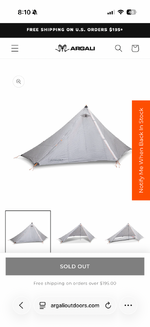
  • Lightweight 1P tent (Lanshan pro 1, Argali owyhee, etc.)

    Votes: 7 63.6%
  • Other (explain)

    Votes: 0 0.0%

  • Total voters
    11

Deli

Lil-Rokslider
Joined
Apr 17, 2020
Messages
209
I'm likely to draw a Sept. CO muzzleloader tag for elk. I've went on this hunt before using a Durston X-mid2 solid which I love, but struggled finding flat enough places to pitch. Because of this, we decided once we found a spot, we would have a base camp and just hunt that area for a few days which left us less mobile and ultimately unsuccessful. I'd like to be able to be more mobile and hunt with camp on my back, so I'm considering other shelter options. I already have a DST tarp and could buy a bivy like the Exo guys recommend. Pro's would be keeping sleep system all in one making setup and breakdown super easy and can also use on winter hunts for extra warmth and Cons being I'm not used to sleeping this way and worried about quality of sleep during the hunt. Otherwise considering just getting a smaller footprint one person tent but setup and breakdown is not as easy or flexible. Either way I'll bring the X-mid2 as a backup in truck.
 
Personal preference, I suppose. I don't have experience with a bivy, because I've always felt like I'd be cramped and very condensation-prone. But I guess it works well for some!
 
This is of course highly dependent upon personal preference, but I do find the bivy sack + tarp tent combo to be the most versatile for hunting in areas where finding a flat spot no larger than a mule deer bed is about all you are going to get. For my preferences, setting up a flat tarp like the DST is too time consuming as it can require some engineering. I tend to favor more minimalists tarp tents and then the bivy sack leaves you the option to just bivy out when its more conductive to the situation and conditions allow for it. Those high country mule deer beds that are 3 square feet of a flat pushed up against a pine or fur tree sure don't make for the most comfortable night's worth of sleep as you'll often have to maintain a little bit of body tension to stay put, but you often are just not going to be able to set up a conventional tent in those spots.

I do it every year. some years, its been quite a few nights -one regular glassing spots I have bivied out at probably 10 nights over the years requires sleeping right on the edge of a cliff where I built a little rock retention wall to keep me from rolling off it. Its definitely not for everyone. You might also consider a hammock.
 
This is of course highly dependent upon personal preference, but I do find the bivy sack + tarp tent combo to be the most versatile for hunting in areas where finding a flat spot no larger than a mule deer bed is about all you are going to get. For my preferences, setting up a flat tarp like the DST is too time consuming as it can require some engineering. I tend to favor more minimalists tarp tents and then the bivy sack leaves you the option to just bivy out when its more conductive to the situation and conditions allow for it. Those high country mule deer beds that are 3 square feet of a flat pushed up against a pine or fur tree sure don't make for the most comfortable night's worth of sleep as you'll often have to maintain a little bit of body tension to stay put, but you often are just not going to be able to set up a conventional tent in those spots.

I do it every year. some years, its been quite a few nights -one regular glassing spots I have bivied out at probably 10 nights over the years requires sleeping right on the edge of a cliff where I built a little rock retention wall to keep me from rolling off it. Its definitely not for everyone. You might also consider a hammock.
Do you have an example of a minimalist tarp tent? I considered just bringing my rainfly of the xmid instead of the flat tarp. It'll still be a pain to pitch, but at least it didn't need to be perfect if I'm in the bivy and just need coverage.
 
We’ve used my sleep system tarp (Warbonnet Ground Tarp) probably at least half the days the last five years in CO or NM in September to ride out storms.

It pitches faster than a tent and can hold four people during a storm (sleep 2-3). It’s also not a problem to pitch in a storm or put away wet because you don’t have to worry about the tub getting wet.

There is definitely a sense of security or comfort from a tent (though it’s mostly a false sense). But the practicality of a tarp outweighs that by far to me.
 
Do you have an example of a minimalist tarp tent? I considered just bringing my rainfly of the xmid instead of the flat tarp. It'll still be a pain to pitch, but at least it didn't need to be perfect if I'm in the bivy and just need coverage.

You could consider a single pole design such as this: https://zpacks.com/products/hexamid-solo-tent
These styles can work well when forced into a tight spot. You could also take a shelter such as the SO Eolus, a two pole design and often make them work in non optimal surfaces. And this is not to say that the DST may not be a good option, because it definitely offers maximum versatility for setting up a shade tent for glassing or keeping sun off a carcass and working in a variety of circumstances. You'll just need to be well rehearsed in setting it up in a variety of configurations.
 
This year I am going to run a borah bivy long wide side chest zip on my gossamer gear groundmat that I fold up and stow in a cordura cover. It doubles as a sit pad. The shelter Im going to bring is the new seek outside brightwater trekking pole tent. Should be super light, easy to set up, runs on one trekking pole and will have plenty of ventilation for condensation. The brightwater can aslo be set up and run as a sun shade/light rain protection for glassing.
 
Back
Top