@Imac45acp — any chance we’ll ever get 223 or 6arc? I’m really liking this thing.

Navigation
Install the app
How to install the app on iOS
Follow along with the video below to see how to install our site as a web app on your home screen.
Note: This feature may not be available in some browsers.
More options
Style variation
You are using an out of date browser. It may not display this or other websites correctly.
You should upgrade or use an alternative browser.
You should upgrade or use an alternative browser.
The All New MRC/S2H Marshall Rifle Now Available
- Thread starter Unknown Munitions
- Start date
I spent last week at the winter S2H class and took my Marshall as my hunting rifle. The first night I asked a few questions about the rifle and especially trigger to @Formidilosus, @Tommyhaak, and @longrangelead. They were able to give me answers to various questions and explain that things I thought I was seeing or feeling were normal and would improve with more use.
What I was interpreting as random trigger creep stems directly from the trigger design and it's differences relative to many other triggers. The Marshall trigger has a rolling break, rather than the more crisp 'snap' of a Tikka or 700 based trigger. It is more analogous to a well-tuned 1911 trigger. This is a function of the very large sear engagement surfaces, which contribute to the Marshall's durability, reliability, and safety. A few drops of oil on those surfaces and some dry fire (especially with thumb pressure on the back of the bolt) made improvements to the trigger feel and removed the seemingly random 'creep' feeling I thought I was having. Dry fire especially will be something I focus on to continue that break-in process.
As for rifle performance in the course, there were zero issues that did not stem directly from user error. I short-stroked the bolt once on the last day of the course, otherwise it fed, fired, and extracted regardless of the circumstances. Form used it as an example after a 700-based action failed with a light coating of snow, and a Tikka failed to extract a round (snow compressed to ice in the bolt face); the Marshall had no issues even with multiple times that amount of snow in the action.
The 5 round MDT AICS mag did not have any issues, I did not use the flush-fit 3 round mag in the class but I have had no issues with it in other shooting sessions. The downside to the 3 rd mag is having to push it out from the top, slowing reload time.
I have ~350 rounds through the rifle now plus cycling and dry firing. I do not expect to have anything but continued improvements from here on out.
What I was interpreting as random trigger creep stems directly from the trigger design and it's differences relative to many other triggers. The Marshall trigger has a rolling break, rather than the more crisp 'snap' of a Tikka or 700 based trigger. It is more analogous to a well-tuned 1911 trigger. This is a function of the very large sear engagement surfaces, which contribute to the Marshall's durability, reliability, and safety. A few drops of oil on those surfaces and some dry fire (especially with thumb pressure on the back of the bolt) made improvements to the trigger feel and removed the seemingly random 'creep' feeling I thought I was having. Dry fire especially will be something I focus on to continue that break-in process.
As for rifle performance in the course, there were zero issues that did not stem directly from user error. I short-stroked the bolt once on the last day of the course, otherwise it fed, fired, and extracted regardless of the circumstances. Form used it as an example after a 700-based action failed with a light coating of snow, and a Tikka failed to extract a round (snow compressed to ice in the bolt face); the Marshall had no issues even with multiple times that amount of snow in the action.
The 5 round MDT AICS mag did not have any issues, I did not use the flush-fit 3 round mag in the class but I have had no issues with it in other shooting sessions. The downside to the 3 rd mag is having to push it out from the top, slowing reload time.
I have ~350 rounds through the rifle now plus cycling and dry firing. I do not expect to have anything but continued improvements from here on out.
Castle Rock
WKR
- Joined
- Mar 28, 2020
- Messages
- 2,278
Great, what caliber do you haveI spent last week at the winter S2H class and took my Marshall as my hunting rifle. The first night I asked a few questions about the rifle and especially trigger to @Formidilosus, @Tommyhaak, and @longrangelead. They were able to give me answers to various questions and explain that things I thought I was seeing or feeling were normal and would improve with more use.
What I was interpreting as random trigger creep stems directly from the trigger design and it's differences relative to many other triggers. The Marshall trigger has a rolling break, rather than the more crisp 'snap' of a Tikka or 700 based trigger. It is more analogous to a well-tuned 1911 trigger. This is a function of the very large sear engagement surfaces, which contribute to the Marshall's durability, reliability, and safety. A few drops of oil on those surfaces and some dry fire (especially with thumb pressure on the back of the bolt) made improvements to the trigger feel and removed the seemingly random 'creep' feeling I thought I was having. Dry fire especially will be something I focus on to continue that break-in process.
As for rifle performance in the course, there were zero issues that did not stem directly from user error. I short-stroked the bolt once on the last day of the course, otherwise it fed, fired, and extracted regardless of the circumstances. Form used it as an example after a 700-based action failed with a light coating of snow, and a Tikka failed to extract a round (snow compressed to ice in the bolt face); the Marshall had no issues even with multiple times that amount of snow in the action.
The 5 round MDT AICS mag did not have any issues, I did not use the flush-fit 3 round mag in the class but I have had no issues with it in other shooting sessions. The downside to the 3 rd mag is having to push it out from the top, slowing reload time.
I have ~350 rounds through the rifle now plus cycling and dry firing. I do not expect to have anything but continued improvements from here on out.
Great, what caliber do you have
6cm
I spent last week at the winter S2H class and took my Marshall as my hunting rifle. The first night I asked a few questions about the rifle and especially trigger to @Formidilosus, @Tommyhaak, and @longrangelead. They were able to give me answers to various questions and explain that things I thought I was seeing or feeling were normal and would improve with more use.
What I was interpreting as random trigger creep stems directly from the trigger design and it's differences relative to many other triggers. The Marshall trigger has a rolling break, rather than the more crisp 'snap' of a Tikka or 700 based trigger. It is more analogous to a well-tuned 1911 trigger. This is a function of the very large sear engagement surfaces, which contribute to the Marshall's durability, reliability, and safety. A few drops of oil on those surfaces and some dry fire (especially with thumb pressure on the back of the bolt) made improvements to the trigger feel and removed the seemingly random 'creep' feeling I thought I was having. Dry fire especially will be something I focus on to continue that break-in process.
As for rifle performance in the course, there were zero issues that did not stem directly from user error. I short-stroked the bolt once on the last day of the course, otherwise it fed, fired, and extracted regardless of the circumstances. Form used it as an example after a 700-based action failed with a light coating of snow, and a Tikka failed to extract a round (snow compressed to ice in the bolt face); the Marshall had no issues even with multiple times that amount of snow in the action.
The 5 round MDT AICS mag did not have any issues, I did not use the flush-fit 3 round mag in the class but I have had no issues with it in other shooting sessions. The downside to the 3 rd mag is having to push it out from the top, slowing reload time.
I have ~350 rounds through the rifle now plus cycling and dry firing. I do not expect to have anything but continued improvements from here on out.
Some good pointers in here, thanks. Where exactly are you putting oil on the trigger much, and can you do it w out disassembling the rifle?
Some good pointers in here, thanks. Where exactly are you putting oil on the trigger much, and can you do it w out disassembling the rifle?
Remove the bolt and apply it through the sear hole, then reinsert the bolt and cycle/dry fire 10-20x. The oil should find it's way down to the sear surfaces easily, the trigger mechanism is very, very simple on these rifles. I removed the barreled action on mine prior to the class to fill the gap between stock and action under the bolt handle, but left things dry then. The stocks are spot bedded and pillared, and the action to stock fit is very tight. I used Slip2000 EWL on this go, but have TW25 lube on order after talking gun lube at the course.
Remove the bolt and apply it through the sear hole, then reinsert the bolt and cycle/dry fire 10-20x. The oil should find it's way down to the sear surfaces easily, the trigger mechanism is very, very simple on these rifles. I removed the barreled action on mine prior to the class to fill the gap between stock and action under the bolt handle, but left things dry then. The stocks are spot bedded and pillared, and the action to stock fit is very tight. I used Slip2000 EWL on this go, but have TW25 lube on order after talking gun lube at the course.
I’ll give it a go thanks. Come to find out the bolt is incredibly easy to take apart as well.

Great report, thank you. If I haven't made the choice between 22 or 6cm by the time these are available again then I'm just gonna flip a coin.
Another hundred or so rounds on the rifle. Decided it was time to do a drop test.
Rifle is as delivered from factory, minus the brake/addition of can. UM rings, SWFA 3-9
3 drops per side from 36” on to astral dog bed (approx 4” pfd foam), I have extremely hard ground and the dog bed test has been enough to reveal issues in past setups.
Did not see a shift in 5 round group post drop compared to 10 round group prior to drop. Of note the 1” stickers I have suck, much prefer the 1.5” they hold up better shooting large groups.
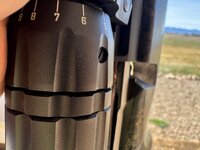
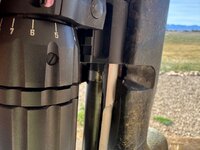
Prior to the drop I did notice a finish issue I don’t love. It likely doesn’t matter and may be unavoidable to get bolt clearance.

Rifle is as delivered from factory, minus the brake/addition of can. UM rings, SWFA 3-9
3 drops per side from 36” on to astral dog bed (approx 4” pfd foam), I have extremely hard ground and the dog bed test has been enough to reveal issues in past setups.
Did not see a shift in 5 round group post drop compared to 10 round group prior to drop. Of note the 1” stickers I have suck, much prefer the 1.5” they hold up better shooting large groups.
Prior to the drop I did notice a finish issue I don’t love. It likely doesn’t matter and may be unavoidable to get bolt clearance.

PopNFresh
FNG
love to see crf's in the wild, if that's a sa win70 footprint there's a bunch of us wishing they'd offer that aics bottom metal
Another hundred or so rounds on the rifle. Decided it was time to do a drop test.
Rifle is as delivered from factory, minus the brake/addition of can. UM rings, SWFA 3-9
3 drops per side from 36” on to astral dog bed (approx 4” pfd foam), I have extremely hard ground and the dog bed test has been enough to reveal issues in past setups.
Did not see a shift in 5 round group post drop compared to 10 round group prior to drop. Of note the 1” stickers I have suck, much prefer the 1.5” they hold up better shooting large groups.
Prior to the drop I did notice a finish issue I don’t love. It likely doesn’t matter and may be unavoidable to get bolt clearance.
View attachment 1029184
View attachment 1029186View attachment 1029187
Mine had the same gap, took 20 minutes to pop the action out and get JB weld in there, then dry time + another 20 minutes to file, sand, and paint. Frustrating to have to deal with it on a rifle billed as it was, but an easy enough fix.
I took my 6cm MRC out to 800 yds today, no issues and another 60 rds down the pipe.

- Joined
- Oct 22, 2014
- Messages
- 15,320
Another hundred or so rounds on the rifle. Decided it was time to do a drop test.
Rifle is as delivered from factory, minus the brake/addition of can. UM rings, SWFA 3-9
3 drops per side from 36” on to astral dog bed (approx 4” pfd foam), I have extremely hard ground and the dog bed test has been enough to reveal issues in past setups.
Did not see a shift in 5 round group post drop compared to 10 round group prior to drop. Of note the 1” stickers I have suck, much prefer the 1.5” they hold up better shooting large groups.
Prior to the drop I did notice a finish issue I don’t love. It likely doesn’t matter and may be unavoidable to get bolt clearance.
View attachment 1029184
View attachment 1029186View attachment 1029187
Mine had the same gap, took 20 minutes to pop the action out and get JB weld in there, then dry time + another 20 minutes to file, sand, and paint. Frustrating to have to deal with it on a rifle billed as it was, but an easy enough fix.
I took my 6cm MRC out to 800 yds today, no issues and another 60 rds down the pipe.
I’m not sure anyone even saw that gap until RancherJohn pointed it out. I believe it was needed for the original bolt handle. If you want it covered, send it back to UM and I will get them to do so. Regardless I will show them to fix on all the ones going forward.

MontyMontana
FNG
- Joined
- Sep 4, 2025
- Messages
- 45
Why did they stop taking orders/ stocking the Marshall? I looked at/ called all the listed dealers and no one has any in stock nor is taking orders until later this year? Trouble resourcing material? Design modifications?

Probably due to get all orders done up? And sent out.Why did they stop taking orders/ stocking the Marshall? I looked at/ called all the listed dealers and no one has any in stock nor is taking orders until later this year? Trouble resourcing material? Design modifications?

wnelson14
WKR
- Joined
- Dec 28, 2020
- Messages
- 1,713
@FormidilosusWhy did they stop taking orders/ stocking the Marshall? I looked at/ called all the listed dealers and no one has any in stock nor is taking orders until later this year? Trouble resourcing material? Design modifications?

I had a good conversation with Ian from MRC at the Western Hunt Expo. How's the next batch coming?
@Imac45acp @Formidilosus
@Imac45acp @Formidilosus
@Imac45acp , whose arm can I twist to get a .308 barrel? My 6CM is shooting lights out and I hate to burn it up.

BAKPAKR
WKR
If UM did the 6CM barrel, I bet they could fix you up.@Imac45acp , whose arm can I twist to get a .308 barrel? My 6CM is shooting lights out and I hate to burn it up.
- Joined
- Oct 22, 2014
- Messages
- 15,320
I had a good conversation with Ian from MRC at the Western Hunt Expo. How's the next batch coming?
@Imac45acp @Formidilosus
As soon as I get back this weekend, I will pick them up and test shoot them.
That would take planning, patience, and sending UM even more of my allowance than I already do. I’d prob just order another 6CM barrel if I’m having UM do it.If UM did the 6CM barrel, I bet they could fix you up.
Similar threads

- Replies
- 4
- Views
- 5K
- Replies
- 357
- Views
- 41K


- Replies
- 1K
- Views
- 124K



Featured Video
Latest Articles
- The Fundamentals of Scouting For Mule Deer & Elk | Hunt West Crossover
- Wiser Precision BA-7 Sparrow Binocular Adapter Review
- How to Kill Giant Bulls with Ryan Carter
- Kifaru Enters the Hunting Apparel Space: Review
- From Big Bucks to Bear Hunts: Catching Up with Jordan Budd
- Mule Deer Days Wildlife Conservation Mashup
- A Hidden Gem: Hunting Washington with Kari Thomas
- Prime Divide Bow Review
- Knowledge From Storms: Surviving and Thriving in the Backcountry with John Barklow
- DIY Wyoming Pronghorn Hunt