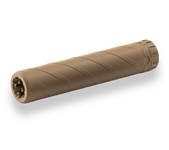
T & K Suppressors Altus™ and Vorix™

TandKHunting

MADE IN THE USA - VETERAN OWNED
Classified Approved
Rokslide Sponsor
Joined
May 31, 2023
Messages
435
T & K Suppressors — ALTUS™ 30 vs VORIX™ 30 (3D-Printed Titanium .30 cal cans)

Deposits are currently being taken for cans shipping end of February - Early March -
TANDKSUPPRESSORS.COM
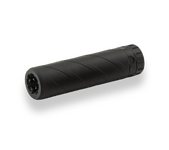
AltusBlack.pngvorixcoyote.png

ALTUS™ 30 — Compact. Lightweight. Purpose-Built.​

The ALTUS 30 is a compact, 3D-printed titanium suppressor built for shooters who prioritize balance, weight, and real-world usability without sacrificing meaningful sound reduction.

Built using additive manufacturing, the ALTUS uses monolithic internal geometry to optimize gas flow and pressure staging beyond what traditional stacked/welded baffle designs can typically achieve. The result is strong suppression in a shorter, lighter package — ideal for hunting rifles, field guns, and anyone who values mobility.

On subsonic bolt-action platforms, ALTUS provides solid peak muzzle reduction while staying light and well-balanced at the end of the barrel. On higher-pressure platforms like 5.56 NATO, it performs like a compact suppressor should — reducing blast and concussion without excessive length or backpressure.

ALTUS 30 is rated up to magnum cartridges, making it a versatile “one can does it all” option without committing to a full-length suppressor.

Included with every ALTUS 30: a premium Kilo™ or X Tango™ suppressor cover and direct thread mount of your choice.

ALTUS 30 is for shooters who want premium performance in a streamlined, carry-friendly suppressor.


VORIX™ 30 — Maximum Suppression. No Compromises.​

The VORIX 30 is our quietest 3D-printed titanium suppressor, engineered for shooters who want maximum suppression across a wide range of platforms — from subsonic bolt guns to hard-use 5.56 rifles and magnum calibers.

Compared to ALTUS, VORIX has increased length, internal volume, and baffle count. That added volume holds and manages gas longer, resulting in noticeably greater sound reduction (especially on high-pressure cartridges). Pressure decays more smoothly, creating a softer impulse and improved shooter experience.

On subsonic bolt guns, VORIX delivers exceptional peak muzzle reduction and lands in the same performance class as today’s top-tier additive titanium suppressors. On 5.56, it provides strong suppression without the excessive backpressure commonly associated with overly restrictive designs.

Like ALTUS, VORIX is fully 3D-printed titanium (no welds, no stacked tolerances), enabling complex internal geometry that traditional construction can’t replicate — built for consistency, durability, and long-term performance.

Included with every VORIX 30: a premium Kilo™ or X Tango™ suppressor cover and direct thread mount of your choice.

VORIX 30 is for shooters who want the quietest, most capable suppressor in the lineup and are willing to carry a bit more length/weight to get it.


Highlights (Both ALTUS + VORIX)​

• Fully 3D-printed titanium construction
• DLC heat-treated finish (durability / wear resistance / high-temp performance)
• Optimized gas management (reduce blowback without excessive backpressure)
• Broad platform performance (subsonic, 5.56, and magnum cartridges)
• Premium suppressor cover included (bolt-action use only)


Specifications — ALTUS™ 30​

Material: Titanium
Weight: 7.3 oz
Length: 5.75 inches
Diameter: 1.5 inches
Minimum barrel length: 10.3 inches
Rear interface: 1.375×24 HUB (Bravo)
Direct-thread options: 1/2×28, 5/8×24
Caliber range: .30-cal projectiles and smaller
Full-auto rating: 90 rounds with 10-minute cooldown
Cleaning: Simple Green (1:4) soak or ultrasonic (no heat)


Specifications — VORIX™ 30​

Material: Titanium
Weight: 11.3 oz
Length: 7.5 inches
Diameter: 1.5 inches
Minimum barrel length: 10.3 inches
Rear interface: 1.375×24 HUB (Bravo)
Direct-thread options: 1/2×28, 5/8×24
Caliber range: .30-cal projectiles and smaller
Full-auto rating: 90 rounds with 10-minute cooldown
Cleaning: Simple Green (1:4) soak or ultrasonic (no heat)


Sound Test Data (LZpeak — peak impulse)​

.308 Winchester (Hornady 168gr) — 22" Bolt Action (Tikka)​

Unsuppressed: ~165 dB
• ALTUS — Muzzle: 139.6 dB (~25 dB reduction)
• VORIX — Muzzle: 133.1 dB (~32 dB reduction)
• ALTUS — Shooter’s ear: 129.9 dB (~35 dB reduction)
• VORIX — Shooter’s ear: 123.5 dB (~41 dB reduction)

7.62×39 Subsonic — 14.5" Bolt Action​

Unsuppressed: ~160 dB
• ALTUS — Muzzle: 134.7 dB (~25 dB reduction)
• VORIX — Muzzle: 121.7 dB (~38 dB reduction)
• ALTUS — Shooter’s ear: 125.2 dB (~38 dB reduction)
• VORIX — Shooter’s ear: 119.0 dB (~41 dB reduction)

5.56 NATO (M4A1) — 14.5" Gas-Operated Rifle​

Unsuppressed: ~168 dB
• ALTUS — Muzzle: 144.3 dB (~24 dB reduction)
• VORIX — Muzzle: 136.9 dB (~31 dB reduction)
• ALTUS — Shooter’s ear: 137.0 dB (~31 dB reduction)
• VORIX — Shooter’s ear: 133.9 dB (~34 dB reduction)

.300 Weatherby Magnum (180gr, very high velocity) — 26" Bolt Action (Weatherby)​

Unsuppressed (typical): 168–172 dB
• ALTUS — Muzzle: 146.1 dB
• VORIX — Muzzle: 144.2 dB
• ALTUS — Shooter’s ear: 139.2 dB
• VORIX — Shooter’s ear: 131.5 dB

Testing note: Peak impulse sound measurements (LZpeak) recorded approximately 3 ft left of the muzzle and 6 inches right of the shooter’s ear. Unsuppressed levels represent typical centerfire rifle impulse noise for comparable platforms. Results may vary based on firearm, ammunition, barrel length, and environmental conditions.
 
Price??

I would be interested to hear some user feedback.

The VORIX is $1399 and comes with a mount, suppressor cover, and we are offering new customer 10% off discount.

The ALTUS is $1050 and comes with a mount, suppressor cover, and we offer the same new customer 10% off.

We are currently working with ROKSLIDE to get a review article done on them. I will be talking with @robby denning at Western Hunt. We will have cans there for guys to check out and put deposits down on.
 
The VORIX is $1399 and comes with a mount, suppressor cover, and we are offering new customer 10% off discount.

The ALTUS is $1050 and comes with a mount, suppressor cover, and we offer the same new customer 10% off.

We are currently working with ROKSLIDE to get a review article done on them. I will be talking with @robby denning at Western Hunt. We will have cans there for guys to check out and put deposits down on.
Why would I buy one of these over any number of other 3d printed Ti cans like CAT, SAW, PTR, Airlock, etc.? What stands out?

Give us a sales pitch.
 
Why would I buy one of these over any number of other 3d printed Ti cans like CAT, SAW, PTR, Airlock, etc.? What stands out?

Give us a sales pitch.
What ultimately separates our suppressors from many others in the same 3D-printed titanium space is that we’re publishing unweighted LZpeak impulse data, including shooter’s-ear averages, and those numbers are still competitive at the very top of the category. LZpeak captures the raw peak pressure of the gunshot in microseconds and can’t be filtered, averaged down, or massaged to look better, which makes it a far more demanding metric than dBA or composite scores. When strong results show up under LZpeak, it’s not because of marketing or test conditions — it’s a direct reflection of internal geometry, gas path design, and pressure management inside the suppressor. In other words, the performance you see is coming from engineering choices that shape and delay the pressure wave before it ever reaches the shooter, not from how the sound is measured.

Obviously, we can talk customer service, warranty, and other stuff, but if you want science based data we have it.
 
What ultimately separates our suppressors from many others in the same 3D-printed titanium space is that we’re publishing unweighted LZpeak impulse data, including shooter’s-ear averages, and those numbers are still competitive at the very top of the category. LZpeak captures the raw peak pressure of the gunshot in microseconds and can’t be filtered, averaged down, or massaged to look better, which makes it a far more demanding metric than dBA or composite scores. When strong results show up under LZpeak, it’s not because of marketing or test conditions — it’s a direct reflection of internal geometry, gas path design, and pressure management inside the suppressor. In other words, the performance you see is coming from engineering choices that shape and delay the pressure wave before it ever reaches the shooter, not from how the sound is measured.

Obviously, we can talk customer service, warranty, and other stuff, but if you want science based data we have it.
Warranty is really important for many people, me included. Especially if the serial number can be preserved through the warranty process so it’s always the “same suppressor”.
 
Warranty is really important for many people, me included. Especially if the serial number can be preserved through the warranty process so it’s always the “same suppressor”.
Our suppressors are fully monolithic 3D-printed titanium, meaning the serialized structure is one continuous unit rather than a removable core or stacked baffle system like traditional machined cans. The advantage of that approach is substantial weight reduction and the ability to design internal geometry and gas pathways that simply can’t be achieved with conventional machining, which is directly reflected in the performance data we’re publishing. The tradeoff is that they aren’t designed to be disassembled for individual baffle replacement. In the rare event of catastrophic structural damage, it’s handled through replacement rather than modular repair. As with any suppressor, the vast majority of baffle strikes are related to host alignment, mounting, or ammunition stability rather than suppressor design, which is why proper setup and mounting are critical regardless of manufacturer.

That said, we stand behind what we build. We’re not in the business of taking someone’s money and disappearing. If something happens, we work with the customer to find a fair and reasonable solution. Our goal is long-term relationships, not one-time transactions.

Someday the ATF may allow us to destroy the original can and issue the same serial number on a new can, but that day has not come yet.
 
That makes sense. I’m a big fan of the T & K company and the high quality products from you guys that I own, and I’m sure your ethos will extend to these suppressors.

Not suggesting you should optimize around my circumstances at all; just sharing a datapoint. As someone living in a state that could ban suppressors soon, a great warranty that can preserve the serial number by chopping the tube above the serial number and welding on a new tube (3D printed or not) is a major purchasing criteria. Regardless, I hope you guys kill it in the suppressor game!
 
That makes sense. I’m a big fan of the T & K company and the high quality products from you guys that I own, and I’m sure your ethos will extend to these suppressors.

Not suggesting you should optimize around my circumstances at all; just sharing a datapoint. As someone living in a state that could ban suppressors soon, a great warranty that can preserve the serial number by chopping the tube above the serial number and welding on a new tube (3D printed or not) is a major purchasing criteria. Regardless, I hope you guys kill it in the suppressor game!
Thanks brother! Between the weight, sound reduction, and internal geometry...we think it's a premium product. Hopefully we push a bunch of them at Western Hunt this week, or I'm going to have to sell a kidney to pay for the hundreds of cans in production currently. haha
 
Haha well I’m about to buy some more bino harness accessories and maybe a pair of gaiters, so hopefully that kidney can wait 😆
 
What ultimately separates our suppressors from many others in the same 3D-printed titanium space is that we’re publishing unweighted LZpeak impulse data, including shooter’s-ear averages, and those numbers are still competitive at the very top of the category. LZpeak captures the raw peak pressure of the gunshot in microseconds and can’t be filtered, averaged down, or massaged to look better, which makes it a far more demanding metric than dBA or composite scores. When strong results show up under LZpeak, it’s not because of marketing or test conditions — it’s a direct reflection of internal geometry, gas path design, and pressure management inside the suppressor. In other words, the performance you see is coming from engineering choices that shape and delay the pressure wave before it ever reaches the shooter, not from how the sound is measured.

Obviously, we can talk customer service, warranty, and other stuff, but if you want science based data we have it.
I'm sorry, but "how you measure the sound and publish the data" can't be all that separates your suppressors from the herd and justifies a particular price point. The way you phrased this sells you really short, in my opinion.

I accept your premise that measuring the LZ peak impulse data at shooter's ear is the most accurate and honest way to determine how hearing safe your suppressors are in reality. I wish the rest of the industry would use the LZ values in their marketing materials. According to the voluntary SAAMI guidelines, everyone should be used the LZ values. "All channels shall be recorded with no frequency weighting. (Sometimes referred to as “Z-Weighting” or “unweighted”.)" https://saami.org/wp-content/uploads/2025/07/SAAMI-Z299.6-202X-Suppressors-Approved-2025-07-30.pdf

And it makes sense to do that from a safety point of view. This is based upon my understanding that LZ values more accurately measure the amount of sound that can "affect your hearing" rather than simply the part of the sound "we can hear." So, bravo for measuring that and using it in your marketing!

I also accept that a suppressor that measures 123.5 dbZ at shooter's ear is really impressive! Especially from a suppressor that weighs 11.3 oz., is 7.5" long, and only 1.5" in diameter. Now, you did use a 22" barrel for that, which may make a slight difference, but still impressive.

By way of comparison, from the consolidated TBAC Suppressor Summit data, the quietest SE DB rating for any other existing suppressor is the Otter Creek Labs Hydrogen-L at 129.8 DB, which weighs 13.9 oz., is 9.54" long, and 1.61" in diameter! That was with a 20" barrel.

With all that said, when shopping, it would be nice to be able to do an easier apples-to-apples comparison between your suppressors and competing ones. These seem like great suppressors and if I didn't already own too many of them, I would be really excited about the possibilities you are offering. I wish you the best of luck and I look forward to seeing your results from a future TBAC Suppressor Summit.
 

.308 Winchester (Hornady 168gr) — 22" Bolt Action (Tikka)​

Unsuppressed: ~165 dB
• ALTUS — Muzzle: 139.6 dB (~25 dB reduction)
• VORIX — Muzzle: 133.1 dB (~32 dB reduction)
• ALTUS — Shooter’s ear: 129.9 dB (~35 dB reduction)
• VORIX — Shooter’s ear: 123.5 dB (~41 dB reduction)


You are stating that the Vorix is as quiet, or quieter than dry firing a rifle? You can hear the firing pin fall on a supersonic round?


5.56 NATO (M4A1) — 14.5" Gas-Operated Rifle​

Unsuppressed: ~168 dB
• ALTUS — Muzzle: 144.3 dB (~24 dB reduction)
• VORIX — Muzzle: 136.9 dB (~31 dB reduction)
• ALTUS — Shooter’s ear: 137.0 dB (~31 dB reduction)
• VORIX — Shooter’s ear: 133.9 dB (~34 dB reduction)

How are you getting 133.9dB on an AR at shooters ear?
 
You are stating that the Vorix is as quiet, or quieter than dry firing a rifle? You can hear the firing pin fall on a supersonic round?


How are you getting 133.9dB on an AR at shooters ear?

LZpeak measures peak impulse pressure at a defined mic location. It doesn’t represent perceived loudness or eliminate mechanical noise. A suppressed rifle at 123 dB peak is not “dry fire quiet” and still produces supersonic crack and action noise. The number reflects peak pressure reduction, not a subjective comparison to mechanical sound.

Shooter’s-ear impulse on a gas gun is heavily influenced by port pop and gas system behavior, not just muzzle suppression. LZpeak measures peak pressure at a defined mic location, and our results are averaged multi-shot data with consistent placement (3 ft muzzle / 6" ear). A properly managed gas system combined with effective internal pressure staging can produce low-130s LZpeak at the ear on a 14.5″ 5.56 platform. That doesn’t make it “quiet” in a subjective sense — it reflects peak impulse pressure reduction under defined test conditions.
 
LZpeak measures peak impulse pressure at a defined mic location. It doesn’t represent perceived loudness or eliminate mechanical noise. A suppressed rifle at 123 dB peak is not “dry fire quiet” and still produces supersonic crack and action noise. The number reflects peak pressure reduction, not a subjective comparison to mechanical sound.

Shooter’s-ear impulse on a gas gun is heavily influenced by port pop and gas system behavior, not just muzzle suppression. LZpeak measures peak pressure at a defined mic location, and our results are averaged multi-shot data with consistent placement (3 ft muzzle / 6" ear). A properly managed gas system combined with effective internal pressure staging can produce low-130s LZpeak at the ear on a 14.5″ 5.56 platform. That doesn’t make it “quiet” in a subjective sense — it reflects peak impulse pressure reduction under defined test conditions.

I’m aware of how it works. I meter suppressors 3+ days a week. Port pop on an AR is not 133 dB at SE. Nor is a super sonic 308 123 dB at SE.
 
I’m aware of how it works. I meter suppressors 3+ days a week. Port pop on an AR is not 133 dB at SE. Nor is a super sonic 308 123 dB at SE.
We’re reporting averaged LZpeak impulse values using defined mic placement (3 ft muzzle / 6″ shooter’s ear) on an HBK 2255. If your setup, weighting, mic orientation, host configuration, or environmental conditions differ, the numbers will differ. We’re simply publishing the results from our defined test conditions. Anyone is welcome to replicate the setup and compare apples-to-apples.
 
We’re reporting averaged LZpeak impulse values using defined mic placement (3 ft muzzle / 6″ shooter’s ear) on an HBK 2255. If your setup, weighting, mic orientation, host configuration, or environmental conditions differ, the numbers will differ. We’re simply publishing the results from our defined test conditions. Anyone is welcome to replicate the setup and compare apples-to-apples.

Yes. And I’m pointing out- that either you don’t know what you are doing, or you are purposely misleading. Port pop on an AR is over 140 dB at SE unweighted- full stop. There are no cans that meter 123 dB at SE on a super sonic 308 at SE. there very few that meter 129 dB SE in a 308. Integrally suppressed 308’s don’t meter 123 dB SE.
 
Yes. And I’m pointing out- that either you don’t know what you are doing, or you are purposely misleading. Port pop on an AR is over 140 dB at SE unweighted- full stop. There are no cans that meter 123 dB at SE on a super sonic 308 at SE. there very few that meter 129 dB SE in a 308. Integrally suppressed 308’s don’t meter 123 dB SE.

Again,

We’ve disclosed the instrumentation, mic placement, weighting, host platform, ammunition, and that the results are averaged LZpeak impulse values. Those are the conditions under which the data was recorded.

We stand behind the methodology and the results. If someone believes the numbers are not achievable, they’re welcome to replicate the setup using the same equipment and placement and compare results directly. We’re not speculating or misleading— we’re publishing measured data from defined test conditions.
 
I'm sorry, but "how you measure the sound and publish the data" can't be all that separates your suppressors from the herd and justifies a particular price point. The way you phrased this sells you really short, in my opinion.

I accept your premise that measuring the LZ peak impulse data at shooter's ear is the most accurate and honest way to determine how hearing safe your suppressors are in reality. I wish the rest of the industry would use the LZ values in their marketing materials. According to the voluntary SAAMI guidelines, everyone should be used the LZ values. "All channels shall be recorded with no frequency weighting. (Sometimes referred to as “Z-Weighting” or “unweighted”.)" https://saami.org/wp-content/uploads/2025/07/SAAMI-Z299.6-202X-Suppressors-Approved-2025-07-30.pdf

And it makes sense to do that from a safety point of view. This is based upon my understanding that LZ values more accurately measure the amount of sound that can "affect your hearing" rather than simply the part of the sound "we can hear." So, bravo for measuring that and using it in your marketing!

I also accept that a suppressor that measures 123.5 dbZ at shooter's ear is really impressive! Especially from a suppressor that weighs 11.3 oz., is 7.5" long, and only 1.5" in diameter. Now, you did use a 22" barrel for that, which may make a slight difference, but still impressive.

By way of comparison, from the consolidated TBAC Suppressor Summit data, the quietest SE DB rating for any other existing suppressor is the Otter Creek Labs Hydrogen-L at 129.8 DB, which weighs 13.9 oz., is 9.54" long, and 1.61" in diameter! That was with a 20" barrel.

With all that said, when shopping, it would be nice to be able to do an easier apples-to-apples comparison between your suppressors and competing ones. These seem like great suppressors and if I didn't already own too many of them, I would be really excited about the possibilities you are offering. I wish you the best of luck and I look forward to seeing your results from a future TBAC Suppressor Summit.
I appreciate the thoughtful discussion and support man. For full transparency, we’re sending our suppressors to PEW Science for independent third-party testing. We believe strongly in apples-to-apples comparisons, especially when it comes to true Z-weighted impulse data. There are so many different measurement standards being used across the industry that it becomes difficult to compare performance unless it’s Z vs Z under defined conditions. I will certainly work on a document that compares our cans with others on PEW Science to show the world.

Based on the internal geometry, pressure staging, and the data we’re seeing in our own testing, we’re very confident in the engineering and overall performance. The cans sound excellent and we’re extremely happy with how they’re behaving across platforms. Once independent testing is complete, we’ll publish the results and provide a clear comparison document so people can evaluate everything using consistent methodology.
 
Back
Top