I apologize for any misunderstanding.
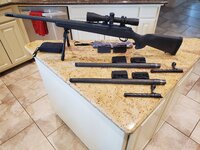
First, you merged two different statements that I made. I first stated there is no cost savings with optics just because you have multiple barrels. I then followed that statement up with an example of moving a single scope around on multiple rifles to demonstrate that point. Then in a new section of my post I mentioned that if you rely upon a single scope then that is a single point of failure. This is true if you use a single scope and run a single rifle with multiple barrels or multiple rifles. From a savings perspective, there could be a stronger argument for the total cost (rifle, barrels, single optic) being less expensive than multiple rifles and a single optic. It would depend on the cost of the barrels vs the cost of the rifles. However, I do not recall that being brought up.
Second, with most folks the more they disassemble and reassemble something the odds increase that they are going to mess up. Sometimes it can be an easy fix while other times it can mean a broken part. Most folks are human and do periodically make mistakes. What potential issues could arise if someone were to over-torque the barrel? What potential issues could arise if someone were to under-torque the barrel?
Third, fair points on having good data on where everything should be. I even went so far as call it a nuisance and not specifically a drawback. I personally would not be "one and done" with hitting a 10" plate at 500 yards after moving an optic or swapping a barrel. Your response was not expanded upon so I do not know if you'd stop there and be "good to go" or if you would then make an adjustment. Each adjustment/confirmation shot costs a few bucks. While individually it is chump change, it can add up depending on how often your swap barrels or move your optic.
Fourth, you have valid point as there is always a risk. But there's more than one way to address this. I have one rifle that likes ABLR. I have another rifle that likes Berger. I have another rifle that likes ELD-M. Grey tip, no tip, red tip. No need to read head stamps on the brass. No need to read the chambering on the barrel. No confusion as none of the rifles/scope combinations look exactly the same. Now if I had multiple rifles that were the same make/model and had the same scope, or if I used a single rifle/scope with multiple barrels, then I absolutely would be using a very similar approach as what you had mentioned.