Spotting your shot, most import factors.

I think I am a blinker. I have taken video of myself and I generally don’t have tension that’s noticeable - I notice that I also blink a fair bit just in general after or before shooting in the videos! But for the closer shots where the time of flight is closer to a tenth second like a blink, it would be great not to!

I loaded a bullet in a sized and unprimed case after Form’s suggestion but wondered about noticing the difference even if I load blind - the oats is a good idea to mask the weight difference!
Rice would also work well. The finger tips can tell the smallest differences, so I back off the decapping rod to keep the old primer in place. If you keep being able to tell which are dummies, some light glove liners while reloading helps hide them better.

I used to worry about the blink more in the past. Dummy cartridges definitely show everything, and as long as it’s only a blink and not a full flinch or tensing hand/arm my group sizes aren’t affected even a little bit.

It’s funny remembering back to being a young kid and adults being upset I had a hard time keeping an eye open for eye drops, or when trying to put contacts in as a teenager. lol
 
Rice would also work well. The finger tips can tell the smallest differences, so I back off the decapping rod to keep the old primer in place. If you keep being able to tell which are dummies, some light glove liners while reloading helps hide them better.

I used to worry about the blink more in the past. Dummy cartridges definitely show everything, and as long as it’s only a blink and not a full flinch or tensing hand/arm my group sizes aren’t affected even a little bit.

It’s funny remembering back to being a young kid and adults being upset I had a hard time keeping an eye open for eye drops, or when trying to put contacts in as a teenager. lol
I don’t think it affects group size - just closer range actual time of impact spotting. I have a really hard time keeping my eyes open for eye drops - I can’t do it without just physically holding them opening.
 
I watched some videos of me shooting. I sometimes blink and sometimes I don’t. Part of it could be I keep my eyes trained on the target so when the shot breaks, a blink was waiting to happen anyways.
 
This was absolutely fascinating, definitely appreciate the level of detail.

In particular, the points you make about cheek-weld - it reminded me quite a bit about grip pressures and inputs on a handgun in managing sight tracking/recoil/trigger control, etc. That really clicked something into place for me in understanding precision rifle a bit better.

Would you mind sharing a primer on cheek weld, and what inputs you're imparting with different points of body contact and platform (ie, shoulder pressure, hand pressures, how hard you're pressing the cheek, pressure into bipod/tripod/bags, etc)?

@Formidilosus , how much pressure are you putting into cheek-weld? And how is that related to how much you build up your neoprene cheek pads?

As in, if you just lay your cheek against the pad, is your eye perfectly aligned in the center of the scope? Or are you pressing hard enough, that without pressure and just neutrally resting your cheek, your eye ends up resting just a bit above the scope's centerline?
 
@Formidilosus , how much pressure are you putting into cheek-weld? And how is that related to how much you build up your neoprene cheek pads?

As in, if you just lay your cheek against the pad, is the scope perfectly aligned in the center of the scope? Or are you pressing hard enough, that without pressure and just neutrally resting your cheek, your eyes end up resting just a bit above the scope's centerline?

Lay the full weight of your head on the stock with your cheek fat scrunched up. Then pick your eye up between 1/8” and 1/4” from dead bottom- that’s where the scope is lined up.

I want a solid cheekweld during recoil with friction not hard pressure. A cheek pad of some type helps with that.
 
Awesome, thank you.

Reread my last post, I added a piece.


How much pressure against your shoulder?

About the weight of the rifle itself- 10-12lbs of pressure.

And, what hand is putting that pressure into the stock?

Grip hand. Make a hook with your fingers, pull that straight back into shoulder pocket. Or, you can think of it as rifle is still, fingers hook, and your body pushed into the rifle with 10-12lbs.
 
Reread my last post, I added a piece.


About the weight of the rifle itself- 10-12lbs of pressure.


Grip hand. Make a hook with your fingers, pull that straight back into shoulder pocket. Or, you can think of it as rifle is still, fingers hook, and your body pushed into the rifle with 10-12lbs.


This is super helpful, and much appreciated. Somehow, a very long time ago, I picked up that you wanted minimal contact and pressures input into the rifle, but just never got good results with that. Couldn't figure out what I was doing wrong, and went back to doing what worked better, and just assumed I'd need more training on the minimal-contact thing. But these details help quite a bit, and are making me realize I was probably infected by some sort of tactical fudd-lore on it.

With the friction on the cheek-weld...is that intended to help control recoil direction, or keep the stock tucked into your shoulder consistently, or something? What's the intent behind that part of what you're doing on the rifle?
 
This is super helpful, and much appreciated. Somehow, a very long time ago, I picked up that you wanted minimal contact and pressures input into the rifle, but just never got good results with that.

It’s great from benchrest. And that’s where it originated, and PRS has continued it- as PRS is as much barricaded BR as it is anything else.


Couldn't figure out what I was doing wrong, and went back to doing what worked better, and just assumed I'd need more training on the minimal-contact thing. But these details help quite a bit, and are making me realize I was probably infected by some sort of tactical fudd-lore on it.


The reason to actually grip a rifle is “control”. Free recoil means zero control of a gun- that’s doesn’t work in field shooting on live things and/or dynamic shooting. It’s not a death grip- it’s controlled neutral grip.


With the friction on the cheek-weld...is that intended to help control recoil direction, or keep the stock tucked into your shoulder consistently, or something? What's the intent behind that part of what you're doing on the rifle?

The goal is to keep the rifle and your body- head eyes, hands, shoulder; as one unit for the entire shot process. Yes real cheekweld does help with recoil/sight movement, but it also keep the whole shooting platform stable and together.
 
Grip hand. Make a hook with your fingers, pull that straight back into shoulder pocket. Or, you can think of it as rifle is still, fingers hook, and your body pushed into the rifle with 10-12lbs.

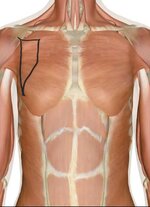
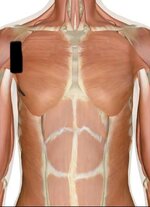
where exactly do you define shoulder pocket? I always assumed it was the AC joint, where the clavicle meets the humerus. Then every one started shooting as medial as possible, and it never occurred to me to ask exactly where everyone defined the "shoulder pocket" specificaly.

Also, what portion of the recoil pad are you putting there? the toe of the recoil pad, the center, the top? Does this change based on position?
 
Back
Top