fair enough280 AI is an extremely efficient cartridge and can get close to 7rm and 7prc speeds with much less recoil. It is more pleasurable to shoot. It is my favorite cartridge.

Navigation
Install the app
How to install the app on iOS
Follow along with the video below to see how to install our site as a web app on your home screen.
Note: This feature may not be available in some browsers.
More options
Style variation
You are using an out of date browser. It may not display this or other websites correctly.
You should upgrade or use an alternative browser.
You should upgrade or use an alternative browser.
Small caliber regret
- Thread starter OneMore
- Start date

I regret not understanding bullets and wound channels earlier.. If I would have understood bullets kill not headstamps I would have switched years ago.. My fast 6mm outperforms my 300 wildcat terminally and shoots "flatter" has the EXACT same wind bracket, doesn't punish me to shoot and most importantly I can spot my shots. I personally have zero need/want to ever go back to hunting with large magnums.


Chris in TN
WKR
- Joined
- Jun 17, 2025
- Messages
- 1,927
Dad and I sold our .300s but kept our 25-06. It's sort of a family heirloom now, with a story. We still hunt with it and likely will this fall. It was also my grandpa's favorite deer caliber. He loved the .30-06 and .308 because of bullet selection, which was a real factor 10-20-30 years ago, but always hunted with his 25-06. I wish his rifle hadn't got 'lost' when he died, but we still have ours. It'll never be a high volume caliber for us, but it really made a lot of sense for 0-400 yard hunters back in the day before rangefinders.I have been shooting a 25-06 since 1969 when I built my first one (it was a wildcat then). I probably have killed over 100 deer and antelope with my Ruger M77 which I bought in 1973 and still shoot. You guys just discover small calibers?
I still shoot my Ruger #1 in .300 Wby today and have since I bought it in 5 years ago. I had another .300 Wby that I gave my son, since 1980. I am 84 and just shot it today getting ready for my elk hunt in 2 weeks. My only admission to my age is I have a muzzle brake on it.
These 2 guns are my go to hunting guns for everything I hunt and will be until I die.
Chris in TN
WKR
- Joined
- Jun 17, 2025
- Messages
- 1,927
I love my .280ai's performance. I wanted it for years, built it on what is an heirloom action, to me, and I'd never sell it, but man it's a heavy thing and the performance it offers well exceeds what my needs call for.280 AI is an extremely efficient cartridge and can get close to 7rm and 7prc speeds with much less recoil. It is more pleasurable to shoot. It is my favorite cartridge.
A lot of people say they wish they'd gone smaller years ago, maybe from a 30-06 to a 6mm creed, or a 300 win mag to a 243. I was started on and always trusted the 243, and still wish I had started smaller. If I had started with a nice light 223 and a swfa 6x, and spend more time practicing, I would have killed more animals with less misses and less wounded for my first 7 or so years of hunting.
I'm now at a point where my proficiency is high enough that for my hunting there's no noticeable difference between using the 223 and 243, but it's taken pretty much a decade to get here without the right education to start me off.
Here's hole from 95 classic hunters in the 243 that completely eviscerated the lungs of this deer, and left an inch hole in the offside as it exited. If I need more than the 6mms I'll let you know but once you step up from here meat damage becomes catastrophic
I'm now at a point where my proficiency is high enough that for my hunting there's no noticeable difference between using the 223 and 243, but it's taken pretty much a decade to get here without the right education to start me off.
Here's hole from 95 classic hunters in the 243 that completely eviscerated the lungs of this deer, and left an inch hole in the offside as it exited. If I need more than the 6mms I'll let you know but once you step up from here meat damage becomes catastrophic
Attachments


TaperPin
WKR
- Joined
- Jul 12, 2023
- Messages
- 6,317
Well, I assumed it would be more clear the intended comparison was normal weight big game bullets, like 100 gr 6mm vs 115ish 25 cal, in a popular fairly soft bullet like ballistic tips, or run of the mill cup and core factory bullets. From 12 year old junior high school kids with their first license on up, it’s no secret what cartridge/bullet combinations work better than others. There’s a lot more hands on knowledge in the community than you give credit for. It’s kind of like off road pickup tires - it doesn’t take an engineer to see who in a group struggles on hard off road jeep trails, or gumbo mud. I suspect you might point out correctly it also depends on a pickup’s weight distribution, increased traction differentials, air pressure, driving style, etc, but usually a tire’s reputation is well earned and easy to see.You make a great point about the old 100-grain bullet versus the new 103-grain bullet, but I don’t follow you the rest of the way.
What is it about a .257 caliber 100-grain bullet that makes it so much better than a 100-grain .243 caliber bullet? Does the extra 0.14” diameter make up for the lower ballistic coefficient? Or does the .257’s superior performance with 134- or 138-grain bullets set it apart from the .243, which tops out around 115- or 117-grain bullets?
I’ve had double-lung shot deer run 400 yards after being hit by .30-06 and .45-70. Does that mean I need a bigger bullet?
People switch to larger calibers because that’s what gun culture tells them they are supposed to do, not for any truly rational reason.
I’m not even saying small cartridges don’t work, obviously they kill a bunch of animals every year, but yeah, a 25-06 kills better than a 243. It just does. Every hunting bullet fired from pistols, rifles, or muzzleloaders behaves in rather predictable ways given different shot angles and impact velocities, so I don’t think it’s that far out of line to suggest it’s common sense to stay within the limitations of each one. Without putting words in your mouth, your argument seems to be heavier bullets going faster don’t kill better? The junior high me would argue that just doesn’t match what is seen in the field.

S-3 ranch
WKR
I apply to that group of starting small and graduated to larger then moved to the middle of reality.While many have just discovered the 6mm, a large number of us started out hunting with it, and if you know anything about young guys we will shoot any and every bullet through a rifle. The use of soft fragmenting bullets isn’t anything new, despite popular thoughts that a 103 gr bullet makes the 6mm a giant killer, while a soft 100 gr produced since the 243 came out in 1955 is SOOOOOOOO much different. *chuckle*
A 243 works, but there are much better choices and everyone I grew up with gravitated to larger cartridges. If it worked as well as larger cartridges it’s not like we wouldn’t keep using it, everyone I know still has one in the closet ready to go, we just don’t see it as the be all end all. A cow shot double lung with my rifle went almost 400 yards, luckily out in open sage. In some thick overgrown areas that don’t show hoof prints, 400 yards can be a very very long way and many elk are lost in half that distance. There are much better choices. The 25 calibers are a much better minimum choice.
Time and time again guys say since going to a smaller cartridge they shoot more, but they should have started with a smaller rifle and always had it to practice with. I call it confusing practice rifles with hunting rifles.
I started elk hunting our alfalfa fields in Colorado with a .243win yes it worked marginally
Then moved into a .270win and it killed elk and muledeer with more authority
Less cows running back towards the irrigation canal ( brushy and NF boundary)
Then moved into a .300wm for years,( never lost a single animal or had one run )
Now I am back in to shooting.270win and .308 , but still keep my 375 ruger sighted in and ready for action.
IMO 6mm is a absolute minimum to kill with any type of authority
I know someone will throw up their “ my .223 is a bowling ball on heavy game @ 600+ yards “
I turned in my liars club card and will just stick with my old .270

huntnful
WKR
- Joined
- Oct 10, 2020
- Messages
- 3,986
Started with a 6.5 CM, then went to 28 Nosler, then 300 NMI, then 6.5 PRC, then 6 PRC, then 7-300 NMI and now a 6.5-7PRC.
I've only hunted with the 6.5-7 all season, despite having a 7-300 NMI along for every trip. I just don't feel handicapped by the 6.5-7. It shoots amazing, and has almost no recoil. It's tough not killing something with a gun and load I put a lot of time into (the 7-300 NMI), but I've grown pretty fond of the 6.5 and 156 Berger. And it's been a great killer as well.
I'm not sure when/if I'll go back to a bigger cartridge bullet again. So far the 6.5 hasn't left me wanting more in an scenarios.
I've only hunted with the 6.5-7 all season, despite having a 7-300 NMI along for every trip. I just don't feel handicapped by the 6.5-7. It shoots amazing, and has almost no recoil. It's tough not killing something with a gun and load I put a lot of time into (the 7-300 NMI), but I've grown pretty fond of the 6.5 and 156 Berger. And it's been a great killer as well.
I'm not sure when/if I'll go back to a bigger cartridge bullet again. So far the 6.5 hasn't left me wanting more in an scenarios.
TaperPin
WKR
- Joined
- Jul 12, 2023
- Messages
- 6,317
A lot of fluff is online about how every elk or deer is as easy to kill, and that’s just not correct unless you believe every animal will turn for a good angle. If you mind waiting for good shooting angles within the limitation of the cartridge/bullet then sure, use the smallest thing that will kill it if you want to. For most of my adult life I’ve enjoyed focusing on antler or horn size and early on had a tremendous mulie just walk into the trees because the shot angle was outside of the limitations of the rifle. Since then I will never feel under gunned trophy hunting with a 7 mag or larger since I’ve already paid the price once for carrying a less capable combination. Real life comes with a lot of less than ideal situations.
Are you really willing to pass up a big deer or elk at an angle like this? Nothing wrong with your answer either way, but more than once I’ve seen first hand how big talk about shooting ethics go out the window quickly. (Cue the dude saying he shoots everything at 500 yards in the neck and has never lost an animal, or a 223 would easily kill it.)
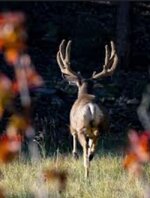
Are you really willing to pass up a big deer or elk at an angle like this? Nothing wrong with your answer either way, but more than once I’ve seen first hand how big talk about shooting ethics go out the window quickly. (Cue the dude saying he shoots everything at 500 yards in the neck and has never lost an animal, or a 223 would easily kill it.)

Pharmseller
WKR
If the animal is moving at a good clip he’s safe from me, regardless of angle or cartridge. I’m just not that good of a shot at moving targets.
S-3 ranch
WKR
Having a caliber & bullet combo with 25-30 inches of penetration does wonders for these marginal shots, can’t do that with a pea popperA lot of fluff is online about how every elk or deer is as easy to kill, and that’s just not correct unless you believe every animal will turn for a good angle. If you mind waiting for good shooting angles within the limitation of the cartridge/bullet then sure, use the smallest thing that will kill it if you want to. For most of my adult life I’ve enjoyed focusing on antler or horn size and early on had a tremendous mulie just walk into the trees because the shot angle was outside of the limitations of the rifle. Since then I will never feel under gunned trophy hunting with a 7 mag or larger since I’ve already paid the price once for carrying a less capable combination. Real life comes with a lot of less than ideal situations.
Are you really willing to pass up a big deer or elk at an angle like this? Nothing wrong with your answer either way, but more than once I’ve seen first hand how big talk about shooting ethics go out the window quickly. (Cue the dude saying he shoots everything at 500 yards in the neck and has never lost an animal, or a 223 would easily kill it.)
View attachment 961987

Colorado Cowboy
WKR
In over 70 years of hunting and killing big game, I've learned one thing......no two animals (of the same species) will act the same when getting hit with the same caliber/load/bullet. Many years ago while hunting deer in California, my hunting buddy shot a forked horn buck. He was about 100yards standing broadside. At the shot, the buck took off running up the ridge and disappeared over the top. He said to me "there's no way I missed that deer". We went to the spot the buck was standing and there was a pile of lungs that was as big as your fist and several pieces of rib bones. We went to where the deer disappeared and there he was dead. He had a hole in the exit ribcage as big as both of your fists together. The deer was about 100# gutted. He had run about 300 yards showing no sign of being hit.
His gun was a sporterized o3 Springfield in 30-06. He was shooting his reloads with a 150 gr Sierra bullet at about 2800 fps. I shot the same load too. We had killed dozens of deer with the same load, usually they dropped immediately. IMHO you can use the reaction of the animal you are shooting to judge the ability of the bullet to kill. The animals are different and don't react the same to being shot.
His gun was a sporterized o3 Springfield in 30-06. He was shooting his reloads with a 150 gr Sierra bullet at about 2800 fps. I shot the same load too. We had killed dozens of deer with the same load, usually they dropped immediately. IMHO you can use the reaction of the animal you are shooting to judge the ability of the bullet to kill. The animals are different and don't react the same to being shot.

Machingeaneer
WKR
- Joined
- Dec 2, 2023
- Messages
- 364
The answer is yes, I would pass that shot every time. I find it interesting that many big cartridge proponents often talk about using them out of respect for the animal yet here we are talking about how big magnums let us shoot animals in the ass.
S-3 ranch
WKR
No need for a magnum , just a nice bonded bullet, those explosive bullets mean the difference between gut shot and a lethal shot into the vitalsThe answer is yes, I would pass that shot every time. I find it interesting that many big cartridge proponents often talk about using them out of respect for the animal yet here we are talking about how big magnums let us shoot animals in the ass.
Chris in TN
WKR
- Joined
- Jun 17, 2025
- Messages
- 1,927
I see both sides of this and don't want to argue with either of you but I think the issue might be better stated as:Without putting words in your mouth, your argument seems to be heavier bullets going faster don’t kill better? The junior high me would argue that just doesn’t match what is seen in the field.
"Heavier bullets have the potential to kill better in absolute terms, but as we collectively learn to shoot better, and have better choices to match our bullets to the speed at which we'll use them, with higher BCs across the board that allow us to enjoy wider windows of optimum performance, it becomes clearer that smaller calibers employed properly (within game size and bullet speed constraints) work far better than 'well enough' and also allow for greater precision as we collectively begin to practice more with those smaller calibers."
If you're going to take that shot you should be more worried about your bullet's SD and construction relative to its velocity, because penetration is more a function of those, than it is bore size. Velocity isn't always your friend when you need penetration. I've seen absolutely incredible levels of penetration from bullets moving fairly slow (big bore revolvers). Not much tissue damage. So I think the question you pose is sort of a category error.Are you really willing to pass up a big deer or elk at an angle like this? Nothing wrong with your answer either way, but more than once I’ve seen first hand how big talk about shooting ethics go out the window quickly. (Cue the dude saying he shoots everything at 500 yards in the neck and has never lost an animal, or a 223 would easily kill it.)
View attachment 961987
I think there's a whole world of people who still use more heavily constructed bullets on game precisely because they're anticipating that sort of shot. I gave up on it when I realized I wasn't comfortable pulling the trigger on that angle regardless of caliber and I haven't looked back. To be clear, I agree with what you're saying about ethics. I've seen it too. And I've seen easier shots flubbed. But if I'm trying that shot - and I have declined it twice now since I lost a buck to it that I know that I killed, just couldn't find until two months later, in a pine thicket - I'm thinking about how well my bullet will penetrate, not how much raw power it has. The guy who has a stout bonded bullet in his .243 or 6.5cm can make that shot, likely as well or better than the guy who has his .300Manglum loaded with faster-expanding bullets at crazy speeds. But then you get into the expansion and tissue damage you had to leave on the table for broadsided shots, when you chose the heavy bullet for the Texas heart shot.
Everything is a tradeoff, but at the end of the day, I don't think the answer to your question really hinges on caliber size.

Does texas heart shot not fall into the "margin of error" category?The answer is yes, I would pass that shot every time. I find it interesting that many big cartridge proponents often talk about using them out of respect for the animal yet here we are talking about how big magnums let us shoot animals in the ass.

- Joined
- Oct 22, 2014
- Messages
- 15,260
A lot of fluff is online about how every elk or deer is as easy to kill, and that’s just not correct unless you believe every animal will turn for a good angle. If you mind waiting for good shooting angles within the limitation of the cartridge/bullet then sure, use the smallest thing that will kill it if you want to. For most of my adult life I’ve enjoyed focusing on antler or horn size and early on had a tremendous mulie just walk into the trees because the shot angle was outside of the limitations of the rifle. Since then I will never feel under gunned trophy hunting with a 7 mag or larger since I’ve already paid the price once for carrying a less capable combination. Real life comes with a lot of less than ideal situations.
Are you really willing to pass up a big deer or elk at an angle like this? Nothing wrong with your answer either way, but more than once I’ve seen first hand how big talk about shooting ethics go out the window quickly. (Cue the dude saying he shoots everything at 500 yards in the neck and has never lost an animal, or a 223 would easily kill it.)
View attachment 961987
Always the same.
How many shots at that angle have you taken on animals? How many were recovered? With what calibers, bullets and impact velocity?
- Joined
- Oct 22, 2014
- Messages
- 15,260
No need for a magnum , just a nice bonded bullet, those explosive bullets mean the difference between gut shot and a lethal shot into the vitals
How many shots at that angle have you taken on animals? How many were recovered? With what calibers, bullets and impact velocity?

Ozarkansas
WKR
- Joined
- Nov 10, 2020
- Messages
- 655
I would absolutely pass on that shot unless the animal was already wounded and I needed to follow up.Are you really willing to pass up a big deer or elk at an angle like this?
Coincidentally , last year I dropped a deer with a broken leg using a Texas heart shot. The 140 grain Gold Dot from my 6.5x55 made it all the way to the front of the chest. So I’d have no concerns that my main big game rifle would do the job on that shot. I’d be willing to bet that my .243 could make it work as well with Partitions, but I’ve never done it.
Similar threads


Latest posts
-

-
 Ebikes ..... are they really useful for hunting anymore?
- Latest: Whitefox82
-

-


Featured Video
Latest Articles
- How to Kill Giant Bulls with Ryan Carter
- Kifaru Enters the Hunting Apparel Space: Review
- From Big Bucks to Bear Hunts: Catching Up with Jordan Budd
- Mule Deer Days Wildlife Conservation Mashup
- A Hidden Gem: Hunting Washington with Kari Thomas
- Prime Divide Bow Review
- Knowledge From Storms: Surviving and Thriving in the Backcountry with John Barklow
- DIY Wyoming Pronghorn Hunt
- Unlock Precision Shooting: Master Your Hunting Game with Competitive Insights
- Topo Topper Rincon Review