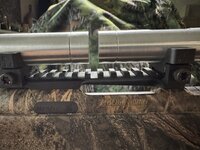
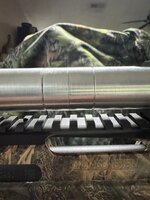
Scope rings and pic rail bedding

Joined
Dec 27, 2025
Messages
41
Hello,

I believe this would be the correct place for this. So I’ve read through the forums, saw some people bed their pic rails and optics in the rings. Do more research and there’s a big opinion that manufacturing tolerances have gotten low enough that it’s not needed, some say it’s still needed. So, the point of this post is I’d like to hear from two groups of people if possible to get a better picture for myself on if it’s worth setting up and doing.

The first group of people I’d like to weigh in are the people who have bedded rails and scopes in the past and have stopped doing it and why. The second would be people who currently do it and their justification for it, preferably with examples that are recent (within 5 years or so). I understand it’ll come down to personal preference and risk assessment. Just would like a bit more knowledge to sway me one way or the other.

Thank you for your time
 
I’d found some comments on other threads from Form about it but hadn’t found his actual write up. Much appreciated. That’s basically the system I have currently except I don’t use a paint pen and I have done anyting with the action screws. Basically everything gets cleaned and thread locker
 
I always bed the rail.

Speedy beds his rings, seems a bit overkill for a hunting rifle.

Part of me wonders how much of this was necessary 20-30 years ago because of manufacturing processes and are now placebo effects now that manufacturing has increased the precision of their tolerances.
 
Part of me wonders how much of this was necessary 20-30 years ago because of manufacturing processes and are now placebo effects now that manufacturing has increased the precision of their tolerances.

A chitbox Haas cnc won't cut round when it's on the showroom floor, some ring mfg's are lying to you about holding .0001" and those shops aren't spending $300,000 on equipment to check .0001" roundness.
 
Bed the rail. The amount of shear and the ever increasing weight and height of scopes makes this a potential payback. I use 10110 and wipe it up wet with a wd40 soaked qtip. I buff a light coat of Johnsons paste wax on the action before the bedding.

Rings, I do not bed....but with the average height of scopes continuing to rise, I may move to bedding the ring/rail connection....release on all sides and pay attention to the mechanical lock points.
 
I always bed the rail.

Speedy beds his rings, seems a bit overkill for a hunting rifle.

I watched this video from start to finish, and I agree that it seems like overkill. Also alot of it seemed counterproductive, and like it could have all been avoided had he just bought quality rings in the first place.

He removed material from the top rail, removed material from the bottom ring, added JB weld to the bottom ring, then sanded down the JB weld. Not to mention he had release agent(wax) everywhere that I never saw him wipe away in some spots. Seems 95% unnecesarry.
 
Part of me wonders how much of this was necessary 20-30 years ago because of manufacturing processes and are now placebo effects now that manufacturing has increased the precision of their tolerances.
I still see guys at the range tapping their optics to make sure that the adjustments "set" or some other such Fudd nonsense.
Hell, I caught myself doing it last Saturday while trying to zero some worthless Simmons or Bushnell optic from Walmart for a buddy. Always made me wonder why no one ever mentioned the double standard of "I've gotta smack my optic to get it to adjust but if I smack it too much or drop it then it loses zero every time". Often those two statements came from the same person minutes apart with no sense of contradiction.
Edit to add:
What is everyone finding to be the best use of bedding like JB Weld to do optic rails without going to the extremes like the video above?
 
Back
Top