It's taken me a bit to compile and organize my thoughts after the 2026 winter S2H class in combination with looking back over the past year after the 2025 class and what I have experienced since then. It's not short, but there is some good info and lessons within and some photos for those of us who prefer those.
BACKGROUND
I took the 2025 winter class, have practiced shooting consistently since then, and since then have directly shot or spotted for three elk and a mule deer and been around several additional deer and antelope hunts this past fall. I’m also on a SAR team and have seen firsthand what happens in the mountains when things go wrong and people are operating at their worst.
This is a summary of lessons I learned last year, applied during hunting season, observed while hunting and on SAR missions, and had reinforced again at the 2026 winter class. Many points have already been covered by Form and others, so I’ll focus mainly on areas that haven’t been emphasized as much.
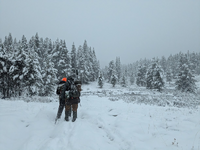 SHOOTING
Obviously, the class teaches you to be a better shooter. What’s less obvious, and often understated, is that it teaches you to perform on demand. That means being able to make effective shots inside 600 yards regardless of distance, position, terrain, or time pressure.
This is developed through repetition. You practice enough correct reps that they begin to override old habits and become your default. That process was clear during the first day away from the range in the winter course this year. When time, pressure, and stress were added, many students reverted to previous bad habits. After correction and repeated proper execution, the second day in the hills went much smoother under similar stress. When you maintain those habits, they truly do become your default. I noticed this personally at the course — I made far fewer communication errors this year compared to last (though I still have areas to improve).
The real world isn’t a flat, manicured, range, so only being able to shoot prone is extremely limiting. Comfort with shooting from a variety of positions opens up many more opportunities. Last fall, I hunted with someone who could only shoot prone off a bipod. In the terrain we were hunting, it simply wasn’t possible — and nothing was killed.
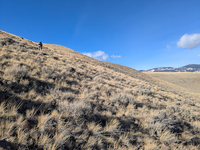
Speed is another critical factor. Hunters often say, “Sometimes you only have seconds to kill a big buck,” yet when people are actually timed, most take minutes to break a good shot. Speed is deliberately taught and practiced in this class, which makes you more effective. After developing competence at shooting quickly, it becomes painfully obvious how many opportunities are lost simply because a partner is slow and unpracticed.
Effective spotting requires quality binoculars on a tripod. This is not something you can do halfway, yet compromised spotting setups (poor glass, not mounted on a tripod or stable surface, etc) are something I have seen more than any other shortcut. Compromised spotting doesn’t save time — it costs more time and/or makes it impossible to confirm hits/misses. I’ve seen this play out while hunting on animals both ways. Good tripod-mounted binos are invaluable and one of the best tools for preventing unnecessary rodeos during and after the shot.
Quick Drop is taught in the class and most people pick it up quickly. However, it often doesn’t get highlighted as a significant benefit like some other topics. The ability to quickly calculate ballistics in your head is a huge advantage in the field and is often understated in theoretical discussions on the internet. When killing elk and deer last fall, we never once referenced a dope chart (other than checking DA in the morning).
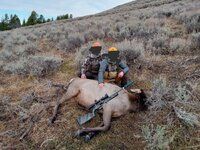
All of these elements came together when I spotted for @Small-foot’s elk. We were glassing when several cows suddenly stepped out of the timber below us. She set up prone off her pack. I ranged them at 300 yards, gave her a quick drop elevation, and when they paused, she shot. I saw the bullet hit the shoulder of the cow and the elk moved at the sound of the impact. They moved out then back into view, but sagebrush now obstructed our view. She quickly moved forward and repositioned to a seated setup off her pack. I ranged 330, gave her the updated quick drop elevation, and then watched the elk drop on the second shot. The entire sequence took 45–60 seconds. There was no confusion, drama, or rodeo. That outcome would not have been as clean or even possible without what we learned in the previous year’s class.
 CLOTHING
Before attending the class, I typically wore a mix of Kuiu, Stone Glacier, First Lite, and other technical outdoor brands. After participating in the rewarming drill and learning more about the benefits of natural materials, I adjusted what I wear in the mountains, and also have a far better understanding and appreciation for how clothes move moisture and keep you warm and dry.
Woolnet base layers have been a major improvement. They keep me noticeably drier, warmer, and more comfortable than traditional merino base layers.
I still incorporate some synthetics — specifically a thin shirt over the woolnet to improve moisture transfer, protect it from brush, and avoid looking like I walked out of a German dance club. I also switched to an Alpha Direct midlayer, which dries faster, breathes better, and moves moisture more effectively than the grid fleeces I previously used. When paired with a wind jacket, it provides impressive warmth for the weight.
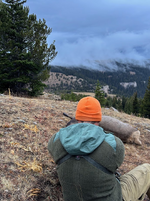
I recently added a quality wool sweater to my system and rarely take it off because of how well it regulates temperature and breathes. It’s not an Atlantic Rancher Ranger, and I haven’t used one enough to compare the two.
Wind jackets are excellent and surprisingly underused in the hunting world. In most conditions, they outperform rain gear in terms of breathability, temperature regulation, and weight. I primarily hunt the Mountain West, so that perspective reflects relatively dry conditions compared to places like the PNW or Alaska. I haven’t yet tested a quality ventile jacket but plan to at some point.
I already owned a down puffy suit (SG Grumman) and was impressed with its performance during the rewarming drill. I wore it throughout hunting season without issue and was often warmer — and faster getting it on and off — than others I hunted with (see Pack section below). That said, I wore one of the anorak puffy prototypes at this year’s class, and the warmth and utility were on another level compared to the Grumman.
Western hunting is often portrayed as an extreme sport, which it isn’t when everything goes smoothly. However, it doesn’t take much for things to deteriorate. I’ve seen hypothermic trail runners in June, hunters forced to improvise tourniquets after broadhead injuries, and hypothermic snowmobilers with frostbitten hands despite insulated Gore-Tex suits and gloves. Having the right equipment and knowing how to use it can make a significant difference.
EQUIPMENT
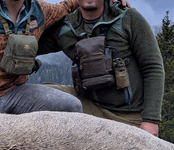
A properly configured bino harness is extremely helpful. At the high end, look at how Form sets his up — essentially capable of supporting a night out on its own. At minimum, think intentionally about how you use yours and configure it to support those tasks. For rifle hunting, even just carrying a spare magazine on your non-dominant side and using rangefinding binoculars greatly increases your efficiency.
Before trying the SG bino harness, I retrofitted my Marsupial harness with a 5.11 pouch to hold a spare mag and wind meter. It integrated well and should work with most harnesses for those not wanting to replace their entire harness.
https://www.511tactical.com/flex-utility-pouch.html
I’ve been using a Teratorn pack for eight months across day hunts, backpacking trips, SAR missions, and general use. It’s difficult to beat in terms of accessibility. I’ll post a more detailed year-long review in July. In the context of this class and hunting, it’s important to organize your tripod, binos, and puffy suit for quick access. That accessibility saves valuable time during hunting situations and in emergencies, as demonstrated during the rewarming drill.
Continued below:



