- Joined
- Jul 18, 2023
- Messages
- 1,629
I did purchase them from Scheel's a couple years ago.

Follow along with the video below to see how to install our site as a web app on your home screen.
Note: This feature may not be available in some browsers.
The primary issue is going to be a cold soaked Li Ion battery. A few hours in the cold doesn't bother them much, but Li Ion really hates long (say 24 + hour) cold soaks.
Storing it inside your jacket or with a hand warmer (even better a tow warmer stuck timo it) will help. It really depends on the weather. You should know the temp of your freezer, bug different between a 15 degree kitchen freezer and a -20 degree deep freeze.
A range finder that can take a AA NiMH battery would be best for cold as NiMH still work pretty good following a cold soak.
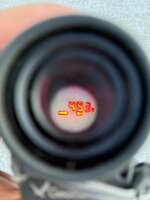
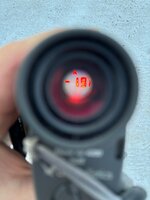
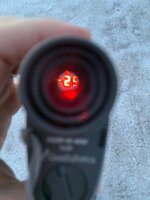
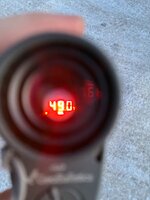
That I don't know. Sounds like the electronics were not designed for cold. You can get odd behavior from resisters and capacitors in the cold.But why was my rangefinder acting up after 30-45min of outdoor exposure at 15° in a bino pack and 45min at -3 in the freezer without the battery?
Probably not. Alkaline batteries also dislike cold. It would only be if something magic happened from the difference in battery voltage.Do you think an alkaline CR2 battery as Sig CS recommended would generate a different result from the lithium?

Send it in for warranty. Fury’s are some of the best in resistance to cold soaking.My Fury 5000 AB sucks in the cold.
I haven't done the "test" but if it's around +5F or less the RF
aspect is practically useless. That's with a new lithium battery
When it's cold I carry a backup RF in my pocket which works better
no doubt because it's warmer in my pocket.
I'd carry a spare battery in my pocket but there's no way in hell I can
change that in the field with cold hands; and I doubt it would last
very long anyway
I've considered putting a handwarmer in the bottom of the marsupial
bino case but have not tried it yet. Has anyone else?

Thanks for the suggestion and I edited the first post with test instructions to include posting what brand and type of battery being used. I agree there is a lot of diversity in batteries and if we are testing rangefinder performance we need to eliminate variables that could affect the outcome of the test which various brands of batteries will impact. Maybe this test would be better served as a locked thread carried out by a single tester like the optics drop test thread to keep it on track and consistent in procedure and results posting. Thanks again!One suggestion—batteries are one of the biggest variables in this, and are (correctly) going to be what all companies point to first if there are any issues. I would suggest standardizing the battery folks are using, and mandating that its a brand new battery, if you have any hope of comparing results.
At an absolute minimum people should state not just the brand, but the specific type of battery. There is a lot more variety in batteries than people would think, often with extremely different performance in cold. Often even within a single brand.
One suggestion—batteries are one of the biggest variables in this, and are (correctly) going to be what all companies point to first if there are any issues. I would suggest standardizing the battery folks are using, and mandating that its a brand new battery, if you have any hope of comparing results.
At an absolute minimum people should state not just the brand, but the specific type of battery. There is a lot more variety in batteries than people would think, often with extremely different performance in cold. Often even within a single brand.
@Formidilosus , even if true, do you want to test the rangefinders, or the batteries? You still need to eliminate the variable if you want to say something about the rangefinders. At a minimum to elininate the straw-man.


That’s a fair question, -25 is rough! Thanks for letting us know how it did. What is your max normal ranging distance vs the -25 performance? Thanks for posting!I left my vortex Razor 4K GB out again all day/night. Temp was -25 when I tested it again today. I used the same tree as yesterday, and it functioned well again. The screen was even more sluggish than yesterday but it was still functional. Now the question is do I want to be hunting at -25?
Thanks for sharing your deeper insights into the tech! Maybe I’ll buy a few different brands of batteries and try them out in different rangefinders and see if it has any impact on their performance although I don’t have much hope on the Sigs getting any better.Take this with a grain of salt, I know enough to get myself in trouble, but I do have some professional experience with electronic devices in cold, I used to work for a company that manufactured avalanche transcievers and was privy to significant testing and the resulting usage recommendations of various batteries in cold weather. Somewhat parallel to a rangefinder, these devices have low drain when simply being carried around (worn agasint your body inside clothing, so warm, and with minimal power draw), but when in active use the battery draw is far more significant (now outside clothing in cold air, as well as with higher power draw via display and active search activated).
Speaking only about AA batteries, we really only looked at lithium and alkaline batteries. NiMH batteries I believe have too-variable a voltage and due to this, mess with the battery-life indicator, which for our use was a life-safety issue, so they were not an option and therefore I dont know of any testing of these. What we saw is that alkaline batteries had a far greater and far faster loss of power due to cold weather. It was enough of a problem that in order to guarantee function you actually had to replace batteries at the mid-point in their life, ie after they were at about 40% capacity, because when active use and cold temps were combined they would lose their ability to function properly inside the time required for use, ie very quickly. Lithium batteries on the other hand were far less affected by cold temps and aloowed more than double the functional battery life without imparied function due to a loss of voltage caused by the temp. Now, I am not aware that we ever did a true "cold soak" like Marbles referenced above, all of our testing that I'm aware of was shorter-term exposure to cold temps. BUT, the Lithium battery advantages were significant enough that we spent a pile of $ developing a battery-life indicator that would allow us to use lithium batteries.
My own cold wx use of rangefinders is from the casual wintertime PRS and similar matches that were local to me for the past several years. Often temps in the low teens or single digits, and most folks wiuld leave their RF binos on a tripod out in the weather all day for spotting, as well as ranging (all of our matches invlved ranging your own targets). I havent done side by side testing of various batteries and devices, but I have seen a number of RF binos go down due to cold. I'd say 95% of what I see in use is either vortex or sig RF binos, so that's where I have the most experience. I cant say that one or the other went down more in my experience though, but I have seen both need to be re-warmed or have battery replaced in order to function. My fury's went down once when they apppeared to be functioning fine when I took them out, but replacing the battery fixed them immediately--which is exactly what I would expect from a lithium battery dying, ie they tend to fail suddenly.
Based on this, my guess is that aside from the battery some RF have internals that are cold-sensitive to at least a degree (above test and @Marbles comment seems to reinforce this). On top of that it's likely some units require higher or lower voltage in order to get a readout or an accurate readout, and the specific battery and battery life remaining, when affected by cold, could have a significant influence in this case. Sounds like Form has found units that function in cold regardless of battery, but also it's plausible there are units that function well in cold ONLY IF they have a battery that will handle it. If anyone winds up with a unit that has problems in cold and contacts the company, the very first thing they are going to do is ask about the battery. If you're going to bother doing a test, I would perform any testing using the specific battery, brand new right out of the package, that the manufacturer recommends. If nothing else it addresses what their first question is going to be and +\- means any issues are due to the rangefinder itself, not the battery.
We’re having weird weather here this winter as our temps are only in the upper 20s to the 30s at night and up to 50 degrees during the day so that’s why I’ve resorted to the freezer to get consistent cold temps for testing, otherwise, I’d just leave it outside. I used a microfiber cloth during testing and repeatedly wiped the condensation off of the lenses while using it outside in low 40’s temps.Most of the described , won't take a correct range reading, is just moisture condensation on the lenses. You are removing a cold item and putting it into a warm, humid environment. Better test is to leave it outside or in a vehicle as stated earlier, then test it.