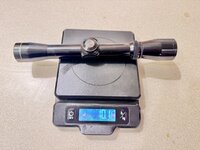
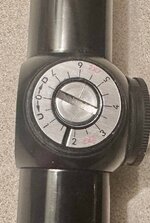
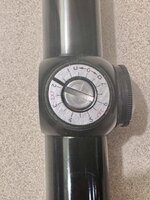
Q&A Leupold Vari-X II 2-7x33mm Field Eval

Formidilosus

Not A Moderator
Shoot2HuntU
Joined
Oct 22, 2014
Messages
13,820
See-

 
Killed my first several deer with that scope and a model 88 Winchester in 308. Might have to run it through the paces just for kicks
 
The last one of these I had was pretty all over the place, when it came to zero retention. Even without drop tests.
 
I still have one of these in a drawer, its killed a stack of animals on everything from 22lr to .308 to .223.
Great to see it still fares OK
I still have a 1994 vintage 2.5-8 vari-x III and a 1995 vintage vari-x III 4.5-14x in regular use. Shot a deer this fall with a 2001(?) vintage 3.5-10x vari-x-iii.

(If OP is running out of scopes to test I'd be happy to dismount and mail him any of them, FWIW, too...not sure I've ever seen a vari-xIII tested here since they haven't been made in 2 decades).

Also, I have a question for OP:

I notice that this test showed a zero shift on shots 4-6 then either shifted again or shifted *back* for shot 7.

It seems like that's a thing - after an impact that causes a shift, some scopes at least appear to shift *back*. Like maybe there's some sort of play in a mechanism that allows the impact to 'bounce' the mechanism, but then subsequent drops bounce it back....right?

Or is that just a chance thing where the scope isn't shifting back to zero, it's just shifting again and sometimes happens to shift back in the general direction it started from? Reading multiple reviews it seems like scopes shift back towards zero more often than they shift in any other direction, after an initial shift occurs.

I'm trying to understand (if anyone else knows) not only that scopes are failing, but what that looks like inside.

I had already been wondering about this but the other day the middle kid and I were in a stand and we had her AR stock set one notch short of her normal position (my bad) and when we sat the rifle in the gun rack it was shorter than the top of the rack, and slid and fell over in the stand (a 90 degree fall sideways onto a wood floor). We didn't get a shot that day. The next day I fired the rifle - first shot from sandbags was ~2.5moa low. The next six shots were centered and within 1.5moa. That was all the ammo I had in the magazine at the moment and deer season is over, there was no need to go any deeper into the test than that. This rifle/load has consistently been 1.75moa or less over dozens of shots (in aggregate) over the last several months. Except for that one shot, which was the first shot after a halfway decent 'bump' as described above, with the 2001 era vari-x iii mentioned above.

In short I guess I'm wondering if many scopes have springs in the adjustments strong enough to resist recoil impulses down the axis of the scope but not strong enough to resist those impulses from the side. I'm sure you've discussed this somewhere before but I don't think I've read every word on the subject yet. Or maybe I read that somewhere and remembered the takehome point but not how it was made.

??

 
I still have a 1994 vintage 2.5-8 vari-x III and a 1995 vintage vari-x III 4.5-14x in regular use. Shot a deer this fall with a 2001(?) vintage 3.5-10x vari-x-iii.

(If OP is running out of scopes to test I'd be happy to dismount and mail him any of them, FWIW, too...not sure I've ever seen a vari-xIII tested here since they haven't been made in 2 decades).

Also, I have a question for OP:

I notice that this test showed a zero shift on shots 4-6 then either shifted again or shifted *back* for shot 7.

It seems like that's a thing - after an impact that causes a shift, some scopes at least appear to shift *back*. Like maybe there's some sort of play in a mechanism that allows the impact to 'bounce' the mechanism, but then subsequent drops bounce it back....right?

Or is that just a chance thing where the scope isn't shifting back to zero, it's just shifting again and sometimes happens to shift back in the general direction it started from? Reading multiple reviews it seems like scopes shift back towards zero more often than they shift in any other direction, after an initial shift occurs.

I'm trying to understand (if anyone else knows) not only that scopes are failing, but what that looks like inside.

I had already been wondering about this but the other day the middle kid and I were in a stand and we had her AR stock set one notch short of her normal position (my bad) and when we sat the rifle in the gun rack it was shorter than the top of the rack, and slid and fell over in the stand (a 90 degree fall sideways onto a wood floor). We didn't get a shot that day. The next day I fired the rifle - first shot from sandbags was ~2.5moa low. The next six shots were centered and within 1.5moa. That was all the ammo I had in the magazine at the moment and deer season is over, there was no need to go any deeper into the test than that. This rifle/load has consistently been 1.75moa or less over dozens of shots (in aggregate) over the last several months. Except for that one shot, which was the first shot after a halfway decent 'bump' as described above, with the 2001 era vari-x iii mentioned above.

In short I guess I'm wondering if many scopes have springs in the adjustments strong enough to resist recoil impulses down the axis of the scope but not strong enough to resist those impulses from the side. I'm sure you've discussed this somewhere before but I don't think I've read every word on the subject yet. Or maybe I read that somewhere and remembered the takehome point but not how it was made.

??


Yes, that is very common. That phenomenon is caused by the erector system. What you are describing is mostly the erector spring.
 
after an impact that causes a shift, some scopes at least appear to shift *back*. Like maybe there's some sort of play in a mechanism that allows the impact to 'bounce' the mechanism, but then subsequent drops bounce it back....right?

I know several old guys who tap on the knobs after making an adjustment. I also know that it used to be pretty common for guys to shoot, adjust, notice no change, repeat the adjustment (IE double it) and the next shot be off the paper.

In hindsight im amazed at the crap I used to put up with when it comes to scopes.
 
I know several old guys who tap on the knobs after making an adjustment. I also know that it used to be pretty common for guys to shoot, adjust, notice no change, repeat the adjustment (IE double it) and the next shot be off the paper.

In hindsight im amazed at the crap I used to put up with when it comes to scopes.
I still do that. I’m fifty; old habits die hard.
 
Back
Top