
RyanT26
WKR
- Joined
- Apr 8, 2020
- Messages
- 1,638
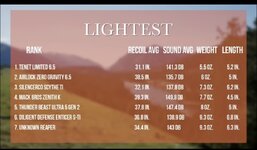
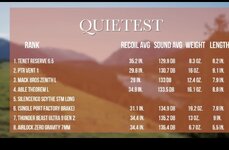
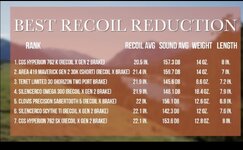
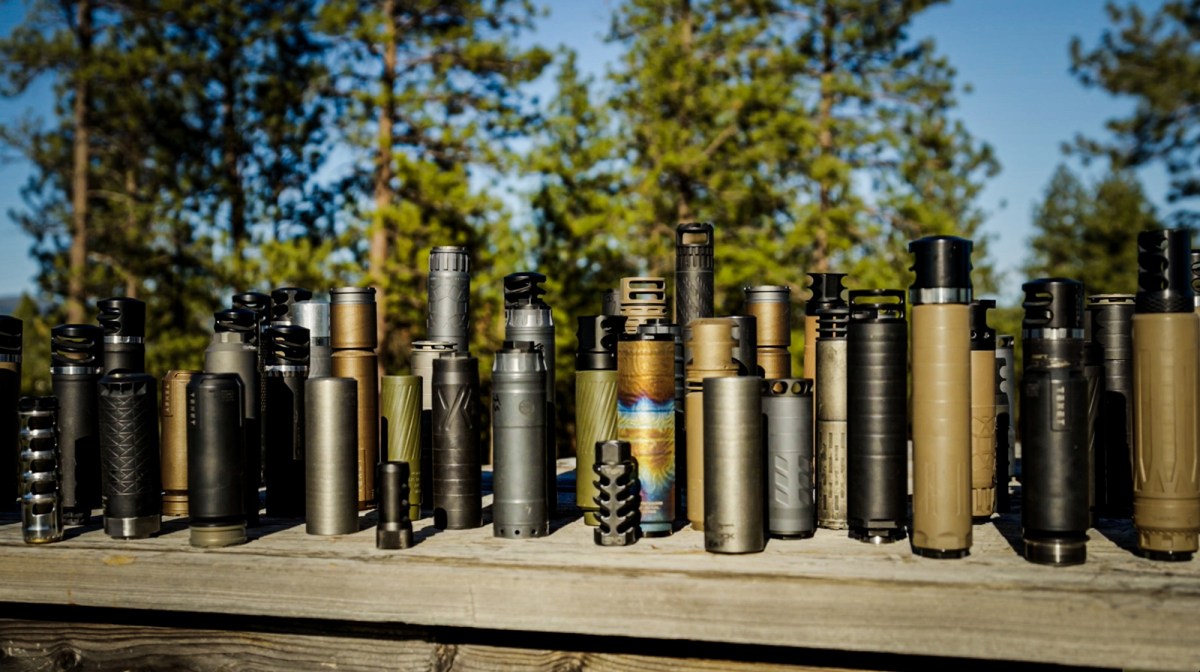
It’s nice to see outdoor life putting this test out. Results are at the end of video.

Follow along with the video below to see how to install our site as a web app on your home screen.
Note: This feature may not be available in some browsers.
 www.outdoorlife.com


If they’re testing them all the same, do the numbers really matter? I like the fact that you can compare TBAC, AIRLOCK, tenet, etc in a true apples to apples comparison.Very cool stuff. So much cool stuff available and on the horizon.
My main gripe with the test is sound readings at muzzle vs shooters ear. Cans will test significantly different based on this metric and some braked cans can perform well at muzzle but shitty at shooters ear which I car about much more. Curious how those tenet cans are at shooters ear.
If they’re testing them all the same, do the numbers really matter? I like the fact that you can compare TBAC, AIRLOCK, tenet, etc in a true apples to apples comparison.
And as someone that shoots magnum rifles, I appreciate the recoil portion.

I’m not sure how you do it, but measuring how well a brake or braked can mitigates muzzle rise seems more important to me than how much it reduces rearward recoil energy. I don’t know how you’d test that in a controlled environment though. And OL specifically flags this limitation in their article.There’s also the matter of how the recoil is experienced by a shooter versus our test sled.
Some of the suppressor-brake combos that ended up with a higher recoil value shoot flatter and are less disruptive than others that did better in our test. From the shooter’s perspective, recoil only matters to the extent that it throws off our sight picture — or not. A softer-recoiling system (as measured in this test) might have more barrel whip than a suppressor that did “worse.” Just because some cans have lower recoil values doesn’t mean its recoil as experienced by the shooter is necessarily superior.
I would ask how much variation there is between muzzle and shooters ear. If you have a can that does great at muzzle I would ASSUME you’re going to see excellent results at SE as well. I could very well be wrong in that assumption.Yes because some perform better at shooters ear than muzzle or vice versa. Look at shooters ear vs mil spec left on tbac rr vs standard Magnus cans in the tbac summit for illustration of this.
I don’t shoot a gun with my ears a meter to the side of the muzzle.
I would ask how much variation there is between muzzle and shooters ear. If you have a can that does great at muzzle I would ASSUME you’re going to see excellent results at SE as well. I could very well be wrong in that assumption.
Ah, valid. Wasn’t referring to braked cans.Your assumption is wrong, particularly in the case of cans with brakes on the end. Look at the variance in db amongst cans and then note that a fat bastard brake vs bare muzzle is a 2 db difference at their sampling location - that is a sign.
Look at ‘24 tbac summit - Magnus s RR is 1 dBa QUIETER at muzzle than Magnus S and 12 dBa LOUDER at shooters ear. Which do you care more about?
It can vary some with standard end caps too but not as drastically. Nomad Xc was one example I recall from tbac tests. Finished amongst 9” cans at shooters ear and amongst 7” cans at muzzle.Ah, valid. Wasn’t referring to braked cans.

Yeah the muzzle control is where the tenet cans are leaps and bounds ahead of the competition. It will soon own the market for hunters carrying a bigger gun.Here’s another video on it:
That video around the 4:30 mark gets into testing muzzle rise on a different day. Neat stuff.

Who has doing the testing during development?The reaper results were pretty disappointing. It’s louder than the scythe by more than it’s quieter than the nhs. I say this as an owner of both of these.
During development of the reaper I remember direct testing against the scythe and the scythe being louder. In this test the scythe is significantly quieter than the reaper.
Maybe it’s the position of the meter?
Regarding the CGS Hyperion K, I wish they’d have tested it with the flat end cap. I regularly get questions about it at matches because of how good it sounds. I think it’s mostly a tone thing, based on how it has tested at the thunderbeast summit.
Who has doing the testing during development?




