PPU 147 JHP
I’ll try some Fed white box 147 FMJ and 147 JHP this week. I prefer the 147’s as they are less snappy.
It'll be interesting to see how the gun runs with a couple of different 147 loads. As a general rule for diagnosing gun malfunctions, unless something is physically broken or significantly out of spec (ie, unfitted 1911 extractor, worn spring, etc), using hotter ammo, better/more thorough lubrication, and proven mags, tends to eliminate the vast majority of gun malfunctions. Those are the first three things to check usually. Is it the mag, the ammo, or the lubrication?
Hotter ammo can give the moving parts the increased energy they need to overcome that cumulative friction, and good lubrication essentially does the same thing from the other direction, by reducing that cumulative friction itself and making the gun more energy efficient. FTFs like you described, where a slight push chambers the round easily, are a great example of a gun's moving parts needing just a bit more energy, or a bit less friction. Especially if it runs fine with those mags and other loads.
The only other thing to commonly watch out for that causes those kinds of malfunctions, is user error. The two biggest you usually see with most handguns are not realizing you're riding the slide a bit with your thumb (removing energy through friction), or limp-wristing, where the slide doesn't really get the full backward travel it needs (or enough energy in the recoil spring) because the wrists are unlocked. When that's happening, the gun is rotating backward more as a unit during recoil, rather than the slide doing its thing more or less independently.
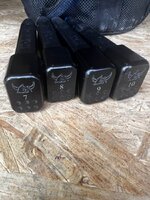
As you've already discovered, accounting for mags is a big deal - they can look perfectly fine and identical to each other, and one out of a batch can just not work. Or stop working. That's why it's critical to number or mark them individually, and to check which mag is in the gun every time a malfunction occurs.
A lot of gun shops are adding laser engravers to their services recently - I had these done in the summer, and couldn't be happier with it. Beats the heck out of tape or sharpies: