Is this right? Weird ballistic calculator statement.

Dave0317

WKR
Joined
Mar 22, 2017
Messages
665
Location
North MS
About 51:30 into this podcast, the guys are discussing zero range vs zero angle.

He claims that with most ballistic calculators, you enter a zero distance and given set of atmosphere conditions. (He uses an example of 1000 yards with cold temps, sea level, to purposely exaggerate the effect) He says that if you then change the atmospherics to something different(higher temp and high elevation), your zero range will still have a correction of 0,0. He claims using zero angle would have been better or given an actual correction. Says that with most calculators, even though the conditions changed it has to give you a 0,0 because the zero range is the baseline it has to go off.

When I try what he says, using Ballistic AE, I get corrections to my dope, even at my zero distance, as long as the atmosphere has changed from the atmosphere I entered at the time of zeroing. For example if I put in a 1000 yard zero, at sea level and cold temps, and then change the atmosphere to get updated data for a different set of conditions, I get about a 3 mil correction even at my zero distance of 1000 yards.

What am I missing? Did he misspeak or is there something I’m missing?

Obviously no one is zeroing at 1000 yards, but I’m always trying to learn more and listening to this just made me really question why they would make that claim when it seems to not be a real issue at all? Any basic calculator should correct data when the atmosphere changes, even for the zero range, right?

 
OK, ive watched a few minutes and I think I know where the confusion is.

I just did this in 4DOF myself, wild environmental shift, zero range 1000 to confirm.

With a zero range, you are telling the calculator that the 2 lines(from reticle to target, and bullet trajectory) intersect at precisely XXX yards. in his example, 1000 yards. Not 1001, not 998, not .00001" high, not .2" low. EXACTLY at that range, EXACTLY at the center of the center of the center of the bullseye. Of course we are virtually NEVER that precise because of a number of limitations(thus the disadvantage vs zero angle).

Also, environmentals dont affect that. If you say its zeroed at 1000yds, 10,000ft, 100 degrees, 90% humidity.....OR its zeroed at 1000yds, 20ft, 20 degrees, 13% humidity......zeroed is zeroed, the calculator only knows what you tell it, and you told it its zeroed at 1000. The trajectory is different between those 2 scenarios, therefore what you do to the scope to achieve those zeros is different, but zeroed at 1000 is zeroed at 1000.

Since most of us shoot under 1000, you can think of this exaggerated scenario as an "impact point and backwards" calculation(forwards too if you are going beyond 1000).

They are saying Zero Angle is a "point of origin and forwards calculation", taking all of the data(including something like "it was .2" high at 107 yards"). From this, it determines the angle that HAD to be between the barrel and reticle to make that happen. THEN from that angle, it calculates trajectory from the muzzle out.

The ideology is you are giving the solver MORE PERFECT data to use to calculate trajectory and therefore get better data out.
 
Seems to be a potentially true technical distinction with no practical change in behavior for someone zeroing at 100. In other words he is saying it to look smart. Just like guys talking about how they factor in the curvature of the earth and its rotation...
 
Didn’t watch the video but in what I’ve tested between zero range and “zero angle” it results to something stupidly small. Like you can’t even dial the difference in the ballistics math with 0.25 MOA per click or 0.1 MIL per click scopes to out past 1,000 yards with every gun I checked.
 
Didn’t watch the video but in what I’ve tested between zero range and “zero angle” it results to something stupidly small. Like you can’t even dial the difference in the ballistics math with 0.25 MOA per click or 0.1 MIL per click scopes to out past 1,000 yards with every gun I checked.
This. Zero angle is technically more accurate, but it's so far down in the weeds that I haven't gone through the trouble of setting it up.

The low-hanging fruit of what causes us to miss a target for big game hunting is an improperly assembled rifle system, rifle system that doesn't hold zero, incorrect zero from small sample size, bad wind call, and crappy shooting.

There is probably an application where zero angle matters for some ELR match where guys are shooting 2,000 yards and running kestrels with wind vanes and known target ranges. Using a 100 yard large sample size zero range versus a zero angle won't be the reason you miss a shot on a big game animal.
 
I wouldn't say that zero angle is any more accurate, but it does depend on fewer variables, which reduces the opportunities for inaccurate solutions due to imperfections in input variables. If the ballistic solver correctly accounts for those additional variables, as does Ballistic AE, the output is the same given that the physical modelling is the same.
 
I only use zero angle when I'm launching Core Lokts from my whinny.

Seriously, you're not missing animals because you don't use zero angle. You're missing because you suck at shooting.... I swear, companies just try to mess with hunters.
 
OK, ive watched a few minutes and I think I know where the confusion is.

I just did this in 4DOF myself, wild environmental shift, zero range 1000 to confirm.

With a zero range, you are telling the calculator that the 2 lines(from reticle to target, and bullet trajectory) intersect at precisely XXX yards. in his example, 1000 yards. Not 1001, not 998, not .00001" high, not .2" low. EXACTLY at that range, EXACTLY at the center of the center of the center of the bullseye. Of course we are virtually NEVER that precise because of a number of limitations(thus the disadvantage vs zero angle).

Also, environmentals dont affect that. If you say its zeroed at 1000yds, 10,000ft, 100 degrees, 90% humidity.....OR its zeroed at 1000yds, 20ft, 20 degrees, 13% humidity......zeroed is zeroed, the calculator only knows what you tell it, and you told it its zeroed at 1000. The trajectory is different between those 2 scenarios, therefore what you do to the scope to achieve those zeros is different, but zeroed at 1000 is zeroed at 1000.

Since most of us shoot under 1000, you can think of this exaggerated scenario as an "impact point and backwards" calculation(forwards too if you are going beyond 1000).

They are saying Zero Angle is a "point of origin and forwards calculation", taking all of the data(including something like "it was .2" high at 107 yards"). From this, it determines the angle that HAD to be between the barrel and reticle to make that happen. THEN from that angle, it calculates trajectory from the muzzle out.

The ideology is you are giving the solver MORE PERFECT data to use to calculate trajectory and therefore get better data out.
Yeah, I think that is what I was understand it as as well. Just seems like it should save the zero conditions and range as a baseline, then apply the new atmospheric conditions on top of that, to still be able to calculate a correction.

So are the other apps just using zero angle and calling it zero range? Like it said, a basic App Store app like Ballistic AE has no issue doing that.

Either way like y’all said error either way is so small I don’t think it could ever matter. Especially not for most of just striving for 2 MOA at 600 and in.

Except @Ryan Avery, I don’t miss animals, I just don’t find them in the first place. Can’t miss if you don’t have one to shoot at. Lol.
 
Yeah, I think that is what I was understand it as as well. Just seems like it should save the zero conditions and range as a baseline, then apply the new atmospheric conditions on top of that, to still be able to calculate a correction.
There is no correction to a zero, it is a constant. I think perhaps you are thinking about things a bit backwards.

You tell the solver your zero. Thats the starting point and it doesnt change until you change it. Everything that happens from there, the solver knows that your bullet hits the bullseye at 1000yds. If you change environmentals, the solver still starts at your bullet hitting the bullseye at 1000yds. The trajectory will be different to get the bullet to that zero and thus different data before and after 1000yds.

Now, if you use zero angle, you can change the environmentals and get new data. including at the range you input to find the angle(.2" high @107yds in the video example would shift with enough environmental change).

And that is the "advantage" they are trying to get across in the video. Once scope angle is found and verified, there is no magic point somewhere downrange that you need to hit to verify before then calculating everything else. You have the angle, you input environmentals, the solver SHOULD be correct. Pick any target at any range, dial what it says, verify that it hits and you are G2G. Thats the case they are trying to make.
 
Don't sweat the details you're incapable of shooting through. If you have a correction that gets you within .2M can you shoot the .2 needed to capitalize on that? If not, find your limit and stay inside it.

Besides that, to be effective, go shoot actual distances not calculated shots. Knowing what really happens is worth a lot more than a high tech guess.
 
Like you can’t even dial the difference in the ballistics math with 0.25 MOA per click or 0.1 MIL per click scopes to out past 1,000 yards with every gun I checked.
Exactly.

I'd like to see a venn diagram of people who go off on this sort of detail versus people who can make hits past 500 from field positions. I mean, I hope I'm wrong, I hope there's a huge overlap, but I don't think there is.
 
Don't sweat the details you're incapable of shooting through. If you have a correction that gets you within .2M can you shoot the .2 needed to capitalize on that? If not, find your limit and stay inside it.

Besides that, to be effective, go shoot actual distances not calculated shots. Knowing what really happens is worth a lot more than a high tech guess.

Agree with the point but also wanted to clarify; the difference is not even approaching .2 mil it's more like .02-.04 mil it rounds down to zero.

It straight up doesn't matter. They're just trying to market a product.
 
I dont see it as a marketing or precision thing(meaning I don't care about their intent)

I see the advantage as speed/convenience. As long as the delivery system and payload doesn't change, the angle doesn't change and isn't dependent on a somewhat arbitrary intersection of 2 paths so verification of data is quicker.

In theory

Which is why I would like to see a true apples to apples side-by-side comparison of the 2 methods, zeroing, calculating data, measure the difference between them, THEN go to a real or simulated "match" with significantly different environmentals, and see who can verify their data quicker.
 
Thanks for the input from those that have gone down that rabbit hole.

Just heard of that concept in the podcast and thought it might be worth a look. I’ll be more than happy to continue with AB and Ballistic AE. I like to learn about this stuff when a new idea comes around, but I also definitely understand not being able to shoot anywhere close to the difference in data.

I guess the thing that struck me is that he says most zero range calculators have that issue, but none that I have will do that. You can zero, input new atmospheric parameters, and it shows you a change in corrections, even at your zero distance. It almost seems like it is a flaw in their (4dof) version of “zero range” but other calcs have no issue making adjustments, even to the impact at the zero range.

I can re-create the flaw he described in 4dof, so I get what they are saying, but he is wrong in saying other calculators won’t correct for that.
 
Thanks for the input from those that have gone down that rabbit hole.

Just heard of that concept in the podcast and thought it might be worth a look. I’ll be more than happy to continue with AB and Ballistic AE. I like to learn about this stuff when a new idea comes around, but I also definitely understand not being able to shoot anywhere close to the difference in data.

I guess the thing that struck me is that he says most zero range calculators have that issue, but none that I have will do that. You can zero, input new atmospheric parameters, and it shows you a change in corrections, even at your zero distance. It almost seems like it is a flaw in their (4dof) version of “zero range” but other calcs have no issue making adjustments, even to the impact at the zero range.

I can re-create the flaw he described in 4dof, so I get what they are saying, but he is wrong in saying other calculators won’t correct for that.
I dont understand. What exactly changes at your zero range when you edit environmentals?

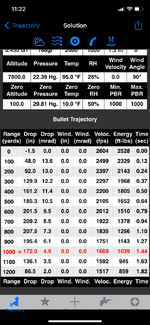
Ive run it in mine, 1000yd zero, 7800ft, 22.39inHG, 95 degrees, 25% humidity
and
1000yd zero 100ft, 29.81inHG, 10 degrees, 50% humidity,

they both say 0 trajectory, 0 come up.
 
I dont understand. What exactly changes at your zero range when you edit environmentals?

Ive run it in mine, 1000yd zero, 7800ft, 22.39inHG, 95 degrees, 25% humidity
and
1000yd zero 100ft, 29.81inHG, 10 degrees, 50% humidity,

they both say 0 trajectory, 0 come up.
Using some generic .308 velocity and BC:

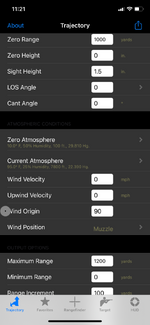
In Ballistic you have this “zero atmosphere” and “current atmosphere” tab, that I don’t think Hornady has an equivalent of. And that is probably where the confusion comes in.

So here is a screenshot of a theoretical trajectory if you zeroed at your lower elevation example, and then brought that same rifle and ammo, without re-zeroing, to the higher altitude environment. This is how the calculator says your bullet would fly if you zero under the lower elevation conditions, but then leave that area and shoot the same rifle and scope set up at higher elevation.
 

Attachments

  • E50D2F12-477C-45AD-A4A8-04A929C1739D.png
    E50D2F12-477C-45AD-A4A8-04A929C1739D.png
    228.9 KB · Views: 5
  • BB383B19-BB92-4B88-969F-F16B9A067FED.png
    BB383B19-BB92-4B88-969F-F16B9A067FED.png
    292.3 KB · Views: 4
OK.
There ABSOLUTELY should be a difference between those 2.

But zeroed at 100ft and zeroed at 7800ft, no matter the environmentals, will result in a chart that says 0 on each chart at 1000.

I think the 2 zeros are what they were talking about.........but id have to rewatch to make sure, i may be wrong.
 
About 51:30 into this podcast, the guys are discussing zero range vs zero angle.

He claims that with most ballistic calculators, you enter a zero distance and given set of atmosphere conditions. (He uses an example of 1000 yards with cold temps, sea level, to purposely exaggerate the effect) He says that if you then change the atmospherics to something different(higher temp and high elevation), your zero range will still have a correction of 0,0. He claims using zero angle would have been better or given an actual correction. Says that with most calculators, even though the conditions changed it has to give you a 0,0 because the zero range is the baseline it has to go off.

When I try what he says, using Ballistic AE, I get corrections to my dope, even at my zero distance, as long as the atmosphere has changed from the atmosphere I entered at the time of zeroing. For example if I put in a 1000 yard zero, at sea level and cold temps, and then change the atmosphere to get updated data for a different set of conditions, I get about a 3 mil correction even at my zero distance of 1000 yards.

What am I missing? Did he misspeak or is there something I’m missing?

Obviously no one is zeroing at 1000 yards, but I’m always trying to learn more and listening to this just made me really question why they would make that claim when it seems to not be a real issue at all? Any basic calculator should correct data when the atmosphere changes, even for the zero range, right?


It’s utter nonsense. It’s math dorks trying to math dork. Using 1,000 yards as an example it them trying to BS the listeners about what is happening- because it isn’t a real thing. Real as in- matters at all no matter how “precise” you are, or how far you are shooting.

“Zero angle” produces the exact same data that “zero range” does when given the same inputs- except in the POS 4dof app. I did a podcast using their own app to show that it is nonsense.

4dof is terrible, and it baffles that people are still using it. Beyond that, “zero angle” is just another way for a company to get people confused and in a tissy and sell them BS.
 
OK.
There ABSOLUTELY should be a difference between those 2.

But zeroed at 100ft and zeroed at 7800ft, no matter the environmentals, will result in a chart that says 0 on each chart at 1000.

I think the 2 zeros are what they were talking about.........but id have to rewatch to make sure, i may be wrong.

No it won’t. There are plenty of apps that allow you to select environmental conditions at zero.


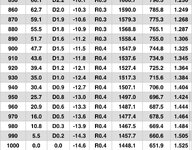
Shooter. 140gr Berger Hybrid. 2,700fps MV.

0ft DA and 59° F. Zero was set at 1,000 yards-
1768329135285.jpeg


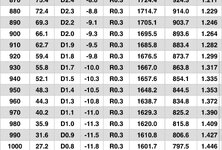
Now at 5,000ft DA and 20° F-
1768329203594.jpeg


A .8 mil difference.
 
Back
Top