Insulation/Spray Foam

Joined
Oct 16, 2017
Messages
783
Location
Upper Michigan
I need insulate my shop. I’ve been pointed towards spray foam but I’ve read some mixed reviews on it and some people say it can off gas vocs for years afterwards. Anyone have experience or know about this?

 
My buddy did his shop, 30x40, keeps the whole thing cool with a mini split in south MS. Another buddy also painted his entire interior white and did epoxy floors, it's pretty bright in there.
I'm fixing to build a house, and I'm undecided on the spray foam due to the reasons you mentioned, but it's only info I've seen online and don't know anyone with it that can confirm a problem. I'm leaning towards rockwool for my house, cause I don't like fiberglass. I'll probably still spray foam the underside since it's a raised house.
It would be great to here of any problems from real people.
 
I've used it on some projects and didn't notice any significant off-gassing. We didn't do any testing to come to that conclusion, but it didn't smell like chemicals or anything. These were on spec homes, so I didn't live in them and I can't speak to any other adverse effects. I am preparing to finish out a living space on my own property and have been looking into this for my own purposes and have discovered that vented or unvented roof assemblies, insulation, vapor barrier choices is pretty complicated (I'm an engineer and I don't totally "get it" myself). I'm leaning towards not using spray insulation and just having a less efficient structure might be the way to go from a building longevity standpoint.

Here's an interesting article from the Building Science Corporation that is probabbly the leading authority on this stuff: https://buildingscience.com/documen...bsi-016-ping-pong-water-and-chemical-engineer

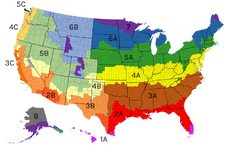
Makes a big difference in what climate zone you're in as well, so take that into consideration. I'm in climate zone 7 and condensation developing on the underside of the roof decking is almost a given.
https://www.energy.gov/eere/buildings/building-america-climate-specific-guidance

bto-building-america-map-042924.png
 
I spray foamed my new house build in 2018. I didn't notice any odors after the initial spray. Energy bills are lower than neighbors. Happy overall.
 
I've used it on some projects and didn't notice any significant off-gassing. We didn't do any testing to come to that conclusion, but it didn't smell like chemicals or anything. These were on spec homes, so I didn't live in them and I can't speak to any other adverse effects. I am preparing to finish out a living space on my own property and have been looking into this for my own purposes and have discovered that vented or unvented roof assemblies, insulation, vapor barrier choices is pretty complicated (I'm an engineer and I don't totally "get it" myself). I'm leaning towards not using spray insulation and just having a less efficient structure might be the way to go from a building longevity standpoint.

Here's an interesting article from the Building Science Corporation that is probabbly the leading authority on this stuff: https://buildingscience.com/documen...bsi-016-ping-pong-water-and-chemical-engineer

Makes a big difference in what climate zone you're in as well, so take that into consideration. I'm in climate zone 7 and condensation developing on the underside of the roof decking is almost a given.
https://www.energy.gov/eere/buildings/building-america-climate-specific-guidance

View attachment 1004076
I'm not sure what your budget is, but I would think spray foam to correct R-value on underside of roof deck and a climate controlled or semi-controlled attic space would offer the best condensation control. Some of it is going to depend on the dew point. At zone 7 temps it will likely require a boatload of insulation or an uncomfortably dry house to meet your goals of condensation control.

You also want to make sure the substrate is the correct temp and clean and dry to get good spray foam adhesion. If not, you get air gaps between the foam and substrate and water will condense in there and rot the substrate. Also, make sure you get enough insulation coverage on the rafters/top chords of the trusses, as those will be the transfer areas for radiant heat loss/gain.

There are formulas to find the point in the wall assembly where condensation will occur at various temps/dew points/R-values. I don't have anything saved on my phone, but they are out there.

The only other great options are venting. In zone 7 you are going to need an exceptionally sealed building envelope especially at the ceiling/attic. Wire penetrations, duct work, and plumbing vent pipes, and lighting will all leak heat/humidity from your house and cause potential issues.

I work in zone 5a and normally we don't see a lot of issues with this. Most issues are catastrophic, as they are a result of very elaborate houses build with normal shitty building envelopes and zero thought given to controlling this. Then they pump humidity into the house all winter to keep the woodworking from shrinking. When we get weather that is colder than climate zone averages, those types of houses have massive damage from frost forming on the roof deck and then melting. It rains inside. It is not a well known issue because it so rarely gets that cold here. All of my clients that have had this problem have called with a roof leak no one can find and it turns out to be this.

As far as off gassing, everything that is solvent based off gasses. The question is for how long and to what effect. I honestly don't have a great answer to the question with spray foam, but I would bet there is published research out there to shed some light on it.
 
We built a house a couple years ago and went with a combo of spray foam and fiberglass batt insulation. I am so glad we did. We have 2" of spray foam on all the exterior walls and then 4" of batt insulation. This house is sealed up tighter than a nuns c*nt which is great since we live in a windy section of CO. I didn't notice any issues with off gassing.

Building a pole barn shop this summer and for sure going to spray that as well.
 
Ben H is correct, there is a lot in the details for modern materials and methods. Design and climate zone are important to consider.

If its an existing metal building, you will want to use a closed cell or it will water log and grow mold in there. A friend tried to use open cell and had that happen after a couple years. Lot of time, cost and effort to redo it with closed cell.
 
Bump for closed cell...

The only reason I would not use closed cell if is the rafters, joists or studs aren't thick enough to use it and the inspector is picky.
 
a friend is a sprayer and I've done several buildings.

Most foam is now closed cell which does not off gas after its cured is my understanding.

it also acts as a Vapor barrier because the closed cells won't allow water in/through.

I did a shop addition with 3" of foam, then fiberglass inside, it's awesome.
I don't consider it a negative but worth noting, foam is stiff so the rain on the roof telegraphs inside noticeably compared to a fiberglass only roof.
 
Only if the foam company doesn't know what they are doing will you have off gassing issues.

Sent from my SM-S931U using Tapatalk
 
a friend is a sprayer and I've done several buildings.

Most foam is now closed cell which does not off gas after its cured is my understanding.

it also acts as a Vapor barrier because the closed cells won't allow water in/through.

I did a shop addition with 3" of foam, then fiberglass inside, it's awesome.
I don't consider it a negative but worth noting, foam is stiff so the rain on the roof telegraphs inside noticeably compared to a fiberglass only roof.

I was shooting in the rain yesterday about 75 yards from my barn and it sounded like the well pump was running continuously, or maybe a fan. Suspicious noise.

When I walked over it was just the sound of the rain on the roof echoing like a guitar.
 
We built a house a couple years ago and went with a combo of spray foam and fiberglass batt insulation. I am so glad we did. We have 2" of spray foam on all the exterior walls and then 4" of batt insulation. This house is sealed up tighter than a nuns c*nt which is great since we live in a windy section of CO. I didn't notice any issues with off gassing.

Building a pole barn shop this summer and for sure going to spray that as well.
This is the way to go, I did the same when i remodeled the 2nd floor of my house and I'm glad I did
 
Back
Top