
Navigation
Install the app
How to install the app on iOS
Follow along with the video below to see how to install our site as a web app on your home screen.
Note: This feature may not be available in some browsers.
More options
Style variation
You are using an out of date browser. It may not display this or other websites correctly.
You should upgrade or use an alternative browser.
You should upgrade or use an alternative browser.
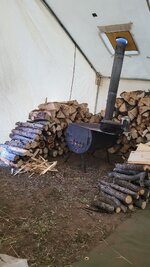
How much wood for a week in the wall tent?
- Thread starter go_deep
- Start date

OP
OP

go_deep
dWKR
- Joined
- Jan 7, 2021
- Messages
- 3,123
I like driving around campsites where guys have left all their cut and split wood after they left for the season.
Easy pickings
Road hunters... Lol
I've found a few piles before two, but I'm pretty certain I've left more than I've ever picked up.
OP
OP
go_deep
dWKR
- Joined
- Jan 7, 2021
- Messages
- 3,123
I use professional grade 75-95 cc chainsaws. All ported, polished, and squished. It cut my wood processing time by 75%.
I can and do cut and split a long bed, grace yard humped when stacked in 2 hours or so. I use a 6 lb splitting mail versus an ax. FWIW, I’m amazed at the number of people who split wood with an ax. It’s so stupid versus a splitting maul.
Anyways, this is oak, hickory, or ash. No room for pine or the like unless I’m burning coal. Which is something you should do if it’s available. I bring a five gallon bucket full of lump coal/day. The heat out put and longevity is probably ten times hardwoods. And 20 times aspen or pine.
Try coal if you got it. And, buy a stove that drafts up through the fire. Versus a door draft. It just compliments how well coal does. Without drafting up through the fire the coal won’t burn completely. Nor, nearly as hot.
I've definitely got access to coal being in Wyoming, even have a coal grate, just never tried it before, but I'll need to give it a go!
WV Mountaineer
WKR
I understand. Use what you got. Just know that if your stove has fire brick in it, and drafts up through the fire, this is where coal shines.I've definitely got access to coal being in Wyoming, even have a coal grate, just never tried it before, but I'll need to give it a go!
Be aware that if you are going to burn coal, that it takes a decent stove thickness or the coal will burn a hole in the stove if it’s drafting up through it.
A coal grate in a stove designed for wood will certainly improve its heating performance versus a bed of wood coals. But, it won’t produce heat and longevity of burn nearly as well as a coal stove.
Burn what you’ve got to burn in. When it’s time to replace it, which you will if you burn coal in a camping type stove, find you a 30-40 pound coal stove. The difference is literally night and day.
Coal needs heat and air to burn efficiently. And, even though it’s not proper, it will get hot enough to warp a thinner walled stove even if it drafts through the door.
When you get into camp for the night, get a hot fire going, dump a 5 gallon bucket of coal in the stove and forget about it till morning. It’s a therapeutic heat that I Enjoy more and More the older I get. Plus, wood processing just become a 15 minute job for the week.
I'm not familiar with coal-specific stoves used in camping. Do you have any resources, pictures, or specific stoves you can point to? I'd like to learn more about them. Any downsides?When it’s time to replace it, which you will if you burn coal in a camping type stove, find you a 30-40 pound coal stove.
OP
OP
go_deep
dWKR
- Joined
- Jan 7, 2021
- Messages
- 3,123
I understand. Use what you got. Just know that if your stove has fire brick in it, and drafts up through the fire, this is where coal shines.
Be aware that if you are going to burn coal, that it takes a decent stove thickness or the coal will burn a hole in the stove if it’s drafting up through it.
A coal grate in a stove designed for wood will certainly improve its heating performance versus a bed of wood coals. But, it won’t produce heat and longevity of burn nearly as well as a coal stove.
Burn what you’ve got to burn in. When it’s time to replace it, which you will if you burn coal in a camping type stove, find you a 30-40 pound coal stove. The difference is literally night and day.
Coal needs heat and air to burn efficiently. And, even though it’s not proper, it will get hot enough to warp a thinner walled stove even if it drafts through the door.
When you get into camp for the night, get a hot fire going, dump a 5 gallon bucket of coal in the stove and forget about it till morning. It’s a therapeutic heat that I Enjoy more and More the older I get. Plus, wood processing just become a 15 minute job for the week.
I have a wilderness 5 stove, can burn wood or coal, just haven't ever tried coal yet. I have heard it'll burn hot and melt a stove that isn't rated for it though!

bigmoose
WKR
We always go early and cut about a truck load. This will be enough for a cook tent and a sleep tent. The fire in the cook tent will be going if anyone is in camp. The sleep tent will have a fire at night before bed and if someone gets up to stoke it (think old men) during the night and in the morning.
Even if it gets below zero, this should be plenty. If you only have pine or aspen, go with pine. Aspen stinks big time and won't last long.
Even if it gets below zero, this should be plenty. If you only have pine or aspen, go with pine. Aspen stinks big time and won't last long.
WV Mountaineer
WKR
Nope. No downsides at all except a properly sized stove for all night heating is going to weigh about a 100 pounds.I'm not familiar with coal-specific stoves used in camping. Do you have any resources, pictures, or specific stoves you can point to? I'd like to learn more about them. Any downsides?
I found a warm morning stove. They are older stoves. This model doesn’t have a jacket around it like some models did. I think it’s a 110A. It’s in my out building but, if you want a pic, I’ll get one tomorrow.
Coal stoves practical for hunting tents are hard to find these days. But, they are out there in areas where coal is/was traditionally mined.
Find a stove that stands upright, with cast iron grates. And fire brick. Those are the requirements for the better stoves. It really doesn’t matter the brand. But, every stove they’ve ever made to specifically burn coal will be loaded from the top. Versus a door that opens into the firebox like tent stoves are made these days.
WV Mountaineer
WKR
The one on the right looks like my camping stove. I’m saying it’s exactly like the one I use. The internet says it’s a 617 model instead off a 110.
The stove on the left is identical to the one I burn in my house. The smaller stove has a 40 pound firebox. The largest one has a 110 pound firebox. The firebox designation is the pounds of coal it’ll hold filled up.
None of these are jacketed. But some you will find once you start searching will be. The jacket on these and other older stoves are made of steel. They did this to prevent severe burns once they get burning good.
However, it’s important to understand Even the unjacketed models won’t torch you if you touch them below the head piece. As long as the fire brick isn’t broke to pieces. They make a premade refractory cement to patch the bricks if they crack or break. So, as long as you don’t mistreat them, these things will last forever.
These stoves have a cast frame, grate, and head piece. They have retainers that hold the brick in the shape of the firebox, tight to the steel sheet the stoves are wrapped in. They do this so they don’t warp. Don’t be afraid of the thin sheet steel used to wrap these stoves either. The firebrick protects it from damaging heat so there is no way to melt it. It’s also why they burn so efficiently and hot while doing it.
If you can find one like the smaller one or another from a different company, you are in business. Just don’t skimp on cheap stove pipe. And install and use a pipe damper. If you don’t, once a stove designed like these get rolling, you’ll warp or melt the pipe if you don’t damper it down.
I know it sounds like a death trap the way I’ve described it. However, It’s really not. I’ve burned buck stoves, Taylor’s, several different models of king Coals, and these warm morning stoves. In my house and my tent. There is a learning curve on how to build a proper base fire before stoking coal to it. Because it takes a hot fire to get coal going. And, you can’t just dump the coal in it and walk away due to it producing so much heat.
I hope this helps you. And, not all coal is equal. But, the worst coal is light years better than properly seasoned hardwoods like oak, locust, ash, and hickory.
FWIW, I started burning coal for my primary heat 10 years ago. The first fire I ever built in my house stove, I dumped a bucket of lump coal on it, left the bottom draft open and pipe damper wide open so it’d get hot. I only left it for about 15 minutes.
Upon returning to check it, When I rounded the corner to go downstairs, the heat rolling up was staggering. When I reached the basement and rounded the corner to the stove, the head piece and 8 inch black pipe was glowing orange and red.
I flipped out. I ran and grabbed my water hose from the garage, and hooked it up to my utility sink. Opened up the basement door and set in a chair and watched it for two hours with that water hose.
That fire got so hot it busted the tape and drywall loose from the nails in the ceiling above it. You want to know what petrified is? Experience that. m
m
Don’t be afraid of it. Just be smarter than I was about it. Because once you get it hot, it’s going to pound the heat for a long, long time. And, I doubt your camping spot has a water hose hookup.
The stove on the left is identical to the one I burn in my house. The smaller stove has a 40 pound firebox. The largest one has a 110 pound firebox. The firebox designation is the pounds of coal it’ll hold filled up.
None of these are jacketed. But some you will find once you start searching will be. The jacket on these and other older stoves are made of steel. They did this to prevent severe burns once they get burning good.
However, it’s important to understand Even the unjacketed models won’t torch you if you touch them below the head piece. As long as the fire brick isn’t broke to pieces. They make a premade refractory cement to patch the bricks if they crack or break. So, as long as you don’t mistreat them, these things will last forever.
These stoves have a cast frame, grate, and head piece. They have retainers that hold the brick in the shape of the firebox, tight to the steel sheet the stoves are wrapped in. They do this so they don’t warp. Don’t be afraid of the thin sheet steel used to wrap these stoves either. The firebrick protects it from damaging heat so there is no way to melt it. It’s also why they burn so efficiently and hot while doing it.
If you can find one like the smaller one or another from a different company, you are in business. Just don’t skimp on cheap stove pipe. And install and use a pipe damper. If you don’t, once a stove designed like these get rolling, you’ll warp or melt the pipe if you don’t damper it down.
I know it sounds like a death trap the way I’ve described it. However, It’s really not. I’ve burned buck stoves, Taylor’s, several different models of king Coals, and these warm morning stoves. In my house and my tent. There is a learning curve on how to build a proper base fire before stoking coal to it. Because it takes a hot fire to get coal going. And, you can’t just dump the coal in it and walk away due to it producing so much heat.
I hope this helps you. And, not all coal is equal. But, the worst coal is light years better than properly seasoned hardwoods like oak, locust, ash, and hickory.
FWIW, I started burning coal for my primary heat 10 years ago. The first fire I ever built in my house stove, I dumped a bucket of lump coal on it, left the bottom draft open and pipe damper wide open so it’d get hot. I only left it for about 15 minutes.
Upon returning to check it, When I rounded the corner to go downstairs, the heat rolling up was staggering. When I reached the basement and rounded the corner to the stove, the head piece and 8 inch black pipe was glowing orange and red.
I flipped out. I ran and grabbed my water hose from the garage, and hooked it up to my utility sink. Opened up the basement door and set in a chair and watched it for two hours with that water hose.
That fire got so hot it busted the tape and drywall loose from the nails in the ceiling above it. You want to know what petrified is? Experience that.
mDon’t be afraid of it. Just be smarter than I was about it. Because once you get it hot, it’s going to pound the heat for a long, long time. And, I doubt your camping spot has a water hose hookup.
Attachments

WV Mountaineer
WKR
I’m sorry for high jacking the thread but, it’s important that I tell you this. It’s a good idea to put some aluminum foil up on the wall behind the stove. It’s not going to cause a fire if you don’t. But, it’ll keep the material strong and protect it from the heat.
Just cut you a couple sticks the height of your sidewall, and wrap it with the foil. Place the sticks the width of the stove before doing so. And, lean it against the wall behind the stove. The stove jacks in a lot of tents do t allow for an adequate stand off. Plus, the foil directs that heat back into your tent versus loosing so much through the tent material.
Just cut you a couple sticks the height of your sidewall, and wrap it with the foil. Place the sticks the width of the stove before doing so. And, lean it against the wall behind the stove. The stove jacks in a lot of tents do t allow for an adequate stand off. Plus, the foil directs that heat back into your tent versus loosing so much through the tent material.

Travis Hobbs
WKR
- Joined
- Mar 29, 2019
- Messages
- 761
I think a lot of guys don’t realize, All fire wood is not created equal. Burn times really vary, depending on wood species. It makes a giant difference.
For instance- A Lodgepole Pine burns significantly longer and hotter compared to a Subalpine Fir. Both of these “pine” species can be found in and around Aspen trees… along with a variety of others.
For instance- A Lodgepole Pine burns significantly longer and hotter compared to a Subalpine Fir. Both of these “pine” species can be found in and around Aspen trees… along with a variety of others.
WV Mountaineer
WKR
Yes. Temperature control is easy. Just remember, if you want a lot of heat fast, feed it air and open the pipe damper once you dump the coal in. You’ll know when it’s time to choke it off. And, in a proper stove, 40 pounds of lump coal will produce good heat for 10 hours or so. As far as setting around in your undies kind of heat, about 5 hours.Great info, thank you. Are they pretty easy to control the temps once they get going? And once dampened down, sounds like they can keep a tent warm all night without adding to it?
It is a tent. And, in single digit lows, you loose the heat so fast. So, you aren’t going to roast when it’s humping. And, after 10-12 hours, the stove will be hot but, not putting out enough heat to leisurely be setting around in the morning. You’ll be putting your clothes on for sure.
I promise if a stove is your intended heating choice, this is the way to go if it’s cold outside. If you do this, you’ll agree. Good luck and God Blesd
Tip: Hunt your ass off all day. That way at night you'll get it warm in the tent...fall asleep and won't wake up to stoke the fire. You use less wood. Also, wake up 30minutes before you head out to hunt. Again no time for a fire or just enough to get warmed up then out the door.....If you want to stay up all night playing cards, staring at each other, planning how to steal a girls buck...probably truck load minimum.

ChrisA
WKR

GSPHUNTER
WKR
- Joined
- Jun 30, 2020
- Messages
- 5,452
Sit down and figure what you will use daily, multiply that by the number of days the trip will be. then double it.
Similar threads

- Replies
- 65
- Views
- 5K



Featured Video
Latest Articles
- Mule Deer Days Wildlife Conservation Mashup
- A Hidden Gem: Hunting Washington with Kari Thomas
- Prime Divide Bow Review
- Knowledge From Storms: Surviving and Thriving in the Backcountry with John Barklow
- DIY Wyoming Pronghorn Hunt
- Unlock Precision Shooting: Master Your Hunting Game with Competitive Insights
- Topo Topper Rincon Review
- Tony Trietch on Big Mule Deer, Desert Bulls & Western Hunting Evolution
- The Right to Hunt & Fish Colorado (and North America)
- Mastering New Zealand’s Mountain Hunts: Challenges and Rewards