Glassing Blacktails

Joined
Nov 17, 2025
Messages
22
Blacktails are edge adapted species who spend alot of time transitioning from cover to feed? What are you techniques and tactics for glassing up mature blacktail bucks? I'm trying to figure out a hybrid style of hunting by using both still hunting and glassing.
 
Glassing blacktails is tough! Here in northern CA it is usually pretty warm so you have to focus on the slowly picking apart the shaded areas. I generally give up about 3-4 hours after sunrise and transition to still hunting through their bedding areas in the dark timber. Slower than slow.
 
I hunt blacktails in ca and truly believe in Robby Dennings mule deer strategy that deer are vampires. Meaning they hate the sun, so i focus on any shade/north facing areas after the sun is out. Also it seems that mature blacktails live in the deepest hell hole, so if you dont want to hike there thats the first place id look!
 
I hunt blacktails in ca and truly believe in Robby Dennings mule deer strategy that deer are vampires. Meaning they hate the sun, so i focus on any shade/north facing areas after the sun is out. Also it seems that mature blacktails live in the deepest hell hole, so if you dont want to hike there thats the first place id look!
Good tip about glassing the shaded areas.
 
Scout your ass off. Find bedding areas. Find travel areas where they move from bedding area to bedding area.

Catch them feeding in the morning and evening. Catch movement when they stand on their back legs to reach the acorns in the low branches of trees. Or shake their heads frequently to try and shake ticks out of their ears.

They love to move in the steepest fingers/canyons, and steep hill sides with cover. We’ve passed on lots of good bucks because they were in steep poison oak infested ravines.

My experience with them is extensive but is limited to specific areas so tendencies could be different elsewhere.
 
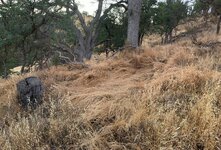
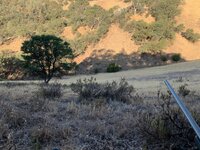
Here is a bed and a ravine that was highway at dawn and dusk. For ambush hunting or spot and stalk, set up where you can glass from above them if possible. You will likely have deer come over the ridge your on as well so keep your head on a swivel. I do like to setup in some cover on a ridgeline where I can glass 360 degrees.

IMG_4476.jpg

IMG_4482.jpg
 
Here is a bed and a ravine that was highway at dawn and dusk. For ambush hunting or spot and stalk, set up where you can glass from above them if possible. You will likely have deer come over the ridge your on as well so keep your head on a swivel. I do like to setup in some cover on a ridgeline where I can glass 360 degrees.

View attachment 997161

View attachment 997160
Are most of your shot close? The pictures are helpful.
 
Use cameras on the game trails. It will help narrow down where the deer are traveling and where to focus. Black tails are so good at staying hidden and tend to not move a ton in October. Cameras in just 4-5 different areas can really be helpful to catch them and give you an idea where you should be glassing.
 
Scout your ass off. Find bedding areas. Find travel areas where they move from bedding area to bedding area.

Catch them feeding in the morning and evening. Catch movement when they stand on their back legs to reach the acorns in the low branches of trees. Or shake their heads frequently to try and shake ticks out of their ears.

They love to move in the steepest fingers/canyons, and steep hill sides with cover. We’ve passed on lots of good bucks because they were in steep poison oak infested ravines.

My experience with them is extensive but is limited to specific areas so tendencies could be different elsewhere.
Seems like the more poison oak the more good bucks 🤔
 
Have you actively hunted logging cuts, and burns? Walking the treelines around those reveals deer pathways pretty well - burns and cuts tend to have more and better feed, increasingly so as the forest gets denser across different habitats.
 
all my experience is Western WA.
In the areas that get logged in rotation, find an area that has a fresh clear-cut, 1-5 years old, an older clear-cut semi grown up in mixed brush, deciduous trees(Alder, cottonwood, maple/vine maple) and evergreen trees and a mature timber stand.

The trifecta of feed/cover in close proximity is a deer factory.

new clear-cut, cover is 1-5 feet tall and lots of feed.

older clear-cut, cover is 8-15 feet tall but open enough feed grows. solid conifer growth shades out food pretty quick.

mature timber, ideally it's 40-60 tall with a tight enough canopy to shade out taller brush enough you can see far enough to be effective.

I've used a tree stand in a mature tree to hunt the brushy clear-cut. the elevation ets you look down into the brush which might be the only way you can see deer.

glass the edges for deer coming and going.

blacktails often sleep in the kitchen.
meaning they often bed where they eat. I've watched deer stand up, stretch and start eating without taking a step. I seen those deer only move 100-200 feet all day.

 
Have you actively hunted logging cuts, and burns? Walking the treelines around those reveals deer pathways pretty well - burns and cuts tend to have more and better feed, increasingly so as the forest gets denser across different habitats.
Yes I hunted a burn/cut this year. Walking the perimeter of the cuts is a good idea to identify travel routes.
 
all my experience is Western WA.
In the areas that get logged in rotation, find an area that has a fresh clear-cut, 1-5 years old, an older clear-cut semi grown up in mixed brush, deciduous trees(Alder, cottonwood, maple/vine maple) and evergreen trees and a mature timber stand.

The trifecta of feed/cover in close proximity is a deer factory.

new clear-cut, cover is 1-5 feet tall and lots of feed.

older clear-cut, cover is 8-15 feet tall but open enough feed grows. solid conifer growth shades out food pretty quick.

mature timber, ideally it's 40-60 tall with a tight enough canopy to shade out taller brush enough you can see far enough to be effective.

I've used a tree stand in a mature tree to hunt the brushy clear-cut. the elevation ets you look down into the brush which might be the only way you can see deer.

glass the edges for deer coming and going.

blacktails often sleep in the kitchen.
meaning they often bed where they eat. I've watched deer stand up, stretch and start eating without taking a step. I seen those deer only move 100-200 feet all day.
That's a good tip for scouting. I shot the buck in my profile basically in that trifecta.
 
Back
Top