First Aid

I quit trying to pack for contingencies, that gets heavy.

I agree with this, but instead of trying to minimize in general I give myself a weight limit and try to pack for as many contingencies as I can in that limit. I have been optimizing my kit for backpacking and am now researching what I should change for hunting. Sounds like I should add a tourniquet.

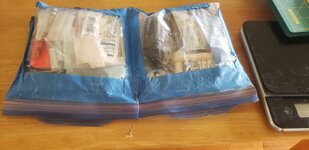
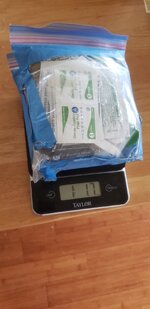
For backpacking I chose 1lb. I taped two quart size ziplock bags together so you can see most of the contents without opening it. Usually carry it in the outside front pocket in my pack. I figured I'd have to replace the bags frequently but its been going strong for like a dozen trips now.

I break risk down into severity and probability. Whats the worst thing that is likely to happen? When backpacking i figured slipping/falling and hitting your head on a rock, spilling a pint of boiling water on yourself while cooking, twisting an ankle, then blisters, random scrapes, etc. But there are lots of surprisingly lightweight first aid things so even at 1lb you can throw a lot in.

Some stuff I usually don't see mentioned:

eye cup = 0.1oz. If you have to pack in water chances are its also a dusty place and being able to use a couple fl oz of water to clean out your eye vs a couple liters can save your trip for only 0.1oz.

irrigation syringe = 0.3 oz

contact lens case full of vaseline and iodine cream = 0.5oz

Benzocaine tincture swab = 1g

Smelling salt capsule < 1g (doesn't register on my scale)

Sterile Splinter Lancet (SplinterOut) < 1g (doesn't register on my scale)

Safecard tick remover = 0.2 oz

Steri-strip wound closure / tape = 0.1oz

And some more common stuff that hasn't been posted in this thread yet:

Swiss Army SD pocket knife (nail clipper/scissor, file, tweezer, blade, toothpick) = 0.7oz

Rite in the Rain 3.25x4.625 stapled weatherproof notebook w/ golf pencil = 0.9oz. They make a smaller one too.
20260627_100905.jpg

20260627_082621.jpg
 
I agree with this, but instead of trying to minimize in general I give myself a weight limit and try to pack for as many contingencies as I can in that limit. I have been optimizing my kit for backpacking and am now researching what I should change for hunting. Sounds like I should add a tourniquet.


lf while cooking, twisting an ankle, then blisters, random scrapes, etc. But there are lots of surprisingly lightweight first aid things so even at 1lb you can throw a lot in.

View attachment 1086555

View attachment 1086556

I would suggest that this is a relatively good approach. Pack for those contingencies that you want to address. The good news is that in the Wilderness Medicine literature, multiple studies have done the work for you to look at what contingencies you might encounter.

If you’ll permit me to summarize here: the injuries in hunting are those encountered in hiking. The only exceptions really are falls from tree stands (obviously very dependent upon your hunting style). Firearms barely crack the top ten, and only in some of the studies. Burns (campfires), blades (usual camping stuff) and falls are the most common.

Enjoy your hunt!


Sent from my iPhone using Tapatalk
 
Firearm injuries are likely rare but they are high up on the list for fatalities without immediate first aid. Cuts, scrapes, blisters, and twisted ankles rarely kill people.
 
Good thread. I spent a lot of years doing this for a living, so I'll throw in a few things that tend to get missed.


On the tourniquet front — everyone's mentioning TQs and that's right, but nobody's talked about packing order. Whatever you grab first when you open that pouch should be your bleeding control stuff, not your ibuprofen. I've seen kits where the trauma gear is buried under blister pads and Benadryl because that's what people use most often, so that's what ends up on top. Flip that around. MARCH — massive hemorrhage first, always.


Also, on the QuikClot vs Celox question nobody's asked but probably should — they're not interchangeable. QuikClot (kaolin) speeds up your body's own clotting, which means it doesn't do much if someone's cold and already losing the ability to clot on their own. Celox (chitosan) works mechanically instead, kind of seals the wound shut regardless of body chemistry, and tends to hold up better in cold or wet conditions. If you're hunting late season in the wet and cold, that's actually relevant, not just trivia.


Couple other things from experience:


The marker for TQ time is right, but write it somewhere that won't sweat or bleed off — a piece of tape works better than skin in my experience. That timestamp matters more than people think; it's part of what a surgeon's weighing when they're deciding if a limb is still salvageable.


If anyone's carrying a chest seal — make sure it's vented. A sealed wound with no vent can turn a simple lung collapse into a tension pneumo, which is way worse and faster. Most decent ones are vented now but it's worth actually checking what's in your kit instead of assuming.


And wound packing is a skill, not just "shove gauze in there." If you've got a femoral or groin bleed where a TQ can't reach, you have to pack the cavity and hold real pressure — like three minutes, not three seconds — and that's something you want to practice on a trainer before you ever need it for real, not learn for the first time in the field.


Anyway — good kits being discussed here. Just wanted to add the why behind some of this stuff, since gear without the knowledge to use it right doesn't do much for you out there.
 
I completely agree with the above and I have lots of experience with military casualties. The only thing I would add is to consider getting the tourniquet in orange. It is quicker to find.

Also practice placing the tourniquet one handed. Your other hand may be tied up holding pressure. Even before you wind the plastic or metal rod, it needs to start quite tight.

The tourniquet is likely to get bloody. You can use a magic marker on the skin to record time.

Also, do not follow the guidelines to place it at least 2.5" above the wound. Go high and tight. Projectiles go in at an angle and cut arteries retract.

On most wounds, I would recommend holding pressure longer: 15 minutes. For amputations, obvious large artery bleeding, or mass casualties, I go straight to the tourniquet. Fortunately that is seldom an issue with hunting accidents.
 
Back
Top

