Estimating distance of animals w mil reticle

Bluumoon

WKR
Shoot2HuntU
Joined
May 4, 2020
Messages
2,379
“Milling” animals. I’ve seen someone’s cheat sheet, and could likely reverse engineer it based on average animal chest height. I’d much rather have you enlightened folks give me the cliff notes. Who wants to break it down for me?
 
Buy a rangefinder(?) Curious why do you want to attempt milling critters in a world where rangefinders are so cheap, accurate, and easy to use

*Edited post*
 
Buy a rangefinder(?) Curious why do you want to attempt milling critters in a world where rangefinders are so cheap, accurate, and easy to use

*Edited post*

They don’t always work. Bear hunting (likely not useful to guess avg chest height) last year fog rolled in and my revics became useless. I could see 800 yards, but could no longer range anything near or far.
 
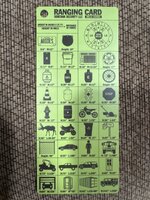
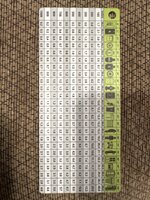
View attachment 876630View attachment 876631
A deer is 36” tall and can be 36-50” long. Good luck after that! 🤣

You know who had outline of deer and elk, their corresponding chest heights, and measured mils at 100yard increments taped to a scope. Snap a pic while he’s not looking for me.

I need to make one for 50” moose antlers, but that is easy enough to math.
 
I’m guessing avg mule deer chest height is 18” and elk 30”?
 
They don’t always work. Bear hunting (likely not useful to guess avg chest height) last year fog rolled in and my revics became useless. I could see 800 yards, but could no longer range anything near or far.
K well now you have me convinced to add that chart too ha
Have also had rangefinders get stumped by fog
 
There’s too many variables for that to be a reasonable or ethical way to range game animals. You’d probably be better using line distance in OnX or just not shoot stuff when you can’t get an accurate range. If you really need to take those shots, shoot a 26 nosler or something ridiculously flat to maximize your danger space
 
I always figured miling for range on animals was just asking for a bad hit. To much varience in animals. Works great for tactical ranging as there are so many standardized things in an urban enviorment like doors, signs, wheels, tables, fences, vehicles and so on.
 
There’s too many variables for that to be a reasonable or ethical way to range game animals. You’d probably be better using line distance in OnX or just not shoot stuff when you can’t get an accurate range. If you really need to take those shots, shoot a 26 nosler or something ridiculously flat to maximize your danger space

I would say it’s an advanced technique (maybe) but much faster than other options when seconds count. Increased danger space certainly helps.

I strive to spot my own shots, I’m not terribly concerned about where vertically I impact on a deer, antelope, or elk chest. Left and right is the bigger concern.

Moose is on the menu and requires practice milling distance.

Batteries die, stuff breaks, gets left behind, etc, etc. I ain’t hiking out 5 miles or passing on a trophy bull if I can make a very good guess at distance.
 
It’s a degradable skill, if you’re going to do it you need to practice a lot, and +/- 10% is pretty good. So if you’re milling a bear at 800, is he full sized, half sized, skinny , fat, short, long??? If you guess his size right, and are pretty good at milling with your optic, he is somewhere between 720 and 880.

That’s why I said not useful for bears. I’d venture mule deer/elk/antelope have relatively little variation.
 
I got given one of these for Christmas. Not sure I'll ever use it though. I'm not a long range shooter, just a MPBR/holdover kinda guy.

Does it come w cliff notes? I think SWFA used to sell something like this. I should order one and try to learn the weaponized math
 
I talked to an old guy who saw a moose years ago, estimated the range, buddy watched the bullet hit dirt, then he held high and got it. It was much bigger than they thought, and much further away. He said the rack was nothing impressive, but absolutely massive body and his range estimation was a few hundred yards off as a result.

From estimating the size of other animals, I would not trust my estimation of the animal.

Probably better off learning to estimate range through practice and only using a range finder to confirm the estimation after saying it aloud to a friend or writing it down.
 
You have to be pretty close on size of the target for milling to be accurate. Everything on those range cards has a hard straight edge. Milling something with soft edges and curves is going to be less accurate. Lighting and weather affects your accuracy too. It’s a good backup skill to practice and have, but I don’t think I would be comfortable using it much past 4-500 yds on an animal. Just too many variables.
 
Back
Top