- Joined
- Mar 17, 2022
- Messages
- 51
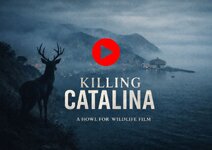
Killing Catalina is finally live.
This film started in 2023, when we learned that nearly 2,000 mule deer on Catalina Island could be eradicated and left to rot. What followed was two years of filming, interviews, documents, public meetings, and unanswered questions. We didn’t set out to make a documentary—but the deeper we went, the clearer it became that this story needed to be told in full.
On Monday, January 26th, we premiered Killing Catalina on Catalina Island. The screening was publicly advertised and open to the community. On the same day, the California Department of Fish and Wildlife approved the first step on the Conservancy’s new Restoration Management Permit—potentially authorizing the next phase of deer eradication. The public had not yet seen this film.
That timing matters.
This film isn’t about arguing over one population number, but we certainly prove a much more accurate approach. For much of it, we accept the Conservancy’s own estimate and ask a harder question: was the hunting program ever designed to succeed—and if not, how did eradication become the only answer? We also examine fire claims, vegetation, survey methods, and why transparency and public trust broke down along the way.
We respect the people who participated in this film—including those we disagree with. But respect doesn’t mean silence, and conservation doesn’t mean shutting the public out.
Please watch the film.
Share it.
And decide for yourself.
 Watch Killing Catalina now on YouTube
This conversation isn’t over—and it shouldn’t be.
Thank you for being part of this work,
Charles Whitwam
Founder, Howl For Wildlife
This film started in 2023, when we learned that nearly 2,000 mule deer on Catalina Island could be eradicated and left to rot. What followed was two years of filming, interviews, documents, public meetings, and unanswered questions. We didn’t set out to make a documentary—but the deeper we went, the clearer it became that this story needed to be told in full.
On Monday, January 26th, we premiered Killing Catalina on Catalina Island. The screening was publicly advertised and open to the community. On the same day, the California Department of Fish and Wildlife approved the first step on the Conservancy’s new Restoration Management Permit—potentially authorizing the next phase of deer eradication. The public had not yet seen this film.
That timing matters.
This film isn’t about arguing over one population number, but we certainly prove a much more accurate approach. For much of it, we accept the Conservancy’s own estimate and ask a harder question: was the hunting program ever designed to succeed—and if not, how did eradication become the only answer? We also examine fire claims, vegetation, survey methods, and why transparency and public trust broke down along the way.
We respect the people who participated in this film—including those we disagree with. But respect doesn’t mean silence, and conservation doesn’t mean shutting the public out.
Please watch the film.
Share it.
And decide for yourself.
Watch Killing Catalina now on YouTubeThis conversation isn’t over—and it shouldn’t be.
Thank you for being part of this work,
Charles Whitwam
Founder, Howl For Wildlife