EastHumboldt
WKR
- Joined
- Nov 14, 2020
- Messages
- 2,028
My brother has one of these systems in his new house, with the special orange CPVC pipe. He poked a hole in it and we had to drain the system to replace a couple feet of pipe. We’re aware that this isn’t standard white pvc pipe and we can’t use that for the repair. We have ordered some of the special orange pipe, orange fittings, and the special glue. The actual repair is a pretty straightforward plastic plumbing job involving a couple ells and couplings.
Back in the day, when I was a commercial building maintenance mechanic for the city, we had a lot of black iron fire sprinkler systems that required treated water to keep the pipes from corrroding too bad or antifreeze where the pipes were in an exterior soffit. Since the system he has is entirely indoors and all plastic except the brass service valves, I’m assuming we can just turn on the valves and refill it with standard city water?
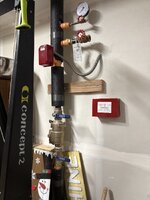
The system is fed by a 1-1/4” line that tees. One side of the tee is the sprinkler system and the other side is his domestic water supply. And do we need to worry about bleeding any air? I’m also assuming if there a ever was a fire, the system is “ self bleeding” when a head pops?
Back in the day, when I was a commercial building maintenance mechanic for the city, we had a lot of black iron fire sprinkler systems that required treated water to keep the pipes from corrroding too bad or antifreeze where the pipes were in an exterior soffit. Since the system he has is entirely indoors and all plastic except the brass service valves, I’m assuming we can just turn on the valves and refill it with standard city water?
The system is fed by a 1-1/4” line that tees. One side of the tee is the sprinkler system and the other side is his domestic water supply. And do we need to worry about bleeding any air? I’m also assuming if there a ever was a fire, the system is “ self bleeding” when a head pops?