Gov't Documents Reveal Stakeholders invited to consult on C-21, including current cabinet member, sought to end handgun target shooting, ban online gun sales, and thought gun owners illegally modified magazines "all the time"
Recently released government documents surrounding consultation on Bill C-21 indicate that stakeholders who consulted on the bill sought to ban online firearm sales, end target shooting with handguns and claimed: “mass shooters who modified their mags were legal gun owners, and it’s common knowledge that gun enthusiasts do this all the time.”
In a document entitled “Preliminary questions re Bill C-21 and other provisions,” a group of stakeholders identified as Polysesouvient, then headed up by current Liberal MP Nathalie Provost, as well as Danforth Families and unnamed others provided former Minister of Public Safety Marco Mendicino with a series of comments on various aspects of Bill C-21, in preparation for a technical briefing on the bill held between the aforementioned stakeholder groups and Ministry of Public Safety staff. Here are some excerpts from the criticisms levelled by these identified stakeholders around what they perceived to be C-21’s shortfalls:
Regarding the handgun freeze: “Authorized businesses with proper storage (i.e., retailers) could continue to import and sell handguns to other businesses (e.g., gunsmiths, museums, valuable goods carriers), law enforcement, defence personnel and exempted individuals. Can gun clubs own and (especially) acquire handguns that stay on site and can be sued [sic] by the public? Can they accumulate a million handguns from current owners before they pass away, ensuring that handgun target practice never dies out? What about new businesses that will pop up to purchase all the existing hanguns [sic]?”
Regarding the provision to make it an offence to alter a cartridge magazine to exceed its lawful capacity and allow for wiretaps for this new offence: “Why is this specific measure in this section? Nothing specifically related to gangs: In fact the mass shooters who modified their mags were legal owners, and it’s common knowledge that gun enthusiasts do this all the time.”
Regarding making it an offence for businesses to promote violence in firearms marketing and sales: “Has anyone ever done this? Who [sic] not do something that will make a difference, like no ads on the internet, or not [sic] online sales?”
Regarding the requirement for a person to present a valid firearms license to import non-prohibited ammunition for firearms: “No additional measure to require PAC to purchase magazines?”
Concerning Insight into Ignorant Influence
This technical briefing is the only reference to a detailed outside consultation included in a 435-page response to a request for “documents regarding the proposal and development of amendments to Bill C-21.” It was authored before the bill’s second reading, meaning it is ostensibly the only such consultation that occurred as government prepared to propose amendments, when the bill passed to the committee phase. This is somewhat surprising, given C-21 combined with the related ban on millions of long guns instituted by Order in Council on May 1, 2020, formed a cornerstone of the most sweeping gun control measures in Canadian history.
In other words, the sole consultation the government participated in during their work on the contentious bill involved individuals who confused the defunct Firearms Acquisition Certificate (FAC) required to buy a firearm in Canada 40 years ago with the Possession and Acquisition License (PAL) program that replaced it in the early 90s, and spuriously tied legal gun ownership to mass shootings in order to make an entirely baseless (and false) claim that gun owners illegally modify their magazines “all the time.”
Taken alongside their advocacy for ending handgun target shooting entirely, a goal that is entirely divorced from any semblance of improving public safety, and banning mail-order gun sales in a country where online shops provide a literal lifeline to rural property owners and remote subsistence hunters, indicates that their “consultation” had nothing to do with providing feedback with the aim of reducing gun violence, and everything to do with simply advancing an anti-gun agenda.
And given the politically-driven nature of the Trudeau-era gun reforms, ranging from questions about the government’s attempts to publicize the illegal firearms used in Portapique to further their political agenda to the years’ worth of statistical evidence that neither the gun bans nor C-21 have had any beneficial impact on the rate of crime committed with a firearm in Canada, that Public Safety Canada only sought feedback from a group that buttressed the Liberals’ political goals with misinformed, false, and misleading rhetoric rather than meaningful evidence is clear evidence that the gun reforms enacted by the Trudeau government are political in nature, not practical. In short, Public Safety Canada sought out those who shared the Liberals’ political aims in order to justify their gun reforms, rather than any actual expertise that could ensure new gun legislation would reduce gun crime.
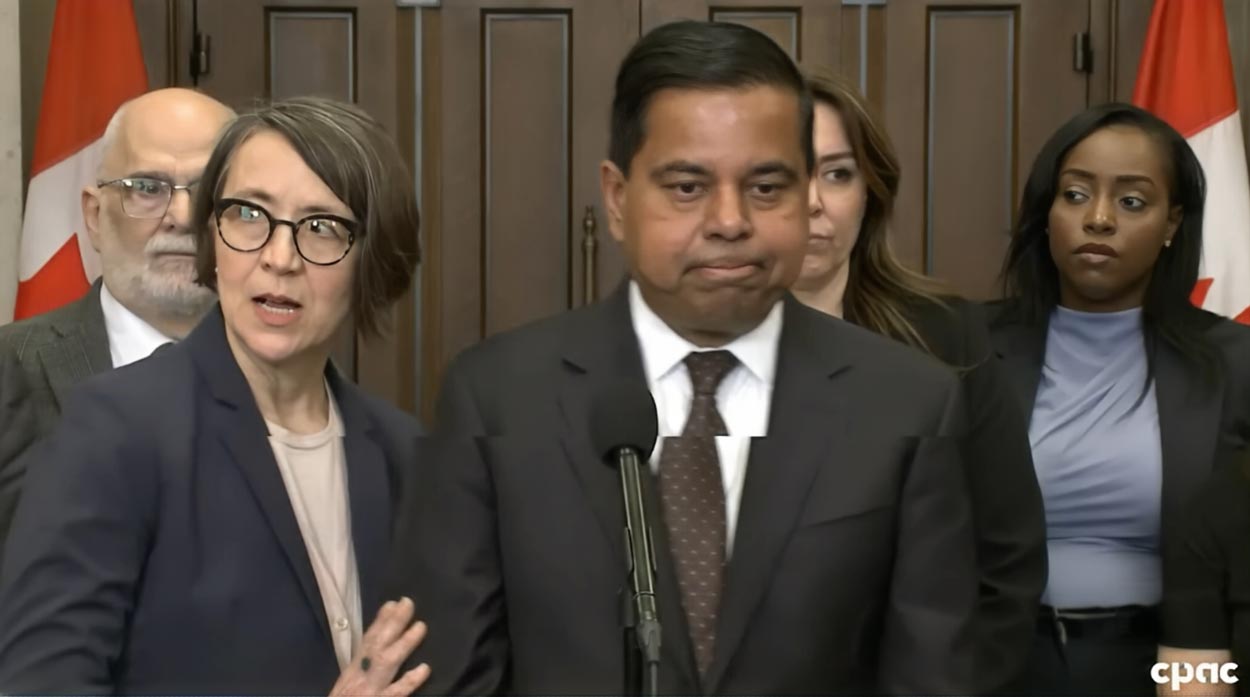
It is also worth noting that Nathalie Provost, then the leader of one of the most prominent groups identified as contributing to this expose of ignorance, now sits at the Cabinet table as the Minister of State for Nature and has repeatedly appeared alongside Minister of Public Safety Gary Anandasangaree during announcements regarding gun policy. Simply put, her involvement in this farce of a consultation, and the comments she contributed to that are contained within, should rationally disqualify her from any involvement in gun policy, as her obvious bias and absolute ignorance of gun laws, policy, and lawful use of firearms in Canada have been quite literally documented by Public Safety Canada above.
Finally, and perhaps most worryingly, this consultation indicates that the Public Safety Canada staff associated with gun policy seem to serve to further the political ends of elected officials rather than the public. One expects politicians to work towards the advancement and popularization of their political goals, but one also expects Canada’s public service to ensure that those goals are put through a filter of precisely that: Public service. But as is plainly evident, that did not occur here, and it should lead many to wonder where the line between politicians and the public service is drawn.
Gov't documents show stakeholders invited to consult on Bill C-21 wanted to ban online gun sales, and thought gun owners illegally modified magazines "all the time."

calibremag.ca




 I used to come to RS to get away from all of IN's copy and pasted news articles on HBC...


